Walk into any grow shop and there is a bottle of silica on the shelf with a plant on the label that looks like it could hold up a fence post. The pitch is always the same: thicker stems, tougher plants, heavier harvests. So does silica help cannabis, or is it the most successfully marketed additive in the hydro aisle?
Both, roughly. Does silica help cannabis? Yes and no, and the split matters. Cannabis absolutely takes silicon up — that part is settled science, and it has now been measured in cannabis specifically. What is far shakier is the part printed on the front of the bottle. The cannabis yield evidence comes down to a handful of small trials, almost all of them on hemp rather than drug-type plants, using different silicon products that are not interchangeable. They do not all agree.
That is a more interesting answer than either “it’s snake oil” or “it’s essential.” Here is what the research supports when you ask does silica help cannabis, and where the stuff is genuinely worth your money.
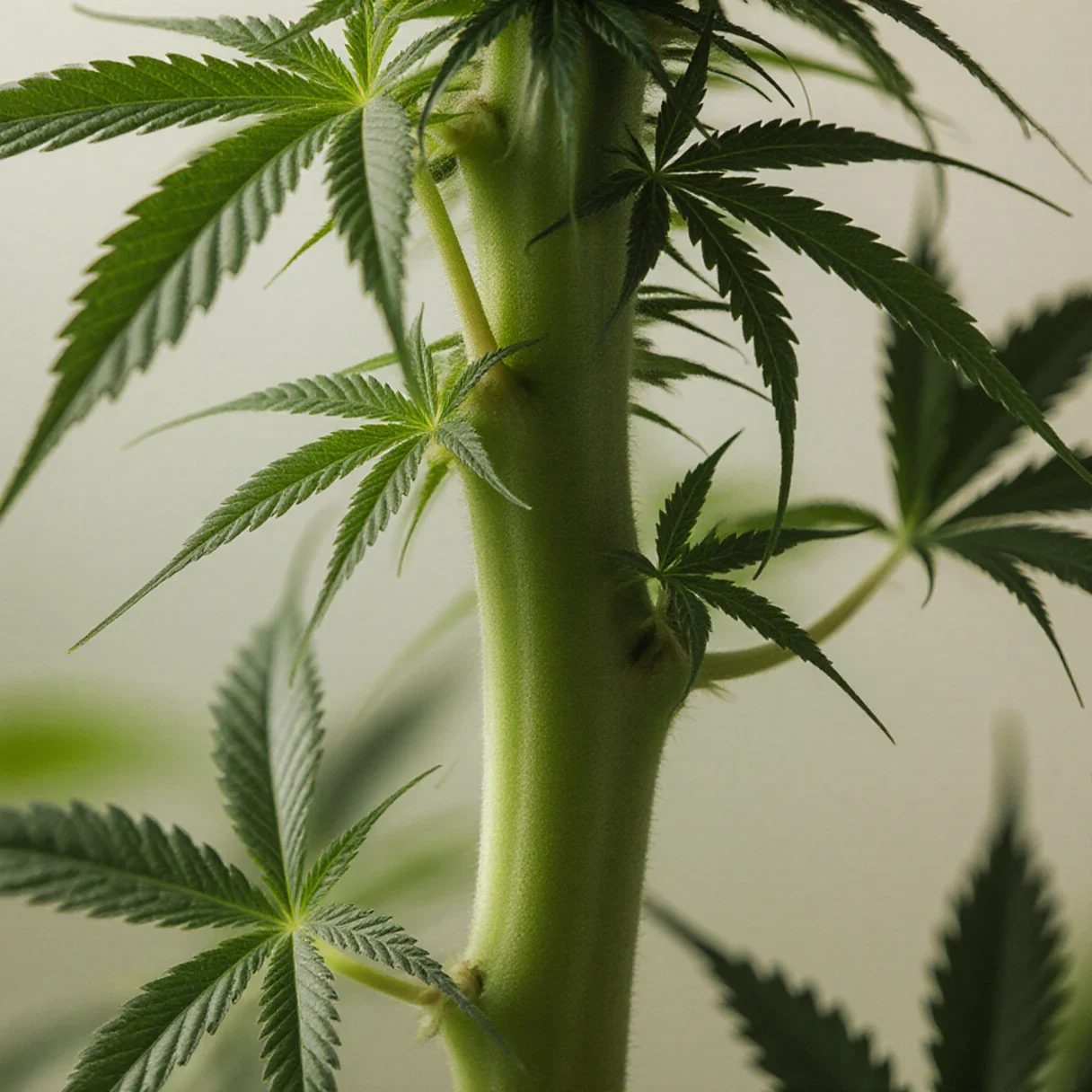
Silicon is classified as a beneficial element, not an essential one. Plants complete their entire life cycle without it — the exceptions are horsetails and some algae. Nothing dies without silica. Compare that to nitrogen or calcium, where deficiency shows up as visible damage within weeks.
So the honest framing of does silica help cannabis is not “does the plant need this.” It doesn’t. The real question is whether adding it buys you something measurable, and the answer depends almost entirely on how stressed your plants already are.
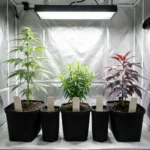
Dialled-in indoor tent, stable temperatures, no wind, clean water, nothing fighting you? Does silica help cannabis in that situation? Barely, on the evidence available. Outdoors in wind and heat swings, or running hard water, or pushing plants to their limit — that is where the case gets strong.
For years the argument against these products was that the silicate in the bottle isn’t in a form the plant can absorb. Plants take silicon up in exactly one chemical form: monosilicic acid. Not silicate salts, not suspended silica particles — monosilicic acid, and nothing else.
That objection has now been tested on cannabis and it did not survive. A 2024 trial published in the New Zealand Journal of Crop and Horticultural Science fed a silicate-based supplement to cannabis and measured what ended up in the leaves. Leaf silicon rose 2.1-fold, with a p-value of 0.001 — about as clean a result as this kind of work produces. The silicate got in.
Where does it go? Once inside, silicon polymerises into solid amorphous silica and is deposited in cell walls, with over 90% of leaf silicon ending up in the epidermis — the outer skin of the leaf. In hemp specifically, researchers have found it laid down in epidermal leaf cells and in the trichomes. It also associates with lignin, the compound that makes plant tissue rigid.
That is a real, physical reinforcing layer. Think of it less as a nutrient and more as the plant laying down its own armour plating. So on the narrow question of uptake, does silica help cannabis build tissue it wouldn’t otherwise have? Yes. That much is no longer in dispute.
Here is where the marketing and the literature part ways.
That same 2024 study is the paper silica product pages like to quote, because it reported inflorescence yield up roughly 1.2-fold. You will see that framed as “20% bigger harvests, proven in a peer-reviewed study.” Three problems with that.
The yield result was not statistically significant. Its p-value was 0.087, and the conventional threshold for calling a result real is 0.05. At 0.087 the honest description is a trend that might be nothing. To be fair to the researchers, they concluded in favour of the combination — that reading is mine, not theirs. But note the contrast with the uptake result at p = 0.001. They demonstrated silicate gets absorbed to a far higher standard than they demonstrated it grew more.
It wasn’t silicon on its own. The treatment was a combined product containing both silicate and phosphite. Whatever yield movement happened, there is no way to tell which ingredient caused it, or whether it needed both.
It was hemp, not drug-type cannabis. Useful, closely related, not the same plant you are growing for flower.
One more detail worth knowing: quality measures — the volatile compounds behind aroma and flavour, plus colour — came out unchanged. The study also found a marginal reduction in branch length, meaning slightly more compact plants, which for most indoor growers is a feature rather than a bug.
Then there is a trial that points the other way. A 2025 study in Scientific Reports sprayed hemp with foliar nanosilicon across a range of drought levels and found significantly heavier flowers under mild drought, along with higher essential oil content — the fraction that carries aroma. Same element, opposite conclusion on quality.
So does silica help cannabis yield more? Why the disagreement, first: partly because these are not the same product. One is a silicate supplement, the other a nanoparticle sprayed on leaves, and they behave differently. Both were hemp, both were small, and neither tested the drug-type plants you are actually growing.
So does silica help cannabis produce more flower? The honest answer is that the cannabis evidence is thin and split — a non-significant trend in one trial, significant gains in another using a different input. Unproven, not disproven, which is a different and more useful thing to know.
This is the part the bottle never explains, and it is the single most useful thing to understand about silicon.
A large meta-analysis in Agronomy for Sustainable Development pooled silicon studies across many crops and stress types. The headline numbers look impressive: silicon-mediated recovery increased plant biomass carbon by 35% and crop yield by 24%.
Read that carefully though. Those figures describe recovery — plants being damaged by drought, salinity, heavy metals or disease, clawing back ground they had already lost. It is not a bonus stacked on top of a healthy plant.
The authors put it about as directly as a journal will allow: silicon-mediated biomass recovery “rarely reaches the biomass carbon accumulation under non-stress condition.” Silicon helps a struggling plant climb back toward the ceiling it would have hit anyway. Across crops, it rarely pushes a comfortable plant past it. That reframes the whole question of does silica help cannabis, because it means the reliable win is protecting your best case rather than raising it.
Fairness demands a caveat: that 2025 hemp trial did report gains at full irrigation too, not just under drought. So “only works on stressed plants” is too strong a claim. What holds up across the wider literature is that the benefit is largest and most consistent under stress.
And the relationship isn’t linear. The same review describes a bell-shaped response curve against abiotic stress severity: the benefit climbs from mild to moderate stress, then falls away again under severe stress. Silica does the most good in the middle. Barely-stressed plants have less to gain, and a plant that is genuinely wrecked is past saving with an additive.
So when someone asks does silica help cannabis, the accurate answer is: it depends on how hard your plants are working. Silica is insurance, and insurance pays out most when something goes wrong.
Which makes the question of does silica help cannabis in your grow answerable in about ten seconds. Find your setup below.
| Your situation | Is silica likely worth it? |
|---|---|
| Outdoor, exposed to wind and heat swings | Yes — the clearest case |
| Hard water, salinity, or high-EC feeding | Yes — salinity is well studied |
| Tall plants carrying heavy weight late in flower | Probably, for structure |
| Hot tent you can’t fully control | Worth trying |
| Stable indoor tent, everything dialled in | Low return — spend elsewhere |
| Plants already failing from a real problem | No — fix the actual cause first |
If your grow sits in that last row, silica is not your answer. Diagnose it properly — start with nutrient deficiencies and your pH, because those two account for most of what growers blame on everything else.
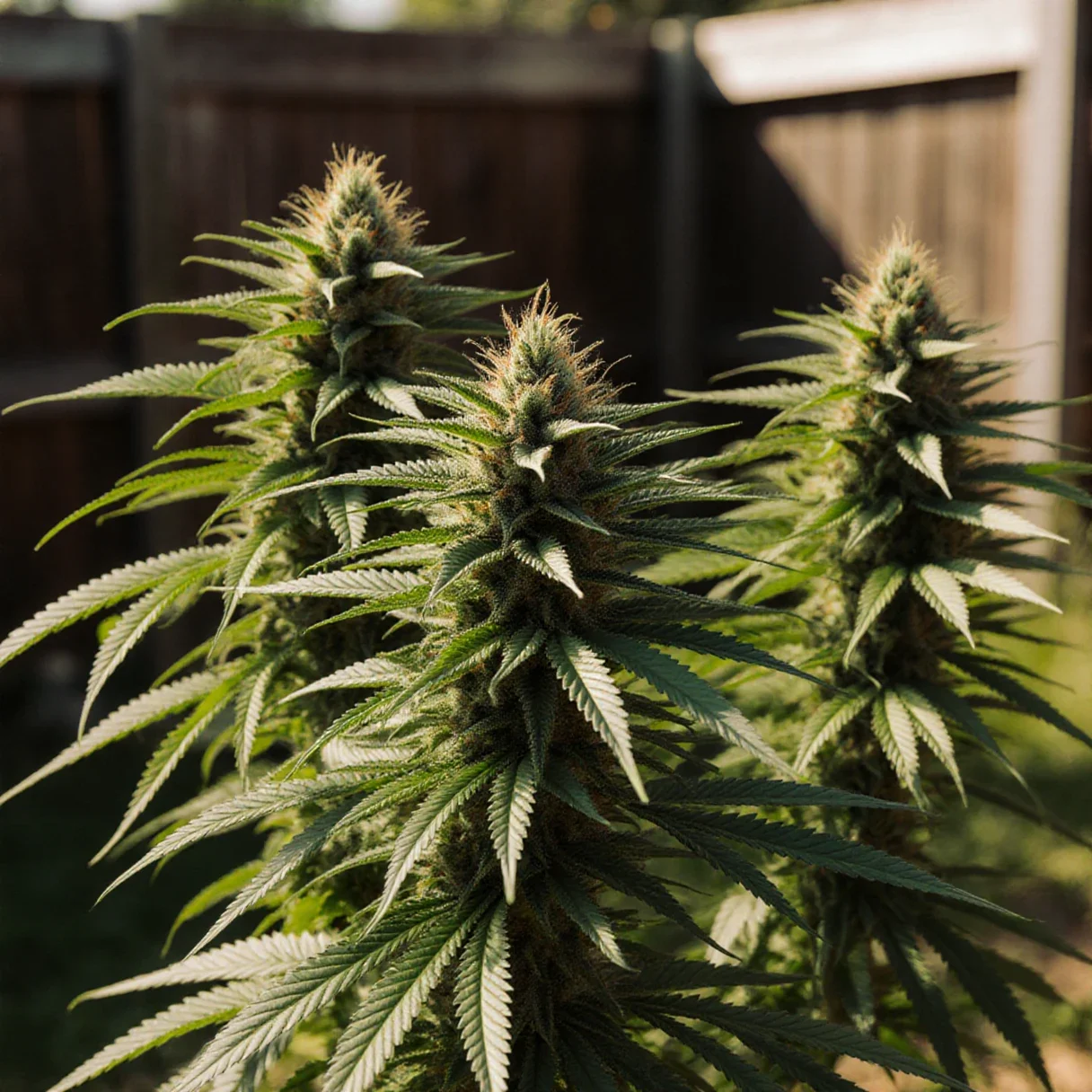
Probably — and this is the one silica claim with a cannabis-specific trial behind it. Just be careful how much weight you put on it, because what was actually tested is narrower than what the bottles imply.
The mechanism is well established elsewhere. Silicon deposited in the leaf epidermis makes physical penetration harder for fungal germ tubes, and it also appears to prime the plant’s own defence responses rather than acting purely as a barrier. That has been demonstrated repeatedly in cucumber, barley, zucchini and Arabidopsis, including work showing both foliar and root-applied silicon enhancing induced resistance to powdery mildew.
There is direct evidence in the plant itself, and it is worth knowing about. Dixon et al. (2022), in Plant Health Progress, found that root-applied silicon significantly reduced powdery mildew severity in the upper and mid-canopy of hemp — Cannabis sativa — grown in soilless systems.
Read the fine print before you reach for a bottle, though: that trial applied silicon to the roots at agricultural field rates of 660 to 1322 lb per acre, which is not the same thing as a cap of silica in your reservoir. Foliar products have fared worse — University of Tennessee studies of one silicon spray did not find it significantly better than untreated plants. So asking does silica help cannabis fight mildew gets you a real but narrow result, not a blanket endorsement of whatever is on the shelf. Treat it as a bonus if it happens, not a reason to skip your airflow.
You will occasionally see “95% effective against powdery mildew” quoted on product pages. I could not trace that figure to any published study, so I would not repeat it. If mould is your real concern, environmental control does far more heavy lifting — our guide to bud rot and how to stop it covers the levers that genuinely move the needle, and VPD is where to start.
Sturdier stems is the promise on nearly every label, and the mechanism is genuinely plausible — silica reinforcing cell walls and associating with lignin is exactly how you would expect to get more rigid tissue.
But I have not found a published cannabis trial that actually measured stem strength with and without silicon. The 2025 hemp study recorded stem diameter and stem dry weight, which is adjacent but not the same thing as load-bearing capacity. Growers report sturdier plants constantly and the biology supports it. That is suggestive, not proof, and I would rather tell you that than pretend otherwise — it is the most-repeated answer to does silica help cannabis and one of the thinnest on direct evidence.
What I will say is that if you run strains that get tall and heavy, structural support is worth planning for regardless of what is in your reservoir. Acapulco Gold stretches to 150–250 cm and can push 800–1500 g per plant outdoors. Gorilla Glue #4 runs 120–200 cm at 600–800 g, and Sweet Island Skunk can hit 240 cm with 600–1000 g outdoors. Those plants need support a bottle cannot provide.
The cheapest structural insurance is not silica — it is low stress training, which builds an even canopy of shorter, thicker branches instead of one tall stem trying to hold everything up.
If you have decided the answer to does silica help cannabis is yes for your setup, the mixing procedure matters more than the dose. This is where most people get burned.
Potassium silicate — what most “silica” products actually are — is strongly alkaline. Dose it straight into a concentrated nutrient mix and you can get precipitation: cloudy solution, gel-like sludge, and calcium locked up where you cannot use it. Two things drive that. The local pH crashes when alkaline silicate meets acidic concentrate, which converts it toward silicic acid, and silicate reacts readily with the calcium sitting in your cal-mag. Dissolved silicon also polymerises out of solution above roughly 2 mM, and undiluted pockets are how you get there.
So, in order:
One flag for coco growers: you are already managing a balancing act with cal-mag, and silica adds another alkaline input to juggle. Our breakdown of soil, coco and hydro explains why coco behaves differently — go in with your eyes open rather than adding two new variables the same week.
My honest read, and this is opinion rather than a research finding: does silica help cannabis enough to justify the shelf space? For outdoor growers, yes. For well-run indoor tents, it is a mediocre buy.
Outdoors you cannot control wind, heat spikes, or a dry fortnight followed by a downpour. Those are precisely the moderate stresses where the meta-analysis says silicon earns its keep. Pair it with genetics that already handle rough conditions — Alaskan Thunder Fuck is built for cool temperate climates, Fat Bastard is rated for all climates, and White Widow has stayed in catalogues since the nineties partly because it tolerates being grown badly.
Indoors, if your root zone temperature is stable, your watering is consistent and your climate is under control, you have engineered out the stress silica protects against. Does silica help cannabis that already has nothing to recover from? Not much — you are buying insurance against a risk you already mitigated, and that money does more in better lighting or a bigger pot.
The one indoor exception: if you are pushing hard — high light intensity, aggressive feeding, plants at the edge of what the space supports — you have reintroduced stress deliberately, and does silica help cannabis again starts to look like a fair question. Same logic as our look at whether drought stress boosts THC: controlled stress is still stress, and the plant responds to it.
Not quite, and the labels are sloppy about it. Silicon is the element. Silica is silicon dioxide, the solid form the plant deposits internally. What the roots actually absorb is monosilicic acid. Products sold as “silica” are usually potassium silicate, which supplies silicon once diluted.
Yes, though the usual damage is to your reservoir rather than your plants — precipitation, pH swings and nutrient lockout. Does silica help cannabis more at higher doses? No cannabis trial has shown high rates beating normal label rates, and the strongest evidence is for stress protection rather than dose-driven growth. There is no reason to chase big numbers.
The same logic applies, with one caveat: autos have no recovery time. A photoperiod plant can lose a week to stress and make it up in veg — an auto cannot. If anything that makes protective inputs slightly more attractive for autos like Devil XXL, which is rated adaptable across temperate conditions. Just don’t let a supplement substitute for getting the environment right early.
Both have support. Root feeding is the conventional route for building tissue silicon, while the 2025 hemp trial that found flower-weight gains used a foliar spray, and foliar silicon has enhanced disease resistance in other crops. The practical rule matters more than the route: avoid spraying anything onto plants in flower, or you invite the mould problem you were trying to prevent.
Medium changes the answer. Soil and living soil already contain silicon and mineral soils release it slowly, so the case for supplementing is weakest there. Inert media like coco and hydro supply none of their own, so if you are asking does silica help cannabis in coco specifically, that is the strongest version of the case — and it is why these products are marketed hardest at those growers.
Yes — measurably, in the sense that cannabis takes silicon up and stores it in its tissue, which is now demonstrated rather than assumed. But the leap from “the plant absorbs it” to “you will harvest more” rests on a couple of small hemp trials that disagree with each other, using silicon products that are not interchangeable. That is a thin foundation for the promises on the label.
What the broader plant science supports well, across many crops and dozens of studies, is that silicon helps plants under moderate stress recover ground they would otherwise lose. That makes silica primarily a defensive input. Buy it to protect an outdoor crop through a rough summer, and treat any yield bump on a clean indoor grow as a bonus you have not been promised.
And if your plants are struggling right now, does silica help cannabis out of a hole? No — it is the wrong first move. Find the actual problem. It is nearly always light, water, pH or heat — and every one of those is cheaper to fix than to paper over. Our look at whether mycorrhizae boost yield reaches a similar verdict about a different bottle, and the pattern is worth noticing: additives help most where something is already going wrong.
Start with genetics that suit your conditions and the rest gets easier. Mac’s own Blue Monkey Dick is an easy grower bred in Ontario for temperate conditions, and Harley Quinn CBD is rated adaptable if you want something forgiving with a different effect profile.
Shop Feminized Seeds | Autoflower Seeds | Fixing Nutrient Deficiencies | More cannabis grow guides
Want to keep learning? Browse our full library of our cannabis growing guides — everything from germination to harvest, in one place.
Ready to grow? Browse premium seeds from Lighthouse Genetics:
Designed & Built by Wynne Web Design