You can feed a cannabis plant a perfect diet and still starve it. That’s the part new growers never see coming. The nutrients are in the pot, the bottle, or the reservoir — all of them, in the right amounts — and the plant still throws yellow leaves and clawed tips like it’s getting nothing. Nine times out of ten the food isn’t the problem. The pH is.
Getting the pH for cannabis right is the cheapest, highest-return skill in the whole grow, and it’s the one most beginners skip. This post covers the right pH for cannabis across the three media people actually grow in — soil, coco coir, and hydro — plus how to measure pH without fooling yourself and how to fix it when it drifts. If you’re still building out the room around your plants, our grow tent setup guide is the companion piece to this one.
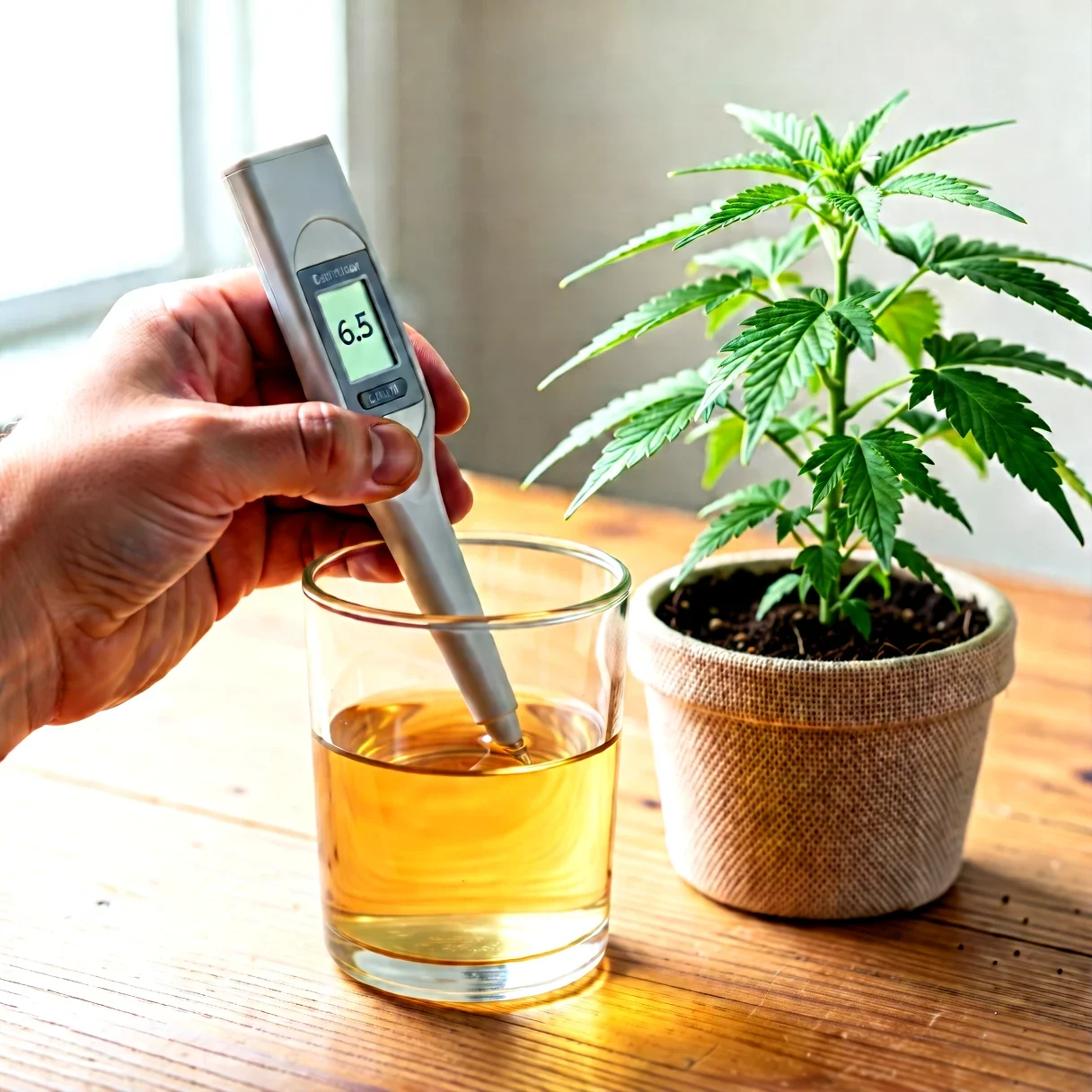
pH is just a measure of how acidic or alkaline your water and root zone are, on a scale from 0 to 14, where 7 is neutral. It matters because nutrients only dissolve into a form roots can absorb inside a narrow band of pH. Drift outside that band and the nutrients are still physically present — they just lock into compounds the plant can’t pull in. Growers call it nutrient lockout, and it looks exactly like a deficiency, which is why it fools people into overfeeding a plant that’s already drowning in food.
Phosphorus is the textbook example. University of Vermont Extension notes that the ideal pH for plants to take up phosphorus is 6.0 to 7.0 — drop below that and phosphorus binds with aluminum and iron and goes unavailable; climb too high and it reacts with calcium instead and locks out the same way. Every nutrient has its own curve like that. The reason the pH for cannabis lands where it does is that it’s the compromise window where the most elements are available at once.
So the goal of managing pH for cannabis isn’t to chase one magic number. It’s to keep your root zone parked inside the band where iron, calcium, magnesium, phosphorus, and the rest all stay soluble together. Nail the pH for cannabis and feeding gets dramatically more forgiving. Ignore it and no amount of premium nutrients will save the grow.
Here’s the part to tape to your wall. The correct pH for cannabis isn’t one figure — the right pH for cannabis shifts with what you’re growing in, because each medium buffers acidity differently. Soil resists change, coco barely buffers, and hydro doesn’t buffer at all.
| Medium | Target pH range | How often to check |
|---|---|---|
| Soil | 6.0 – 7.0 (aim ~6.5) | Every watering or two |
| Coco coir | 5.8 – 6.2 (aim ~6.0) | Every feed |
| Hydroponics | 5.5 – 6.0 (up to 6.5) | Daily |
Soil is where most beginners should start, and the pH for cannabis in soil sits in the widest, friendliest range — 6.0 to 7.0, with 6.5 as the bullseye. The reason it’s so forgiving is buffering: living soil is full of organic matter, clay, and microbial life that all absorb pH swings before they reach the roots. A good soil mix does half the work for you. You can water with slightly-off pH and the medium quietly corrects it, which is exactly why first-time growers make fewer fatal mistakes in dirt than in anything else.
That buffer isn’t infinite. Heavy synthetic feeding, hard tap water, or repeated off-pH watering will eventually drag the soil acidic or alkaline, and once it tips, it tips slowly back. So even in soil, check the pH of what you pour in. You just won’t be doing it with the white-knuckle frequency that hydro demands.
Coco is the in-between medium, and it trips up people who treat it like dirt. It looks and handles like soil but it barely buffers pH, so you manage it more like a hydro grow. The target pH for cannabis in coco is tighter — 5.8 to 6.2, with 6.0 as the center. Because coco gives roots constant oxygen and drains fast, plants in it can grow explosively, but only if you feed every watering and keep that pH dialed. Get lazy with the meter in coco and lockout shows up fast.
One coco-specific quirk: fresh coco can hold onto calcium and magnesium and release sodium, which is why coco growers lean on cal-mag and watch their runoff closely. Keep the input pH near 6.0, feed a complete nutrient line, and coco rewards you with soil-like ease and hydro-like speed.
In a true hydro system the roots sit in nothing but nutrient water, so there’s zero medium to absorb a mistake. The pH for cannabis in hydro runs lowest — 5.5 to 6.0 is the working sweet spot, and you can range up toward 6.5. Oklahoma State University Extension recommends a soilless nutrient solution around pH 5 to 6 so the root environment stays near 6 to 6.5, the band where nutrients are most available. Many growers also nudge the number slightly through the range over a week so different elements each get their best window.
The trade-off for that precision is vigilance. A hydro reservoir’s pH drifts every single day as plants drink and as nutrients deplete, so you check it daily, full stop. This is the most productive way to grow and the least forgiving — there’s no soil to hide your errors.
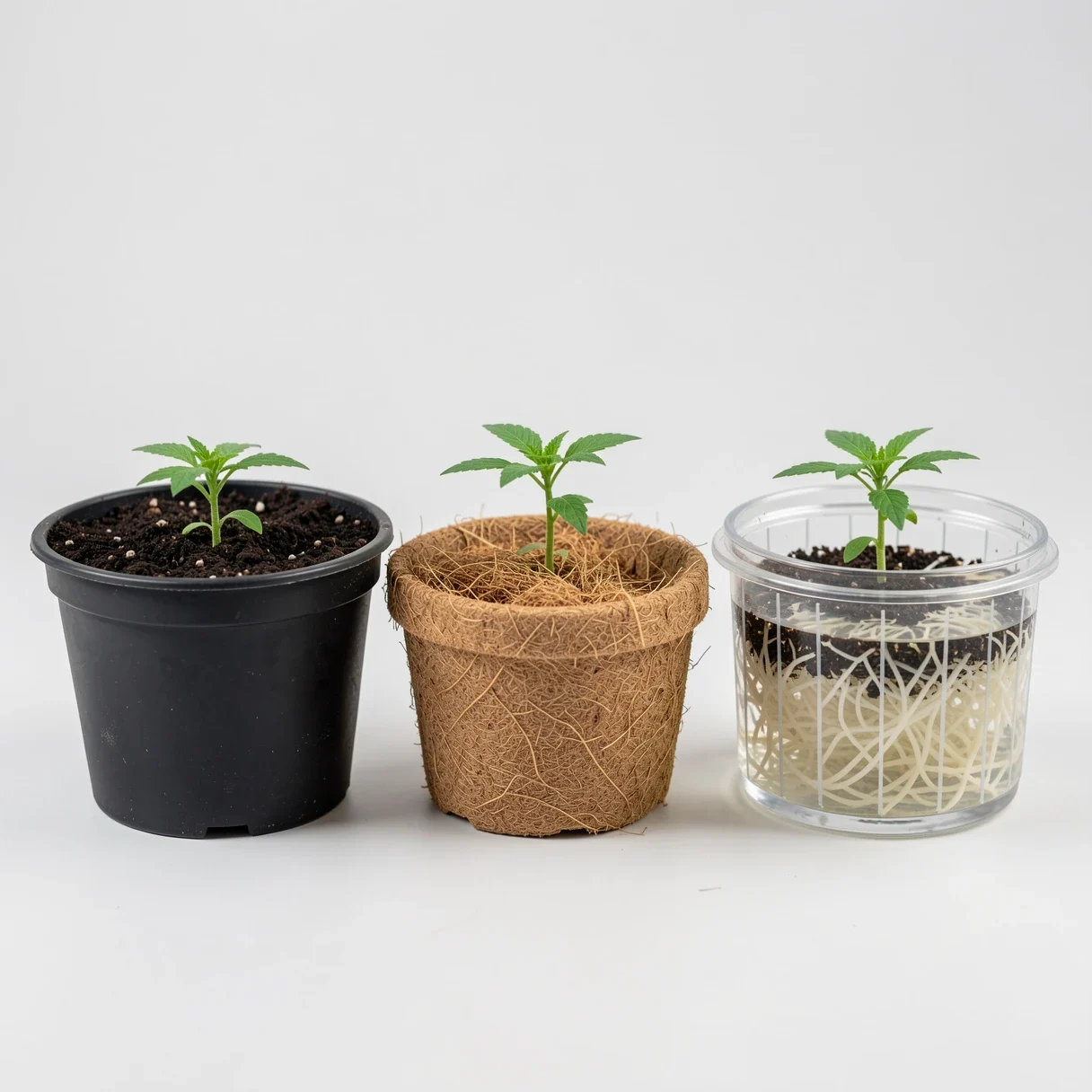
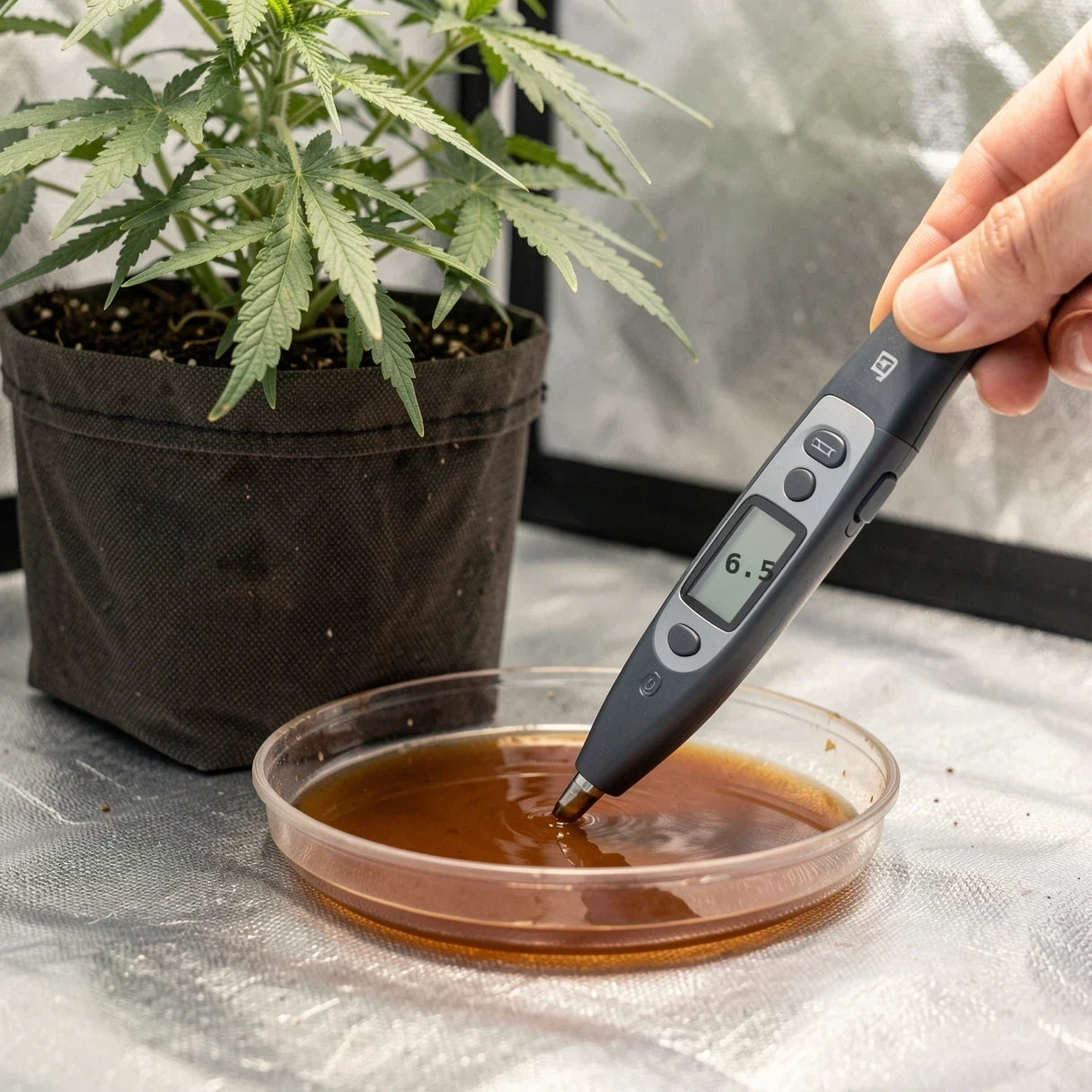
You can’t manage what you don’t measure, and measuring pH for cannabis well is mostly about not trusting the cheap option. Skip the paper strips and the drop-bottle test kits — they ask you to judge a color against a chart by eye, and in tinted nutrient water that’s a coin flip. A digital pH pen costs a little more and removes the guesswork. It’s the one meter worth buying on day one.
A pen is only honest if you calibrate it, and accurate pH for cannabis depends entirely on a meter you can trust. Out of the box and every few weeks after, dip it in the little calibration solution packets (usually a 7.0 and a 4.0) and set it to read true — an uncalibrated pen drifts and lies, which is worse than not measuring at all. Rinse the probe in clean water between readings, keep the tip moist in storage, and replace the pen when it gets sluggish. Measure your water after you’ve mixed in nutrients, not before, because the nutrients themselves shift the pH.
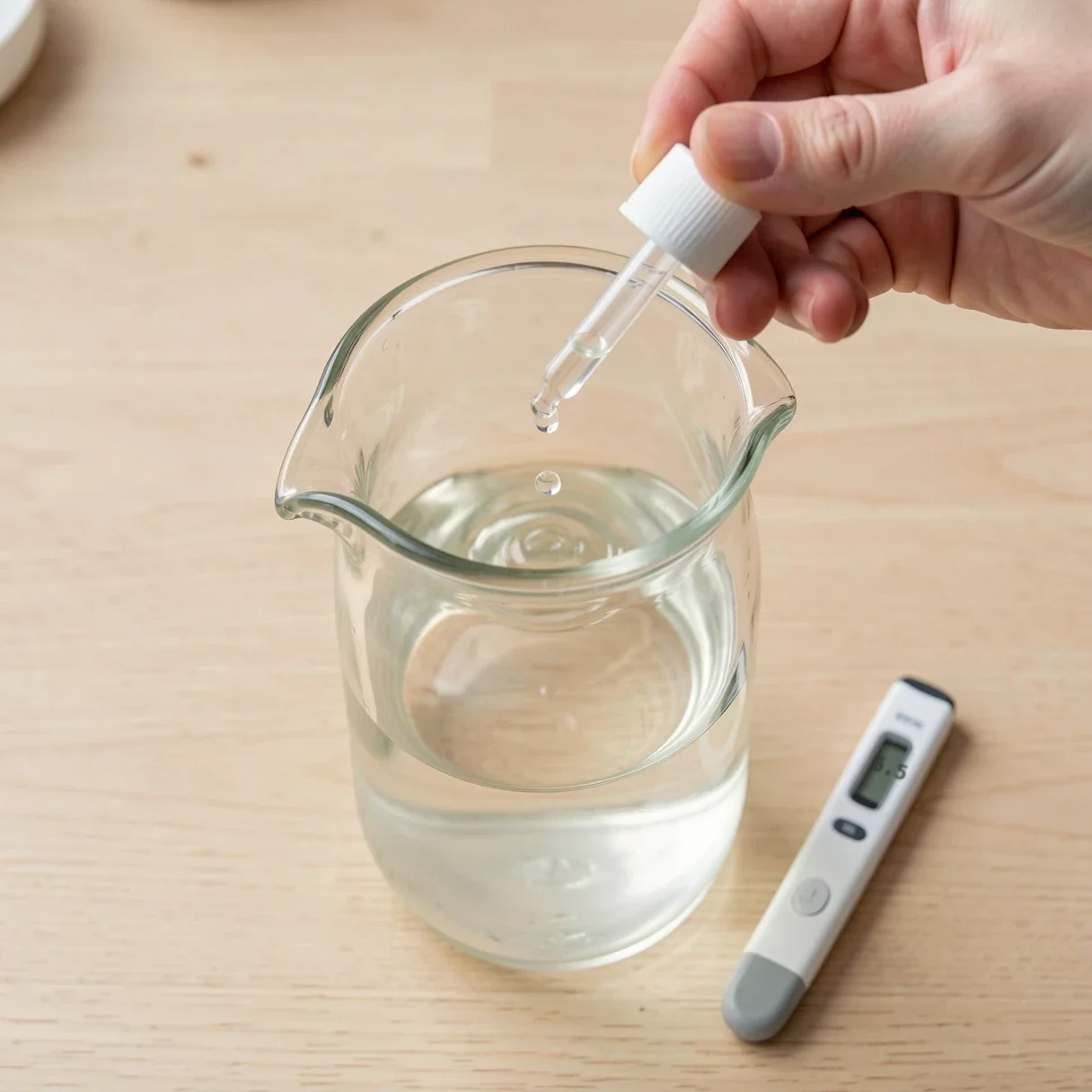
Once you can read it, fixing it is simple. You buy two bottles — “pH Up” (a base, usually potassium hydroxide) and “pH Down” (an acid, usually phosphoric acid) — and dose tiny amounts to nudge the number where you want it. The whole game with adjusting pH for cannabis is going slow: these products are concentrated, and a few drops move the needle hard.
Do it in the right order. Mix your nutrients into the water first, stir, let it settle, and only then read and adjust the pH — because adding nutrients changes pH, so correcting before you feed is wasted effort. Add pH Up or Down a few drops at a time, stir, wait a moment, and re-read. Sneak up on your target rather than overshooting and bouncing back the other way. In hydro you’ll repeat this in the reservoir; in coco and soil you’re pH-ing the water or feed before it goes in.
The pH going in tells you half the story. The pH coming out tells you the other half. In soil and coco, collect the water that drains from the bottom of the pot — the runoff — and read its pH and EC. If you feed at 6.2 and the runoff comes back at 5.4, your root zone has gone acidic and is heading for lockout even though your input looked perfect. Runoff is how you catch a bad pH for cannabis before the plant has to tell you with damaged leaves.
If the runoff reads off, flush the pot with a few times its volume of correctly pH’d water until the runoff matches what you’re pouring in. Then resume normal feeding. This single habit — check the input, check the runoff, reconcile the two — prevents most of the slow-motion deficiency spirals that wreck otherwise healthy grows, and it ties directly into maximizing your yield, since a plant that’s eating properly is a plant that’s building bud.
The pH for cannabis doesn’t sit still. It drifts — and knowing why keeps you ahead of it. Plants actively change their root-zone pH as they take up different ions, nutrient concentration changes the number as a reservoir depletes, and your source water has its own pH and “alkalinity” that fights your adjustments. Hard tap water especially is loaded with dissolved minerals that buffer against your pH Down and creep the number back up.
The classic beginner errors are all avoidable. Pouring tap water straight in without checking it. Adjusting pH before adding nutrients instead of after. Dosing pH Up or Down by the capful and overshooting. Trusting strips over a calibrated pen. And the big one — never reading the runoff, so a slow acidic slide goes unnoticed until the plant is two weeks into a deficiency. Every one of these traces back to skipping a thirty-second measurement. Dialed-in pH also protects everything else you’re chasing, from healthy seedlings to the resin production behind peak THC potency.
If dialing in the pH for cannabis still feels like a lot, stack the deck in your favor with a hardy strain and a forgiving medium. Good soil plus a vigorous, beginner-tolerant genetic absorbs a lot of early mistakes while you build the habit. A classic like Blue Dream or White Widow is famously easy-going, and a sturdy indica like Northern Lights Skunk shrugs off a lot. Browse the full feminized seed range for more resilient photoperiod options.
Autoflowers are even more low-maintenance for a first run — they finish fast and don’t need a light-schedule change, so there’s less time for a pH problem to compound. A Gorilla Glue Autoflower, a punchy Green Crack Autoflower, or a flavorful Gelato Autoflower will all tolerate a learning curve. The full autoflower collection has plenty of compact, forgiving picks. Once managing the pH for cannabis is automatic, you can graduate to coco or hydro and the fussier, higher-ceiling grows — and supplements like CO2 or extra nitrogen in flower only pay off once the basics like pH are locked down.
| # | Rule |
|---|---|
| 1 | Soil target: 6.0–7.0 (aim 6.5) |
| 2 | Coco target: 5.8–6.2 (aim 6.0) |
| 3 | Hydro target: 5.5–6.0 (up to 6.5) |
| 4 | Use a calibrated digital pen, never strips |
| 5 | Calibrate the pen on day one and every few weeks |
| 6 | Mix nutrients first, adjust pH after |
| 7 | Dose pH Up/Down in drops, then re-read |
| 8 | Check runoff pH in soil and coco, not just input |
| 9 | Check daily in hydro, every feed in coco, often in soil |
Between 6.0 and 7.0, with about 6.5 as the ideal. Soil buffers pH naturally, so this wide range is forgiving — you don’t have to hit one exact number, just stay in the band and check the water you feed in.
Coco wants 5.8 to 6.2 (aim for 6.0) and hydro wants 5.5 to 6.0, ranging up toward 6.5. Both are lower and tighter than soil because they barely buffer, so you adjust and check far more often — daily in a hydro reservoir.
It mimics a nutrient deficiency: yellowing, spotting, clawed or curling leaves, and stalled growth even though you’re feeding correctly. That’s nutrient lockout — the food is there, but the off pH has locked it into a form the roots can’t absorb.
Less obsessively, but yes. Quality living soil buffers a lot, so the occasional off reading won’t hurt. But hard tap water or heavy feeding will eventually shift even buffered soil, so a quick check of what you pour in is cheap insurance.
Managing the pH for cannabis is the highest-leverage thirty seconds in your grow. The right pH for cannabis sits at 6.0–7.0 in soil, 5.8–6.2 in coco, and 5.5–6.0 in hydro — buffering is what sets the difference, and it’s why soil forgives beginners and hydro doesn’t. Get a calibrated pen, adjust after you feed, watch your runoff, and you’ve removed the single most common cause of a healthy-looking plant that just won’t thrive.
Don’t overthink it past that. Pick a forgiving strain and good soil for your first run, check your numbers every watering, and let the buffer cover the rest. The growers who win aren’t the ones with the fanciest nutrients — they’re the ones whose pH never wandered. Get that one number right and everything you feed finally counts.
Shop Feminized Seeds | Shop Autoflower Seeds | Grow Tent Setup Guide
Want to keep learning? Browse our full library of cannabis growing guides — everything from germination to harvest, in one place.
Ready to grow? Browse premium seeds from Lighthouse Genetics:
Designed & Built by Wynne Web Design