Canada gives you four plants. Four. That is not a garden — that is a short list, and every spot on it matters. Under the Cannabis Act, every household can grow up to four plants at a time from legal seed. Provinces add their own rules on top: Quebec bans home growing, Manitoba allows it indoors only, Newfoundland and Labrador allows it only indoors or in an enclosed structure, and some provinces limit where you can buy seeds. Check your province’s rules and buy from a source your province allows. In the US, home-grow limits are set state by state.
Choose well and every one of those four spots pays you back. Choose poorly and you spend four months nursing a strain that hates your climate, outgrows your space, or finishes two weeks after frost kills it.
Knowing how to choose cannabis seeds comes down to matching what you want to grow with where you are growing it. Not what looks cool on Instagram. Not what your buddy recommended. Your space, your experience, your timeline — that is what should drive the decision.

Before you look at a single strain name, answer one question: where are these plants going to live?
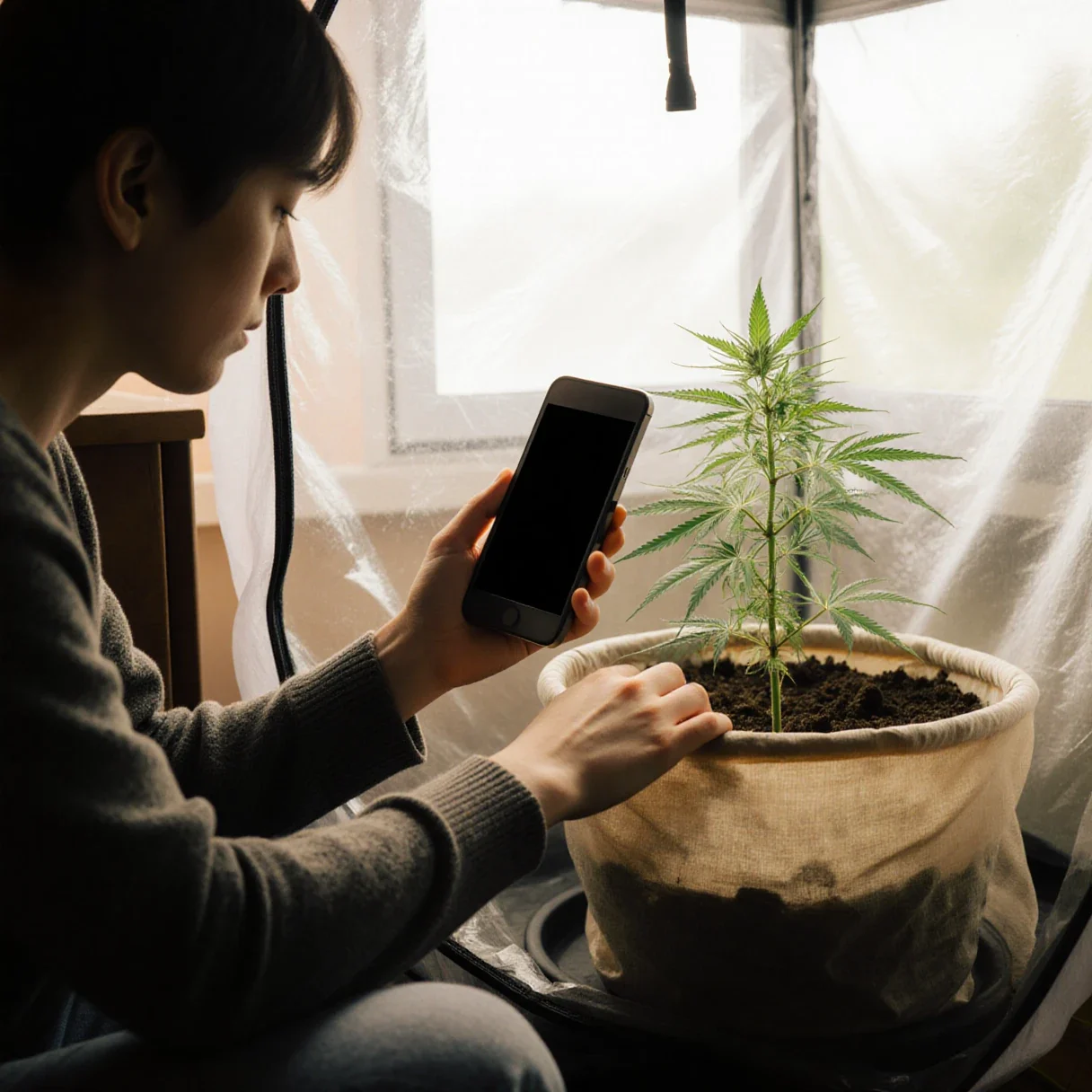
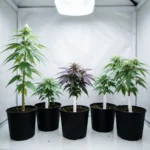
A 2×4 or 4×4 ft tent (60 × 120 or 120 × 120 cm) is a common indoor setup. Space is the constraint. A sativa that stretches to six feet (1.8 m) will press against your light and burn. You need strains that stay compact — short indicas, squat hybrids, or autoflowers bred to stay under a metre (about 3 ft).
Autoflowers are tailor-made for tents. Kush XL Autoflower stays manageable in a 4×4 and produces dense, resinous buds without needing a light schedule change. White Widow Autoflower tops out around 70 to 80 cm (28 to 31 in) — it fits in a 2×4 without training.
If you prefer feminized photoperiod strains indoors, plan on topping and training. Bubba Kush naturally stays short and bushy. Gorilla Glue #4 responds well to LST and SCROG — you control the canopy shape, and it rewards you with heavy resin production.
Outdoors, your constraints flip. Space is not the problem — time is. Your season is the window between last frost and first frost, and in most of Canada that is five months or less. Strain choice outdoors is really a finishing-time calculation.
If you are in southern Ontario or coastal BC, you have enough season for feminized photoperiod strains that flower in about 8 weeks; longer ones run into mid-October. Northern Lights Skunk is listed for an October harvest outdoors. Grape Skunk — a Lighthouse Genetics original bred right here in Canada — finishes by early to mid-October, so both suit these longer seasons.
Growers in Alberta and Saskatchewan, and anyone north of Barrie, should lean heavily on autoflowers. We covered this in detail in our province-by-province outdoor growing guide.
Balcony growing is stealth growing. You need compact plants that do not scream “cannabis” to the neighbours, and you need them to finish without depending on a precise light schedule — balconies get shade, reflections off buildings, and street lights that can delay or stall flowering in photoperiod plants.
Autoflowers solve all of this. They flower based on age, ignore light pollution, and stay small in pots. AK-59 Autoflower runs about 8 to 10 weeks from seed to harvest. Green Crack Autoflower is a slightly sativa-leaning hybrid auto (55/45) without the sativa height (listed at 60–90 cm, 24–35 in).
Once you know your space, the next step in how to choose cannabis seeds is picking the right seed type. If you are new, this is where the most confusion happens.
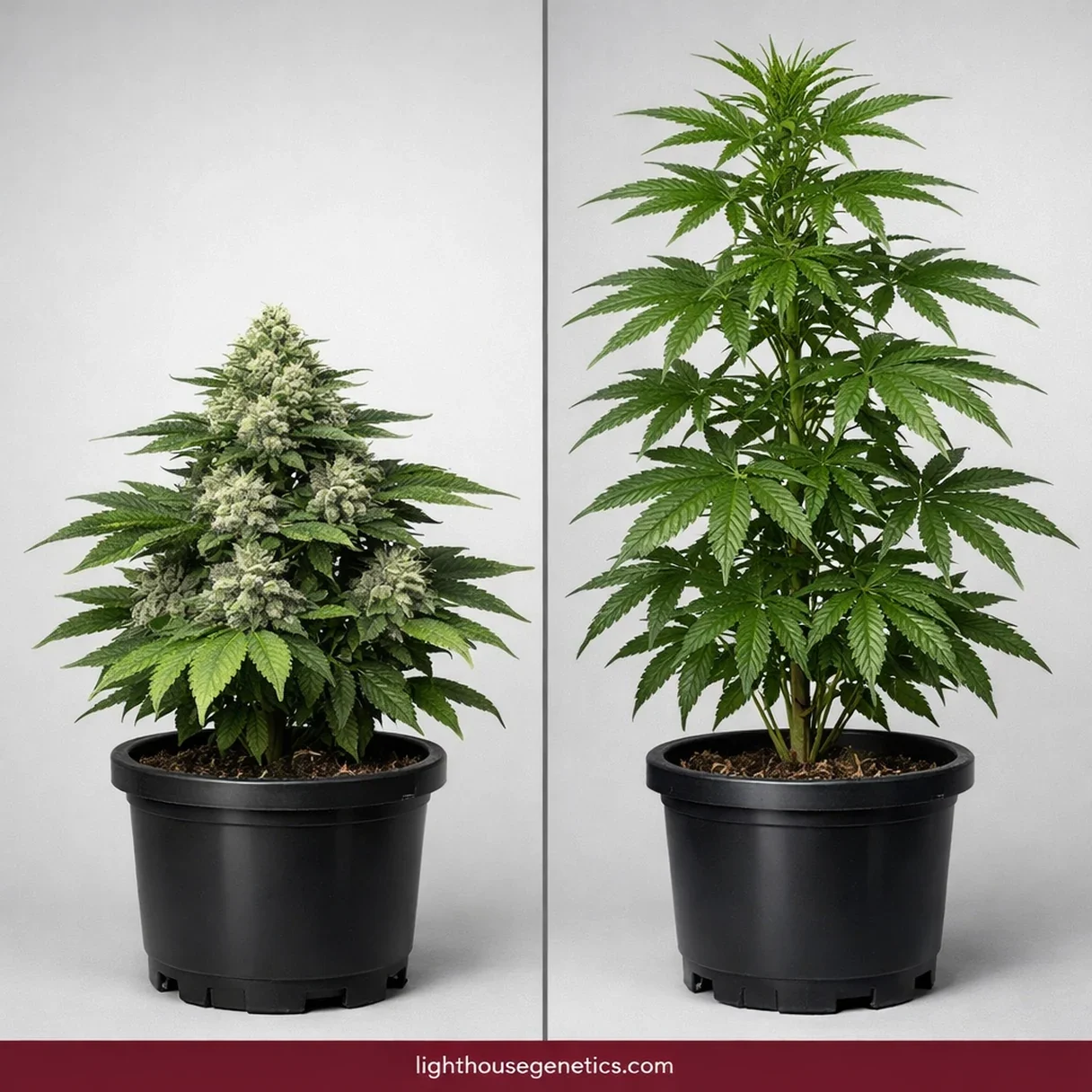
Feminized (photoperiod) seeds produce female plants that flower when the light cycle shortens. Indoors, you control that by switching from 18/6 to 12/12. Outdoors, nature handles it as the days get shorter in late summer. These plants give you more control, bigger yields, and the ability to veg as long as you want — but they need more management.
Autoflower seeds flower automatically based on age, usually starting around week 4 or 5 regardless of light. They are faster (roughly 9 to 12 weeks from seed to harvest, in university outdoor trials), smaller, and more forgiving. The trade-off is less yield per plant and you cannot extend the veg phase if a plant needs more time.
CBD seeds are for growers who want less THC in the jar. Most still contain some THC, and they are milder mainly because there is less of it: in controlled trials, adding CBD didn’t cancel out THC. Harley Quinn CBD (the strain Harlequin) is often sold as a 5:2 CBD-to-THC strain, and our seeds are listed at 7 to 15% THC, so it is mild rather than high-free.
We wrote a full breakdown: Autoflower vs Feminized Seeds: Which Should You Grow?
Beginner-friendly does not mean boring. It means the plant does not punish you for imperfect conditions — inconsistent watering, slightly wrong pH, a heatwave you did not plan for. That forgiveness is what you want on your first or second grow.
Super Skunk is rated Easy, and its breeder calls it a good option for beginners. It flowers in 6 to 7 weeks. Skunk, also rated Easy, is another. It is a Skunk #1 line, and Leafly says Skunk #1 has been parenting a horde of Skunk crosses since it first bloomed, which is why skunk genetics show up in the family trees of so many strains.
For autoflowers, Fat Bastard Autoflower is rated easy and listed for temperate climates.
If you have a few grows behind you and want to push for quality, strains like Frosted Grape Shoes (rated Moderate, 9–11 weeks of flowering) are a good next step. Bruce Banner is listed at 25–32% THC and rated Moderate to grow, and it is a tall plant, so plan your headroom.
More beginner recommendations here: Best Autoflower Strains for Beginners.

If you want to know how to choose cannabis seeds that actually finish, start with the flowering time. Every product page lists it — something like “8 to 10 weeks.” That number is the single most important spec on the page, and most new growers underestimate it.
Indoors, flowering time tells you how long your flower cycle will be after the veg phase. A strain that flowers in 8 weeks versus 11 weeks is three extra weeks of electricity, nutrients, and tent time. If you are running multiple grows per year, those weeks add up fast.
Outdoors, flowering time is a hard deadline against frost. An 8-week flowering strain that starts flowering in early August finishes around late September — fine in southern Ontario and coastal BC, but tight on the prairies, where the first fall frost averages mid-September. A 12-week strain starting at the same time needs until late October. In southern Ontario, where the first frost averages mid-October, that is gambling with frost. On the prairies, it is a lost cause.
Short flowering strains we recommend: Super Skunk (6 to 7 weeks flowering), Afghani (7 to 8 weeks), AK-59 Autoflower (about 8 to 10 weeks from seed to harvest).
If you want to understand what the F1, F2 or F4 on a seed listing means, we explain it in our seed generations guide.
Here is where it gets practical. These are real recommendations based on the growing environment, not generic “top 10” lists.
| Your Setup | Best Seed Type | Recommended Strains | Why |
|---|---|---|---|
| Small tent (2×4 ft / 60×120 cm) | Autoflower | White Widow Auto, Kush XL Auto | About 70–80 cm and up to about 122 cm (28–31 in and up to 48 in); neither needs training |
| Large tent (4×4 ft / 120×120 cm+) | Feminized | Gorilla Glue #4, Jack Herer | Room to SCROG; both heavy yielders with training |
| Outdoor — long season (coastal BC, S. Ontario) | Feminized | Grape Skunk, Northern Lights Skunk | Both listed to finish outdoors in October (Grape Skunk, bred in Canada, by mid-October) |
| Outdoor — short season (Alberta, Sask., N. Ontario) | Autoflower | AK-59 Auto, Fat Bastard Auto | Listed at 8–10 weeks from seed; allow up to 12 outdoors, no light schedule needed |
| Balcony / patio pots | Autoflower | Green Crack Auto, AK-59 Auto | Compact, light-insensitive, fast finishing |
| First grow ever | Either | Super Skunk, Fat Bastard Auto | Both listed as easy; fast finish |
| Max potency | Feminized | Gorilla Glue #4, Bruce Banner | Both in our Very High THC bracket |
| Gentler, CBD-rich | CBD | Harley Quinn CBD, Sour Kush CBD | Less THC per gram; milder, still some high |
Browse all autoflower seeds | Browse all feminized seeds
Understanding how to choose cannabis seeds also means knowing what NOT to do. These are the most common ones.
Picking based on THC alone. A 30% THC strain means nothing if it needs 12 weeks to flower and you are growing outdoors in Alberta. Or if it stretches to six feet (1.8 m) in your 5-foot (1.5 m) tent. THC is one number on the page — flowering time, plant height, and difficulty matter more for actually finishing a successful grow.
Ignoring your climate zone. A tropical sativa bred for equatorial conditions will struggle to finish in a Canadian outdoor grow. Colombian Gold is a classic Colombian sativa, but it needs 10 to 14 weeks of flowering and a long, frost-free season — planting it outdoors in Saskatoon is setting money on fire.
Running all four plants as the same strain. Diversify. If that one strain gets mould, pests, or just does not like your environment, you lose everything. Run two strains minimum — ideally one autoflower for an early harvest and one feminized for a bigger October finish. Learning how to choose cannabis seeds well means spreading your risk, not concentrating it.
Buying from unknown sources. Unstable genetics from no-name seed banks mean unpredictable plants. Some might be male. Some might be more likely to turn hermaphrodite mid-flower and pollinate everything. No seed is herm-proof: in one BC study, 5–10% of plants grew anthers with no stress applied (Punja & Holmes, 2020), so buy from breeders who actually select and stabilize their lines. That consistency is what you are paying for. If you are not sure how to tell a legit seller apart, our guide on what to look for when buying cannabis seeds online walks through the warning signs. We wrote about why that matters: F1, F2, F3, F4 Cannabis Seeds Explained.

If you have never grown before and you are growing outdoors in southern Ontario or coastal BC, here is what we would actually plant with those four legal spots:
That is how to choose cannabis seeds when you only get four — spread your bets. Two autos for speed and insurance. Two feminized for yield and variety. You harvest the autos in August, the feminized from late September into October. Staggered harvests, different effects, and if one plant has problems, you still have three others producing.

If you take one thing from this — knowing how to choose cannabis seeds is not about finding the “best” strain. There is no best strain. There is the right strain for your tent, your backyard, your climate, and your experience level. A White Widow Autoflower grown well in a closet will outperform a high-THC exotic grown badly in a space it was never suited for.
Know your space. Match the seed to it. Start with something forgiving. That is how to choose cannabis seeds that actually deliver — and with only four plants at a time, every choice counts.
Shop All Seeds | Autoflower Seeds | Feminized Seeds | Complete Growing Guide
Autoflowers for the first grow. They are faster, smaller, and do not need a light schedule change. You will make mistakes — autoflowers are more forgiving about most of them. The exception is early stress: sow them straight into their final pot and skip topping. Understanding how to choose cannabis seeds as a beginner means picking the strain that survives your learning curve. Once you have one harvest under your belt, try a feminized strain on your next round.
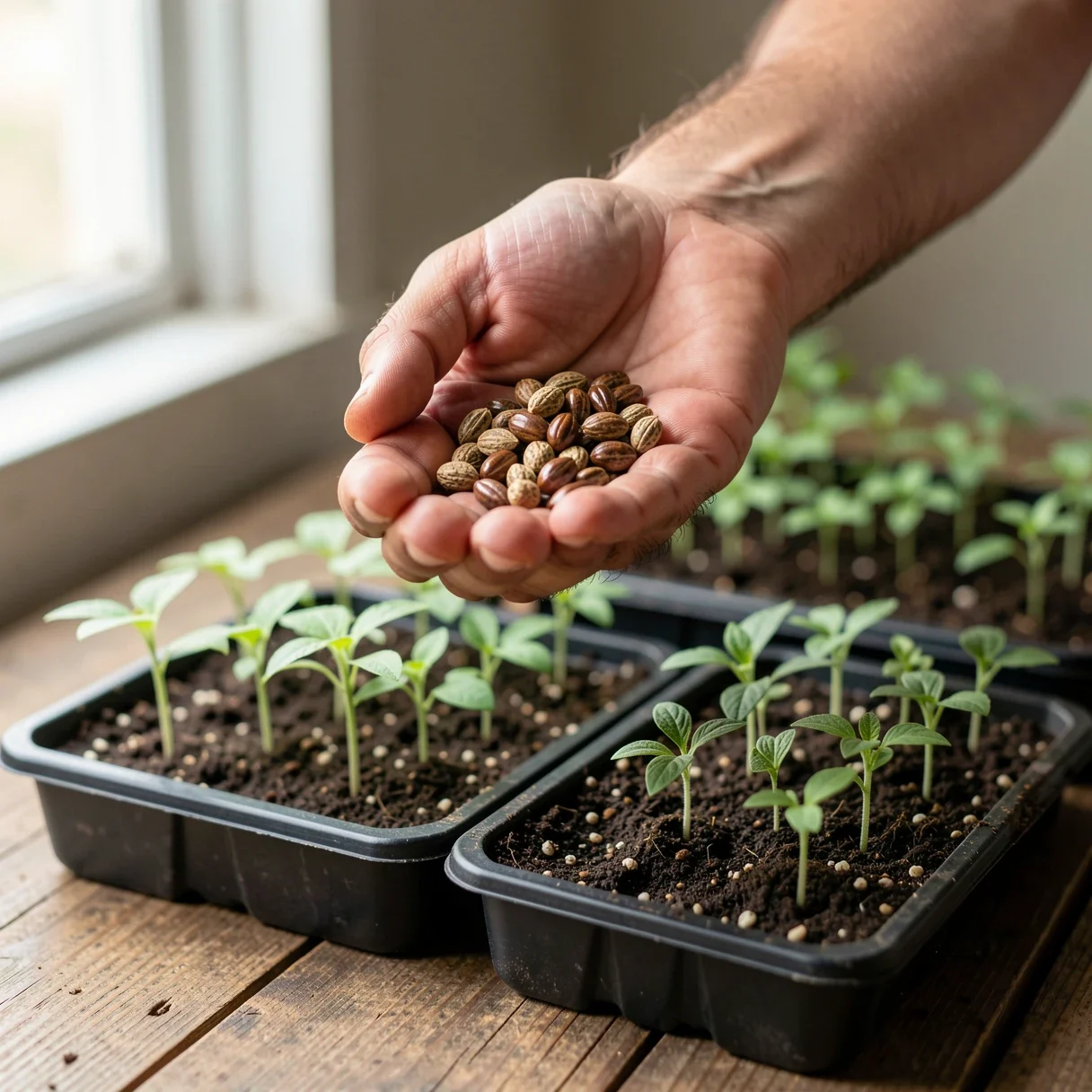
Buy more than four. Germination is not 100%, and occasionally a seedling does not survive the first week. A 5-seed pack gives you a spare. A 10-pack gives you enough for two seasons. We cover germination technique here: A Simple Guide to Germinating Cannabis Seeds.
Yes. Feminized photoperiod plants generally yield more per plant than autoflowers because you can extend the vegetative phase to build bigger plants before flipping to flower. Faster turnaround fits more auto harvests into a year, but in one greenhouse study that did the maths, photoperiods still earned more per square foot (Vergara & Ruterbories, 2026). More on this: Maximizing Yield in Cannabis.
Seeds found in dispensary flower usually come from accidental pollination, and a plant that turned hermaphrodite is a likely culprit (Punja & Holmes, 2020). They are unpredictable: you rarely know what pollinated the flower. A 2020 review in Frontiers in Plant Science notes that seed can grow into genetically variable plants, and that truly uniform seed comes only from true F1 hybrids, made by crossing carefully inbred parent lines. If a male did the pollinating, you might get males that produce no flower. You might get hermaphrodites that pollinate your other plants. For four legal plants, start with feminized or autoflower seeds from a seed bank that breeds and stabilizes their genetics.
Keep reading
Browse all guides to growing cannabis by topic, from germination to harvest.
Ready to grow? Browse premium seeds from Lighthouse Genetics:
Designed & Built by Wynne Web Design