Walk into any grow forum on a Sunday and you will see the same photo posted twenty times: a blurry phone close-up of a sticky bud and the caption “is she ready?” The answer is always the same — look at the trichomes. Clear, cloudy, amber. Wait for cloudy. Wait for some amber. Whatever you do, do not rely on pistil color.
The folklore is right in spirit, but it is also missing the actual science. Knowing when to harvest cannabis is the highest-leverage decision of the entire grow. Three peer-reviewed papers between 2020 and 2023 have now mapped exactly what those tiny mushroom-shaped resin glands are doing chemically as your plant ripens, and the answer changes how you should think about when to harvest cannabis.
This post pulls those three papers together: Livingston and colleagues 2020 in The Plant Journal, Sutton, Punja and Hamarneh 2022 in Plant Phenome Journal, and Punja, Sutton and Kim 2023 in Journal of Cannabis Research. Together they answer what trichomes are, what their color actually means, when cannabinoid content peaks, and why waiting too long can cost you potency. The short version: trichomes are still the right tool for deciding when to harvest cannabis — you just need to read them better than the forum advice does.
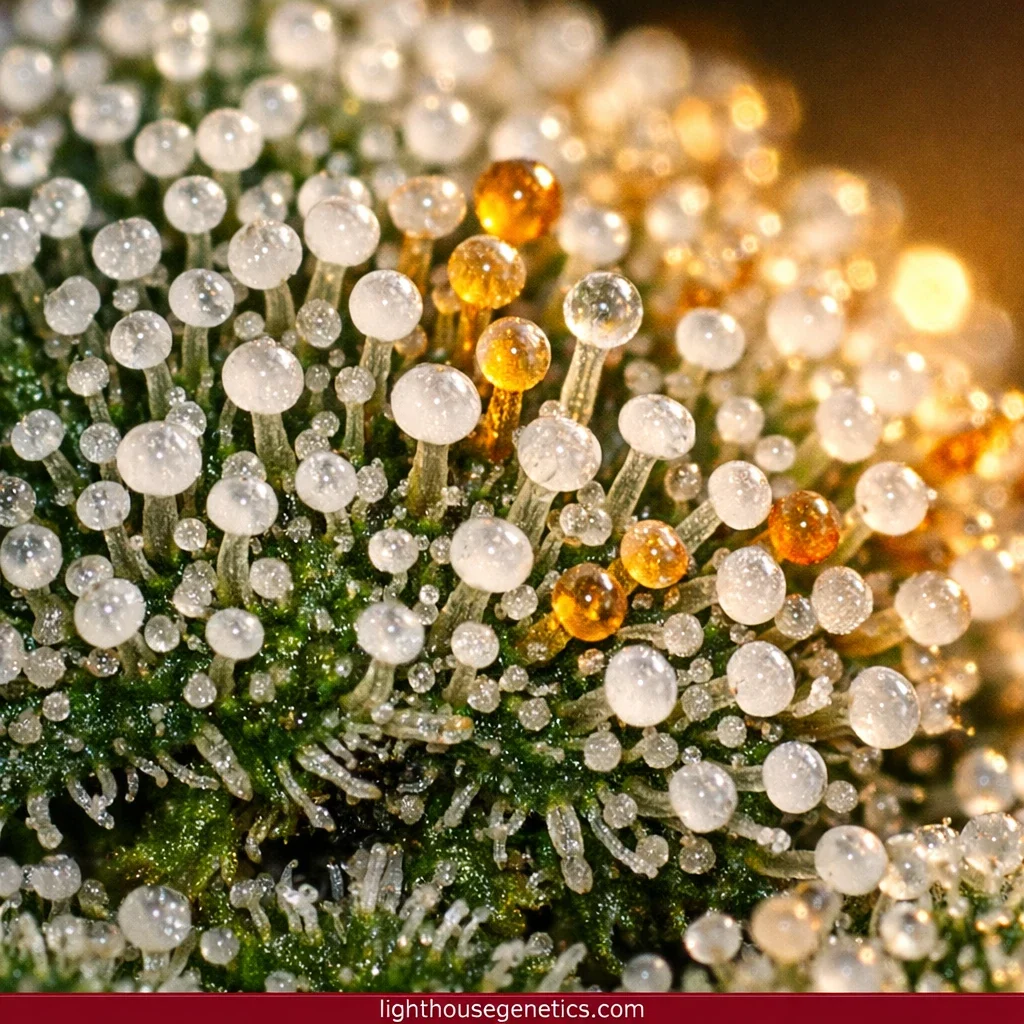
Decide when to harvest cannabis by looking at the glandular trichome heads on the bud (not the leaves) under at least 30× magnification. The clean rule of thumb backed by the research: harvest when about 70 to 90 percent of the glandular trichomes are milky white, with maybe 10 to 30 percent amber, and very few still clear. Earlier than that and the cannabinoids are not at peak. Later than that, particularly with widespread amber and visible browning, the trichomes are senescing and total THC begins to drop. Pistil color (orange vs white) is a much weaker signal — it varies by cultivar and by light intensity and is unreliable as a primary harvest indicator.
That is the whole answer to when to harvest cannabis in three sentences. The rest of this post is why those numbers, what each color stage actually means biochemically, and how to apply this to your specific strain and setup.
Glandular trichomes are tiny, club-shaped or mushroom-shaped resin glands that cover the surface of cannabis flowers and surrounding bracts. They are where cannabinoids and terpenes are made and stored. There are two main types relevant to harvest:
The Livingston paper showed that stalked trichomes likely develop from sessile ones during maturation. That is the underlying biology of “the bud is getting frosty over time” — sessile glands are progressively maturing into stalked glands packed with cannabinoid biosynthesis machinery. Stalked trichomes show blue autofluorescence under UV correlated with high cannabinoid content; sessile and mature/senescent glands show a red-shifted autofluorescence correlated with lower cannabinoid content. That is the cellular signature behind what the eye reads as “frostier.” It also explains why trichome color is the right signal for when to harvest cannabis at any scale.
The reason trichomes change color is that the resin head fills, the cannabinoid concentration rises, and then the gland eventually starts to break down. The Punja, Sutton and Kim 2023 paper documented this color progression formally: “the color of the resin transitions from clear (translucent) to cloudy (milky white) and progresses to amber (brown)” as trichomes mature. They quantified it across the 8-week flowering period and found that decreased translucency and increased “red score” values progressed steadily through weeks 3, 5 and 7, with browning prominent by week 8.
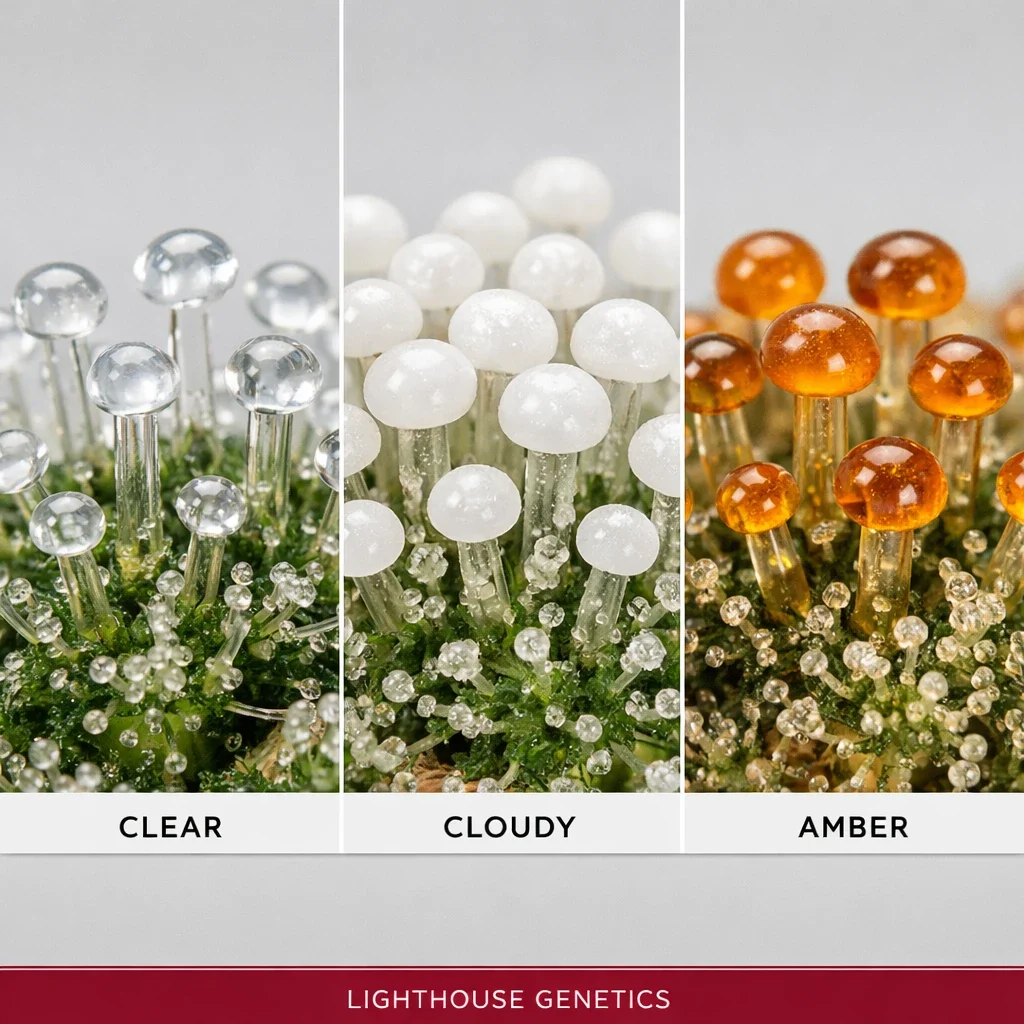
Here is what each stage actually represents, and what it means for when to harvest cannabis:
Knowing when to harvest cannabis comes down to reading where most of your trichomes sit in this curve. Most growers and most cultivars hit peak somewhere around weeks 7-9 of flowering for indica-leaning photoperiod strains, weeks 9-12 for sativa-leaning, and 8-11 weeks total for autoflowers from seed.
The Sutton, Punja and Hamarneh 2022 paper in Plant Phenome Journal took the clear-cloudy-amber rule of thumb and put real numbers behind it for the first time. The team built an automated computer-vision pipeline that could photograph buds, identify individual trichomes, and classify each one as clear, milky, or brown across the entire flowering window.
They tested four commercially grown strains: Afghan Kush, Green Death Bubba, Pink Kush, and White Rhino. Across all four cultivars, the clear → milky → brown progression curves looked remarkably consistent — clear glands dominated early, milky/cloudy peaked in the middle of the flowering window, and brown glands accumulated in the final weeks. The exact week-by-week percentages varied somewhat between cultivars, which is the practical lesson: every strain has its own ripening curve, but the shape of the curve is universal.
The authors also noted directly that “cannabinoid content and quality varies over the 8-week flowering period to such an extent that the time of harvest can significantly impact product quality.” That is the core point. Deciding when to harvest cannabis is not cosmetic — the chemistry of the bud genuinely changes from week to week. The same bud, harvested two weeks early or two weeks late, is meaningfully different smoke.
The classic backup signal — wait until the pistils (the orange/red hairs) have all turned brown and curled in — is much weaker than trichome color. Pistil color responds to a mix of variables, including light intensity, humidity, late-season nutrient stress, and individual cultivar genetics. Some strains will have fully orange pistils with mostly clear trichomes. Others will still have lots of fresh white pistils when most trichomes are already cloudy.
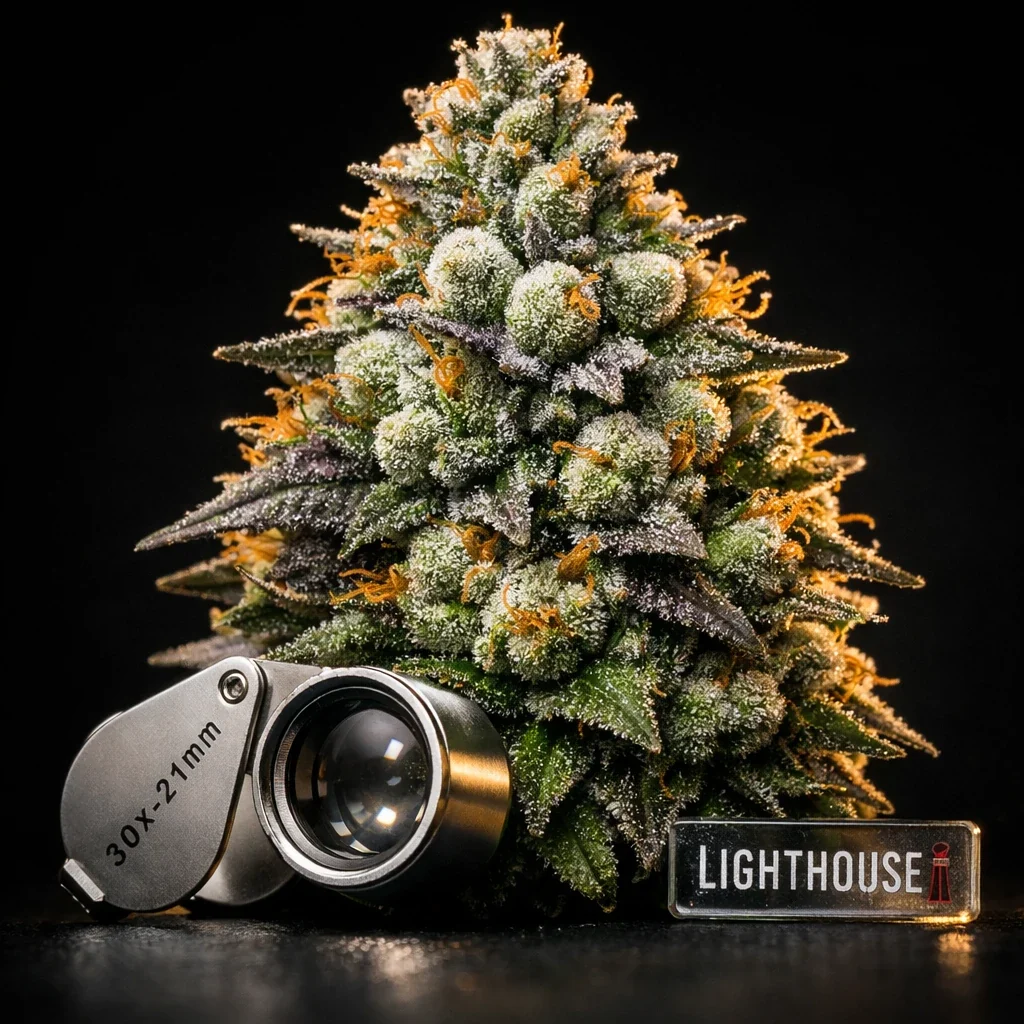
Use pistil color as a coarse “is the plant in late flower at all” tell, but never as the primary signal for when to harvest cannabis. Use trichome color to actually decide when to harvest cannabis. A 60× pocket microscope or jeweler’s loupe is the cheapest piece of grow gear that pays for itself instantly. A USB digital microscope plugged into a phone is even better.
The best practical protocol for deciding when to harvest cannabis on your specific plant:
This is genuinely the highest-leverage hour of your entire grow. You spent weeks perfecting light spectrum and nitrogen feeding. Don’t blow it by missing the harvest window by ten days.
Different cultivars have different ripening profiles, and different optimum windows for when to harvest cannabis. A few rough patterns:
Genetics drive the ripening curve. The trichomes still tell you the same story — clear, cloudy, amber — but the calendar moves around them. Use trichome color, not the calendar, to decide when to harvest cannabis.
For most growers chasing maximum THC and a clear-headed effect, aim for ~80% cloudy with 10-20% amber and a few clear remaining. For a heavier, sleepier effect, push to 30-50% amber. Past 50% amber you are losing potency.
Yes. The decision of when to harvest cannabis is genuinely impossible to make accurately by eye. A 60-100× jeweler’s loupe costs ~$10. A USB digital microscope is ~$25. Either is worth it.
Use pistils as a coarse signal that the plant is in late flower (most pistils have darkened and curled inward). Then use trichomes to make the actual call. Pistils alone will get you in the rough zip code; trichomes will get you to the right address.
Yes. Top colas often ripen 5-7 days before lower bud sites. Selectively harvesting the top, leaving the rest under the light, and harvesting again 5-7 days later is a legitimate technique. You get a bigger total dry weight and tighter optimum timing on each section.
Probably yes, modestly. The Livingston group’s later 2024 work on diurnal trichome metabolism found that primary and secondary metabolism in the trichome cycle through the light period. Most experienced growers chop just before lights-on, when terpene levels are typically reported as highest. The harvest-window decision (when to harvest cannabis at the week scale) matters far more than the time of day.
Some strains and some environmental conditions slow ripening. Check that you have not overfed nitrogen in late flower (covered in our nitrogen guide) — excessive late N can delay ripening. Also rule out stable but slow-finishing genetics (some hazes really do take 12+ weeks). A modest taper at week 8-9 often nudges the plant toward maturity. You do not need to flush before harvest, but reducing late-flower nitrogen is reasonable.
Slightly. Plants run on a longer day length such as a 13 hour photoperiod may flower a touch later and pack more bud at maturity, but the trichome ripening curve still looks the same — clear, cloudy, amber. Same signals, possibly shifted by a few days.
Roughly 5-10 days for most strains, sometimes more. Once you hit ~70% cloudy, daily checks become important. The transition from “ready” to “past peak” can be quick, especially in autos and fast-finishing hybrids.
The decision of when to harvest cannabis is one of the few places in the entire grow where folk wisdom and lab science actually agree. The trichome color rule that growers have repeated for thirty years is the same rule that three peer-reviewed papers between 2020 and 2023 have now formalized. Clear is too early. Mostly cloudy with a fraction amber is peak. Mostly amber and senescing is past peak — and yes, total THC drops once you cross that line.
Get a loupe, learn the curve for your specific strain, and ignore the calendar. The plant tells you when to harvest cannabis as long as you bother to look. Pair it with the rest of the late-flower playbook: a stable photoperiod, no need to flush, and a slow controlled dry at the right temperature. Browse the full feminized seed catalog if you are picking your next strain — the post-purchase guides cover everything that comes after.
Want to keep learning? Browse our full library of cannabis growing guides — everything from germination to harvest, in one place.
Ready to grow? Browse premium seeds from Lighthouse Genetics:
Designed & Built by Wynne Web Design