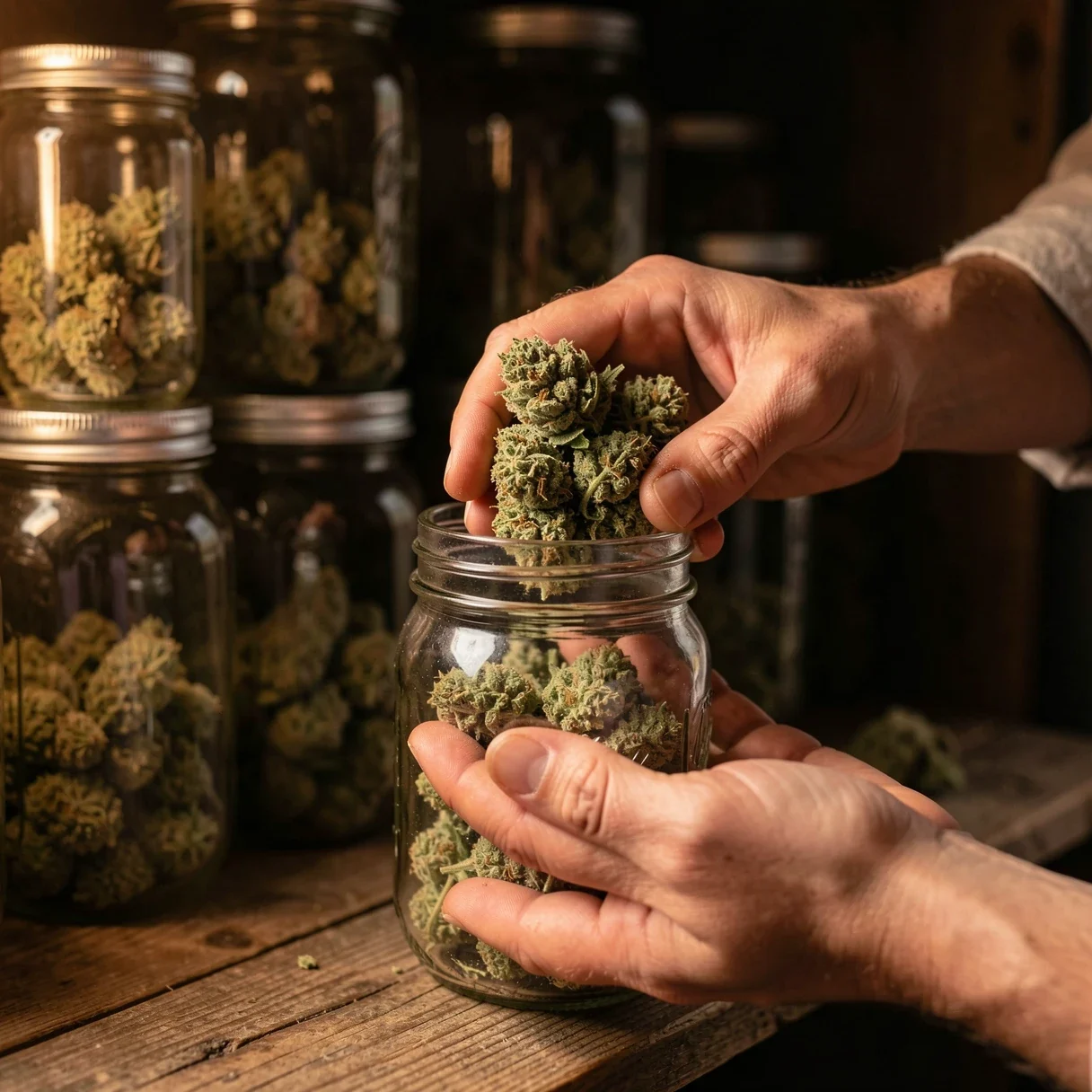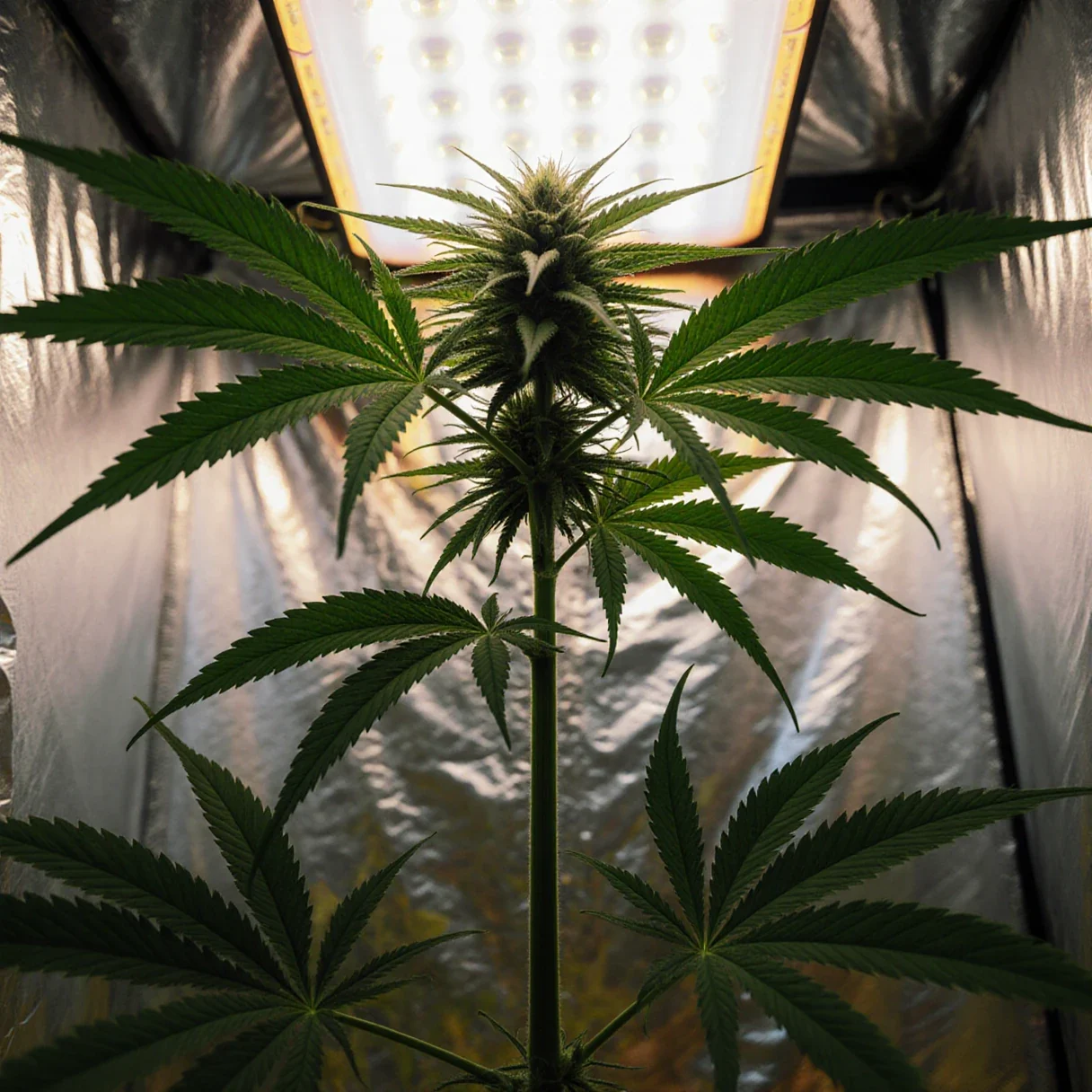
You just harvested a beautiful pound. The buds are dense, frosty, loaded with the sharp gas-citrus-pine aroma that made you fall in love with the strain. Two weeks later the jars smell like hay. The color faded. The flavor is flat. What happened? Most likely the dry went wrong, and the drying temperature for cannabis is the first thing to check.
Terpenes, which carry much of that citrus and pine, are fragile — they are volatile organic compounds that slowly evaporate even at room temperature, and heat speeds that up. The cannabinoids are sturdier, but not bulletproof. Get the drying temperature for cannabis wrong, and the most volatile terpenes are the first thing you lose. Dialing in the right drying temperature for cannabis is not guesswork: one hemp study tested heat directly, and terpene retention fell steadily as the air got hotter.
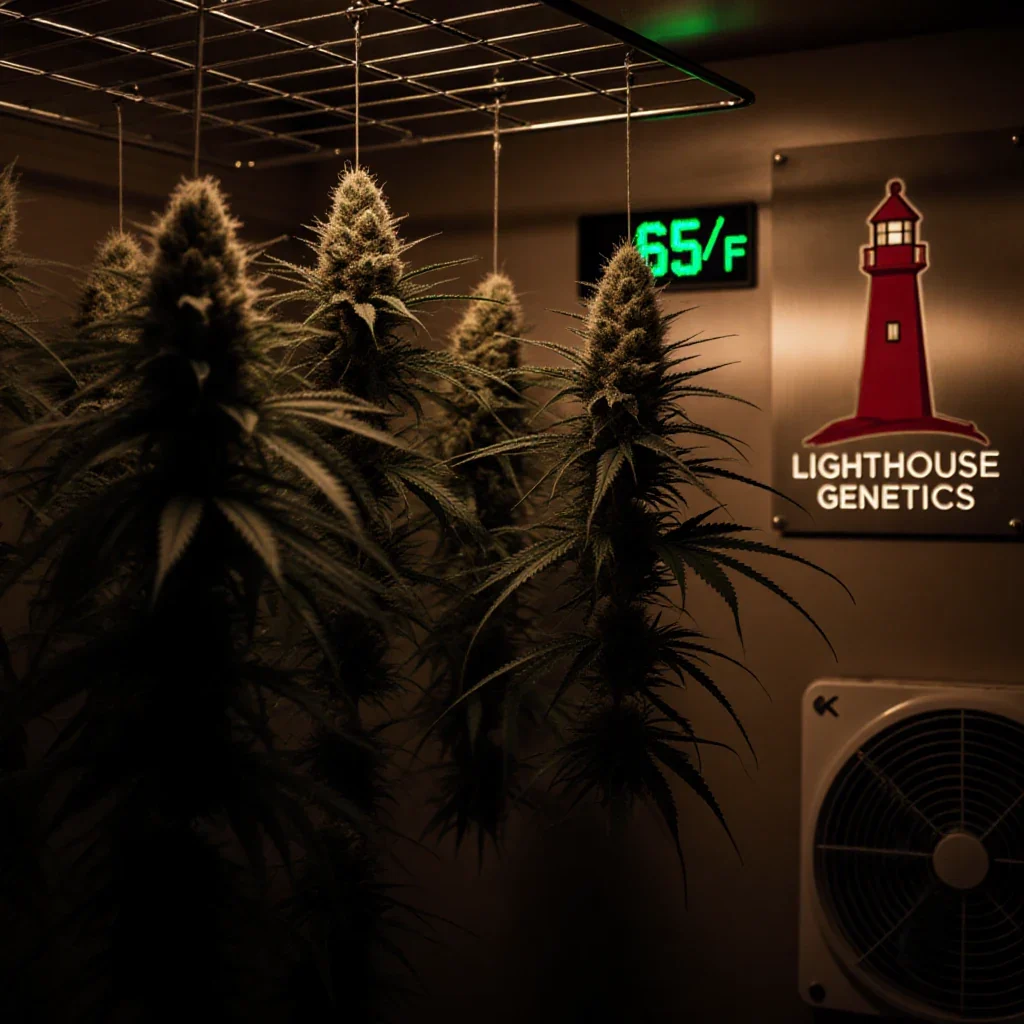
The best drying temperature for cannabis terpenes is 59-68°F (15-20°C) with 50-55% relative humidity, in a dark, well-ventilated room, for roughly a week or two. That temperature sits inside the 59-70°F (15-21°C) range commonly used for drying cannabis, and 50-55% is the humidity Oregon State University Extension gives for slow drying. Many home growers run nearer 60%; if you do, watch harder for mold.
Cool air slows the loss of monoterpenes (the most volatile, flavor-defining terpenes), and warmer air speeds it up. Cool, damp air is also what mold likes, so keep air moving and check your buds every day. A quick dry is less of a problem than many growers think, as long as it stays cool: in a 2024 cannabis study, sealed chambers of very dry air or gas at 59°F (15°C) dried buds in about six days and kept their terpenes well, while open-air buds at the same 59°F (15°C) and 50-55% RH were still not fully dry after 14 days, and one strain molded. Keep it cool, but make sure it keeps drying.
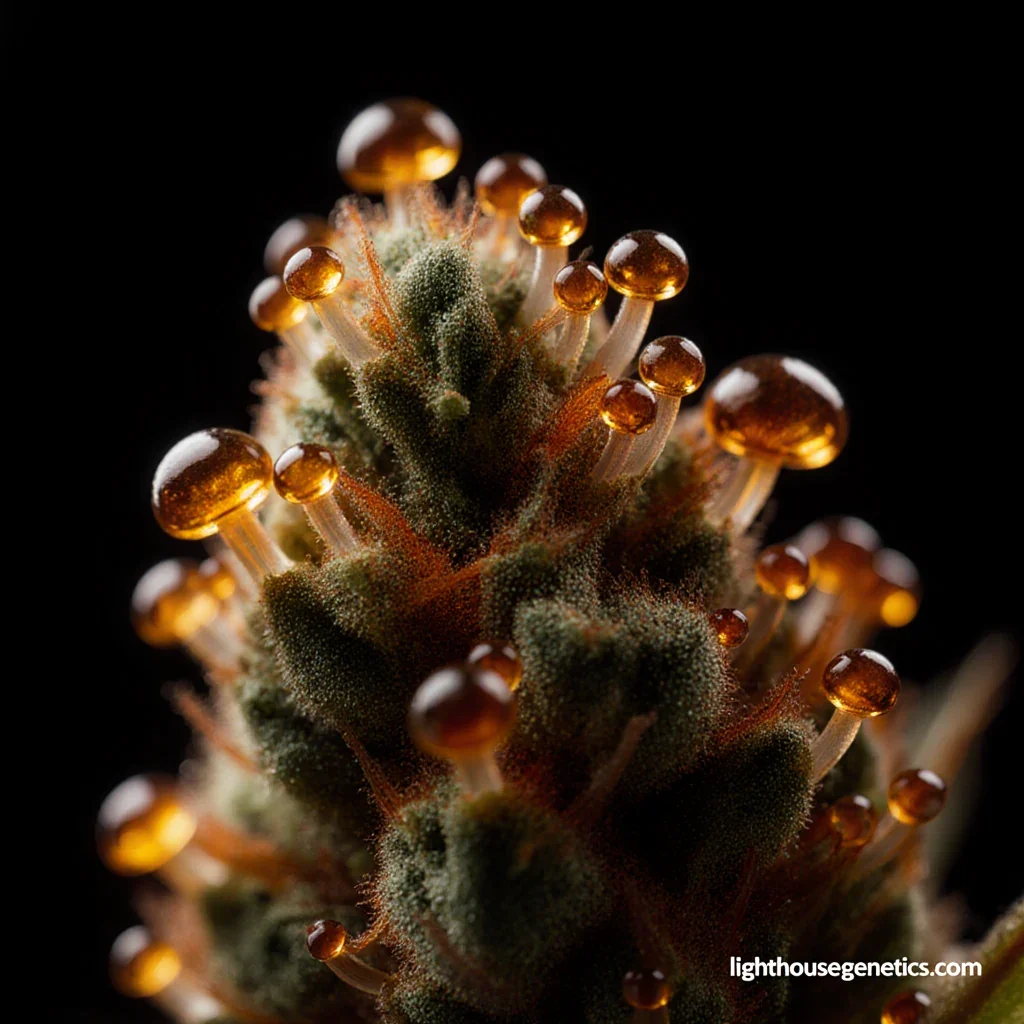
Terpenes are the aromatic compounds behind much of each strain’s smell and taste. Limonene (citrus), myrcene (earthy-mango), pinene (pine), caryophyllene (pepper), linalool (lavender) — these are the molecules doing the work. Chemically, they are volatile organic compounds. Each terpene has a boiling point, and many of them start evaporating at room temperature.
Here are published boiling points of the main cannabis terpenes, roughly ordered by fragility:
The absolute boiling point numbers are a bit misleading for drying. What actually matters is that volatile molecules evaporate at a much lower temperature than their boiling point — just more slowly. At room temperature (72°F / 22°C), drying buds are slowly losing limonene and myrcene the whole time. Warmer air speeds that up: by 85°F (29°C), the pressure pushing these molecules into the air is roughly half again as high. The right temperature is simply one low enough to slow that loss to a crawl, paired with enough airflow to move moisture out without baking the resin. That pairing is what makes a good drying temperature for cannabis actually work.
Here are the drying studies this guide relies on, side by side. Only one of them compared air temperatures (Chen 2021), and only one compared a fast dry with a slow dry at the same temperature (Birenboim 2024):
| Study | Setup and what was measured | Temperature | Humidity | Drying time | Result |
|---|---|---|---|---|---|
| Birenboim 2024, sealed chambers | Two medical cannabis strains on trays in lab chambers of dry air, nitrogen or a low-oxygen gas mix; terpenes, cannabinoids, mold | 15°C (59°F) | Under 10% RH | 6 days | Fully dry, no visible mold. Monoterpenes held near fresh levels, and the gas mix did best (up 26% in one strain). Myrcene still fell in plain dry air and nitrogen. |
| Birenboim 2024, open air | Same two strains in a ventilated room, standing in for the usual slow industrial dry | 15°C (59°F) | 50-55% RH | 14 days and still not fully dry, then 1 day over silica gel | About 80% of one strain’s buds heavily infested with mold by day 12. Myrcene fell at least as much as in the fast dry-air chamber (20% vs 19% in one strain, 29% vs 15% in the other). |
| Chen 2021 | Three CBD hemp varieties (flowers and leaves), room air vs hot air; terpenes and CBD | Room air, then 40-90°C (104-194°F) | Not in abstract | 30 hours in room air, down to 3.5 hours at 90°C (194°F) | Terpene retention fell from 82.1% (room air) to 29.9% (90°C / 194°F). CBD retention 83.8-98.6%. |
| Spadafora 2024 | Three field-grown CBD and CBG varieties, tray drying vs freeze-drying; aroma compounds and cannabinoids | Trays 18°C (64°F); freeze dryer -60°C (-76°F) | Trays 55% RH | Trays 6 days; freeze dryer 24 hours | Freeze-drying kept the acid cannabinoids but lost more aroma compounds than tray drying. |
| Ross & ElSohly 1996 | Indoor-grown cannabis, fresh vs air-dried; aroma oil composition and smell recognition | Not in abstract | Not in abstract | Not in abstract | Air-drying did not change which aroma compounds were present, and people familiar with the smell still recognized it. |
| Das 2022 (review, not a trial) | Summary of current industry drying practice | 18-21°C (64-70°F) | 50-55% RH | Usually 5-6 days hanging; about 4-5 days on screens | Describes this as the “slow drying” method industry still uses. |
Our read: in these papers, heat costs terpenes, and at a cool temperature a short dry cost no more of them than a long one. In Chen’s hemp trial, hotter air dried faster and kept fewer terpenes, but heat and speed rose together there, so it can’t show whether speed matters on its own.
Birenboim held the temperature at 59°F (15°C). Its chambers of very dry air or gas (under 10% RH) finished in 6 days, while the open-air room at 50-55% RH was still drying at 14. The fast dry in plain dry air lost no more myrcene than the slow open-air dry (in one strain, about half as much), and only the slow open-air buds molded. At a cool temperature, the extra days didn’t buy terpenes; they added mold risk, and the authors advise keeping drying short.
The limits: that fast dry used lab chambers under 10% RH and two strains, and none of these studies timed a home dry room. Freeze-drying is a separate case: fast, but it lost aroma.
That clears up a tension in common advice. Oregon State University Extension calls “slow drying” the most common method and gives 50-55% RH for it, and the 2024 paper describes traditional drying as taking two or three weeks. But “slow” there means drying in a room rather than in a convection, infrared or freeze dryer, and it sets no length: the 2022 review puts the hang dry at 5-6 days, Spadafora’s tray dry finished in 6 days at 64°F (18°C), and OSU warns that poor control “can lead to long drying times and poor-quality flowers.” So keep it cool, not long.
Based on the research and common grower practice, a proper dry room — dialed in to the right drying temperature for cannabis — hits these targets:
Hit those numbers and you preserve the terpene profile that makes your specific strain worth growing. This matters especially for aroma-forward cultivars like Orange Creamsicle and Forbidden Fruit — strains bred for a specific terp profile that a bad dry will flatten into generic weed smell. This is the whole reason the right drying temperature for cannabis matters so much for terp-forward strains.
The same 59-68°F (15-20°C) drying temperature for cannabis is a good starting point for every strain, but bud size and density change how fast it dries. Research on cannabis drying has found that different cultivars can respond differently to the same conditions, so watch your own buds rather than the calendar:
The best drying temperature for cannabis terpenes is 59-68°F (15-20°C) at 50-55% RH, in the dark with gentle airflow, for roughly a week or two. The temperature sits inside the 59-70°F (15-21°C) range commonly used for drying cannabis, the humidity is the extension figure, and the research points one way on heat: it costs terpenes. Go too hot and you lose the compounds that make your strain special. Go too humid, too stagnant or too slow and you risk mold. The target is simple and worth hitting.
Drying is the stage where a lot of growers lose quality they already paid for in genetics, light, and nutrients. Get it right and everything else you did matters. Get it wrong and none of it does. Start with genetics worth preserving — browse our full seed catalog for high-terpene strains. If you are just getting started, our germination guide, seed storage guide, and nitrogen feeding guide cover the fundamentals. The plants did the hard part — do not undo it at the finish line.
About 59-68°F (15-20°C) at 50-55% relative humidity, in the dark, for roughly a week or two. Heat is what costs the volatile monoterpenes (limonene, myrcene, pinene) that define each strain’s smell and flavor, so keep the room cool.
Yes, if the room stays cool. In a 2024 study, buds dried in about six days in sealed chambers of very dry air or gas at 59°F (15°C) kept their terpenes well. At home, though, a faster dry usually means warmer air, and heat costs terpenes. Don’t speed it up with heat: the wrong drying temperature for cannabis costs you flavor at any speed.
The buds dry faster, which isn’t a disaster on its own if the drying temperature for cannabis stays cool. Many growers find a very dry room leaves buds crisp outside before the stems are ready, and blame a rushed dry for a harsh, “hay” smell; those are grower reports, not tested results. Aim for 50-55% RH and check the stems, not just the outside of the bud.
Freeze-drying (lyophilization) is fast and is getting attention from commercial producers. The research so far is mixed: it does a good job of keeping cannabinoids in their original acid form, but a 2024 study found freeze-dried flower lost more of its aroma compounds than tray-dried flower, and other work found myrcene and limonene can break down during freeze-drying in some strains. The equipment is expensive, and for terpenes a cool, dark dry is still the safe choice at home.
They are linked — together they determine vapor pressure deficit (VPD), which controls how fast moisture leaves the bud. Both need to be right. Temperature has the more direct link to terpene loss, because warmer air makes terpenes evaporate faster. Humidity mostly sets how fast the water leaves.
If you can hold the temperature at 59-68°F (15-20°C) and the humidity at 50-55% with the tent closed, yes. A tent with the lights off sits at about the temperature of the room around it, so in a warm house it will run above this range — check with a calibrated thermometer/hygrometer. Empty grow tents with gentle exhaust are actually excellent dry rooms because they are light-tight.
Some growers dry in a humidity-controlled wine fridge at around 60°F (16°C). Done right it works. Done wrong (a regular fridge is far too cold, and fridges can run too dry) it produces worse buds than a proper room dry. Humidity control is the hard part.
Keep reading
Browse all our cannabis growing guides by topic, from germination to harvest.
Ready to grow? Browse premium seeds from Lighthouse Genetics:
Designed & Built by Wynne Web Design