Watering sounds like the easy part of growing. You give the plant a drink, it grows. But ask any experienced grower what kills the most first-time crops, and “loving them to death with the watering can” comes up before pests, before nutrients, before light. More plants stall or die from too much water than too little, and the symptoms of both look almost identical — which is exactly why so many people get it wrong twice in a row.
The good news is that watering cannabis plants well isn’t complicated once you stop treating it as a schedule and start treating it as a cycle. This walks through how often to water, how much to give, how to read the plant when something’s off, what’s actually in your tap water, and how the right approach shifts from seedling to harvest.
Cannabis roots need two things that fight each other: water and oxygen. A pot that’s constantly wet has no air pockets left in the medium, and roots sitting in airless, waterlogged soil can’t breathe. They suffocate, then they rot, and a plant with rotting roots can’t drink — so it droops and looks thirsty, which fools the grower into watering more. That death spiral is the single most common way new growers lose a plant, and avoiding it is what watering cannabis plants is really about.
The fix is the wet-dry cycle, and it’s the heart of watering cannabis plants. You soak the medium thoroughly, then you wait — let it dry down until it’s almost (not completely) dry before you water again. That dry-back is when oxygen gets pulled back into the root zone and roots actually grow, reaching out in search of moisture. A plant ridden through proper wet-dry cycles builds a bigger, healthier root system than one kept permanently damp. So the real skill is knowing when the medium has dried down enough, not following a calendar.
The easiest way to read that? Lift the pot. A freshly watered pot is heavy; a dried-out one is surprisingly light. Pick it up right after you water, pick it up again two or three days later, and your hands will learn the difference faster than any meter. When the pot feels light and the top inch or two of medium is dry to the knuckle, it’s time. This weight check is the most reliable, zero-cost tool you have for watering cannabis plants on the plant’s terms instead of your own.
There is no fixed answer, and any guide that hands you “water every three days” is setting you up to fail. How often you’ll be watering cannabis plants depends on a stack of variables that change constantly through the grow:
Because all of those move, the answer to “how often” is always the same: water when the pot tells you, not when the calendar does. Early in a grow you might water once every four or five days. By peak flower the same plant might want water daily. Let the pot weight and the dry-down guide you, and watering cannabis plants stops being a guessing game.
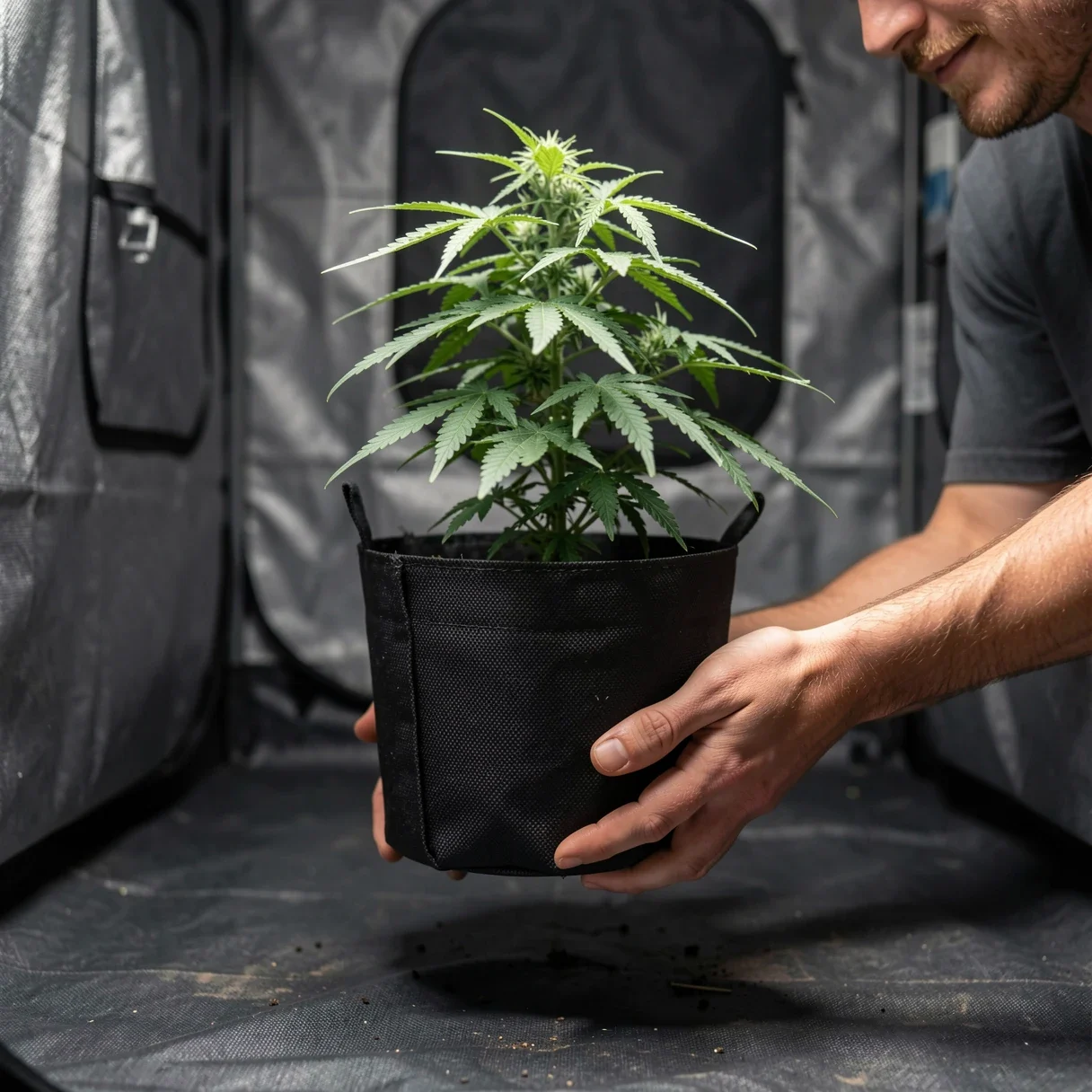
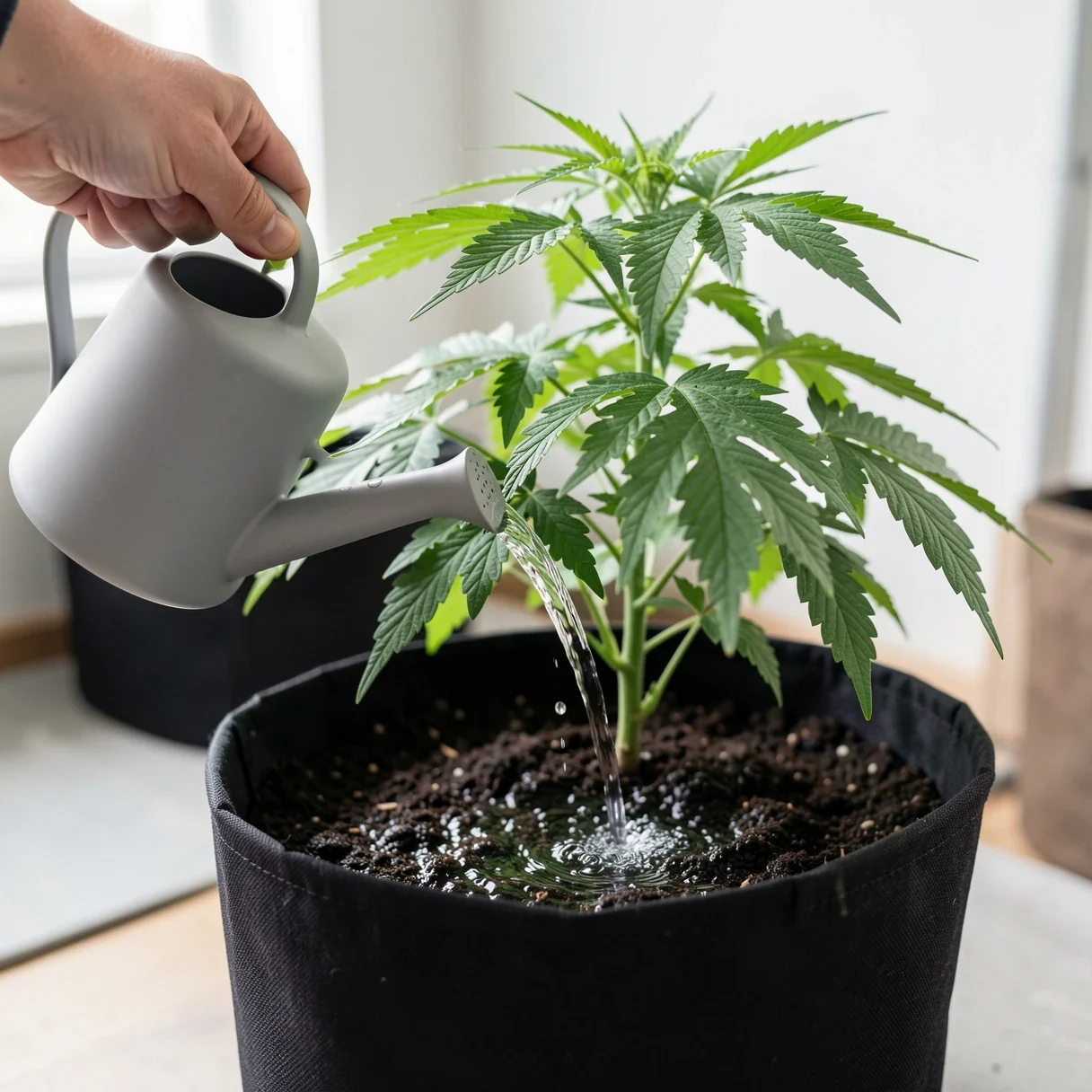
When you do water, water thoroughly. Shallow little sips keep only the top of the medium moist, so roots stay near the surface and the bottom of the pot swings between bone-dry and stale. The standard approach to watering cannabis plants is to water to runoff: pour slowly and evenly across the whole surface until roughly 10–20% of what you poured drains out the bottom.
That runoff matters for more than “the pot is full,” and it’s an underrated part of watering cannabis plants. Each thorough watering flushes out the salts that build up from nutrients, stopping them from accumulating to toxic levels. If you only ever give small amounts with no runoff, those salts concentrate and you’ll see tip burn that looks like overfeeding. The runoff is also a diagnostic window — checking its pH and EC tells you what’s happening in the root zone, which is central to dialing in your pH for cannabis and feeding.
One caveat: water to runoff, but don’t leave the plant standing in the drainage. Empty the saucer. A pot wicking water back up out of a tray of runoff never gets its proper dry-down, and you’re back to the waterlogged-roots problem. In coco the rules of watering cannabis plants loosen — coco is an inert, fast-draining medium, so frequent watering with generous runoff is normal and the dry-down is far shorter than in soil.
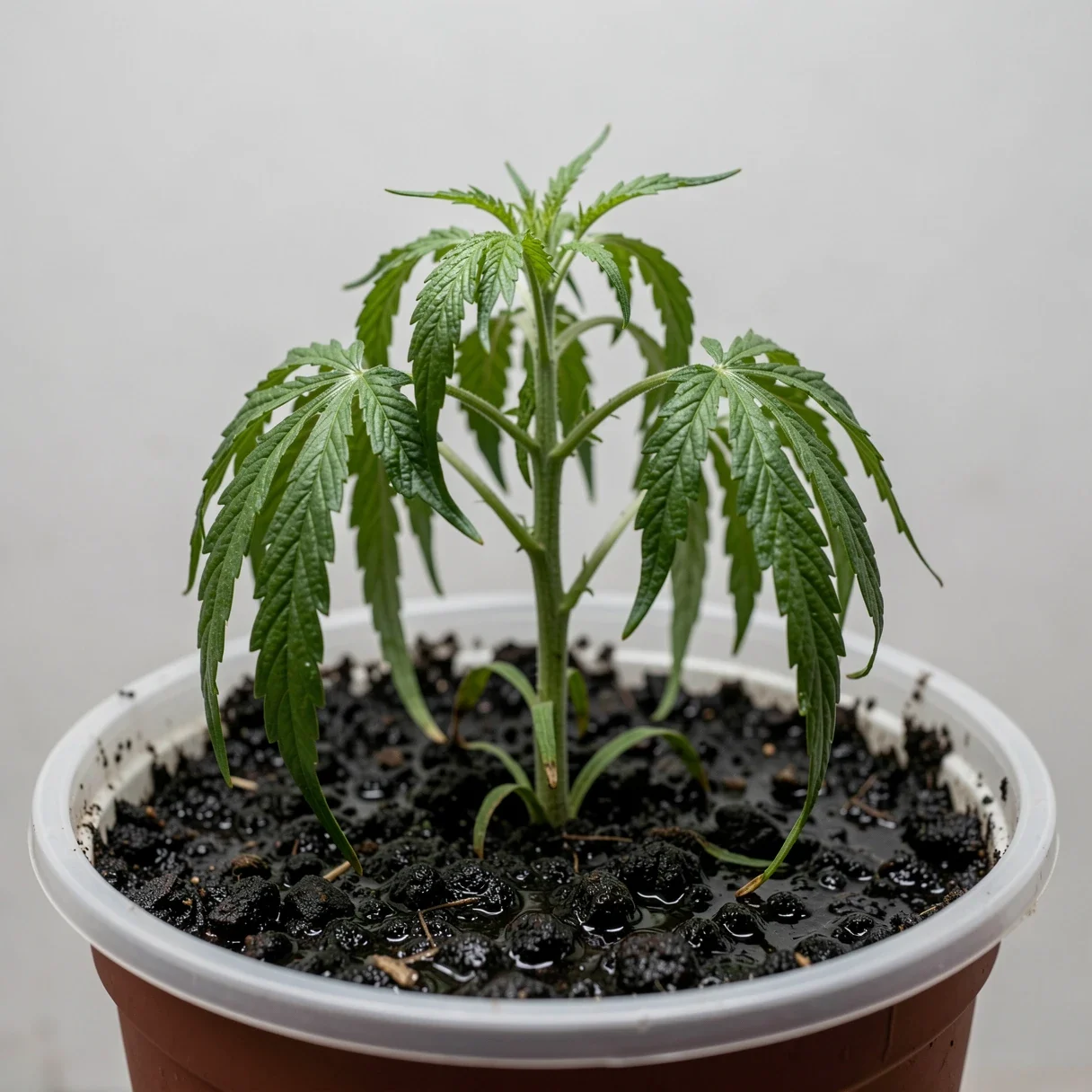
Here’s the cruel twist that catches everyone: overwatered and underwatered plants look almost the same. Both droop, which is what makes watering cannabis plants so deceptive at first. The difference is in the feel of the leaves and the weight of the pot.
| Sign | Overwatered | Underwatered |
|---|---|---|
| Leaf feel | Drooping but firm, puffy, “swollen” — curl down from the stem | Drooping and thin, papery, limp — they wilt |
| Pot weight | Heavy, medium still wet | Light, medium dry |
| Speed of droop | Persistent, slow to recover | Dramatic, but bounces back fast after a drink |
| Other clues | Slow growth, yellowing, possible root-rot smell, fungus gnats | Dry, crispy leaf edges; bone-dry topsoil pulling from the pot wall |
The tell that settles it is the pot. Drooping plant in a heavy, wet pot? You’re overwatering — back off and let it dry down hard before the next drink. Drooping plant in a light, dry pot? It’s thirsty — water it and watch it perk up within hours. This is why pot weight is the cornerstone of watering cannabis plants: it turns two identical-looking problems into two obvious, opposite answers.
Of the two failure modes in watering cannabis plants, underwatering is the easier to fix, because a thirsty plant recovers fast. Overwatering is the dangerous one because the damage compounds — and because the instinct (the plant looks droopy, give it water) is exactly wrong. If you’re going to err while learning to water cannabis plants, err slightly dry. A plant that wilts a little and bounces back is healthier than one drowning in a swamp. Note that a constantly cold, wet medium reads as overwatering too — if your dry-downs are crawling, check your root zone temperature, because cold roots drink slowly and the pot stays heavy for the wrong reason.
Most tap water is fine, but a few things in it are worth understanding before you pour. Watering cannabis plants with the wrong water won’t kill them overnight, but it can quietly drag down a grow.
Chlorine and chloramine. Municipal water is disinfected with one or the other. Chlorine is volatile — leave a bucket out overnight and most of it off-gasses on its own. Chloramine is the catch: it’s chlorine bonded with ammonia specifically so it won’t evaporate, which keeps tap water safe but means letting water sit does nothing to remove it.
At normal tap levels neither will devastate a plant, but in living or organic soil chloramine can knock back the beneficial microbe colonies you’re cultivating. If you run organic soil or add mycorrhizae and microbes, a cheap carbon filter or an aquarium dechlorinator drop solves it. Whether your utility uses chlorine or chloramine is usually listed on its annual water-quality report.
Temperature. Ice-cold water shocks roots and slows uptake; hot water holds little dissolved oxygen. Aim for room-temperature water, roughly 18–22°C (65–72°F). Letting water warm up before you pour is an easy, free upgrade to watering cannabis plants.
pH. The pH of your water decides whether the plant can actually absorb the nutrients in the medium — get it wrong and you’ll see “deficiencies” that aren’t really deficiencies. It’s too big a topic to cram in here, so we cover targets and how to adjust them in the complete pH guide. The short version: soil likes a touch under neutral, coco and hydro run more acidic, and a cheap pH pen pays for itself in a single grow.
Hard water and RO. Very hard tap water (high in calcium and magnesium) can throw off your feeding, and some growers switch to reverse-osmosis water and add their own cal-mag back for full control. For most home growers on average municipal water that’s overkill for watering cannabis plants — plain dechlorinated tap, pH-adjusted, is perfectly good.
The plant’s needs change as it grows, and watering cannabis plants well means adjusting along the way.
This is where overwatering claims the most victims, so watering cannabis plants at this stage is mostly about restraint. A seedling has a tiny root system that can’t drink much, so a soaked pot just sits there waterlogged. Keep the surrounding medium lightly moist, not wet, and water in a small ring around the seedling rather than drenching the whole pot. A spray bottle or a small pour every couple of days is plenty. If you’re still at the sprouting stage, the technique differs — see our guides on germinating cannabis seeds and why seeds fail to germinate, where over-soaking is a leading culprit.
Once the plant has a real root system and is pushing new growth, you can commit to full wet-dry cycles. This is the stage to lock in the lift-the-pot habit: soak to runoff, let it dry down, repeat. Roots chasing the dry-back here build the foundation for a big plant later, so consistent watering cannabis plants now pays off at harvest.
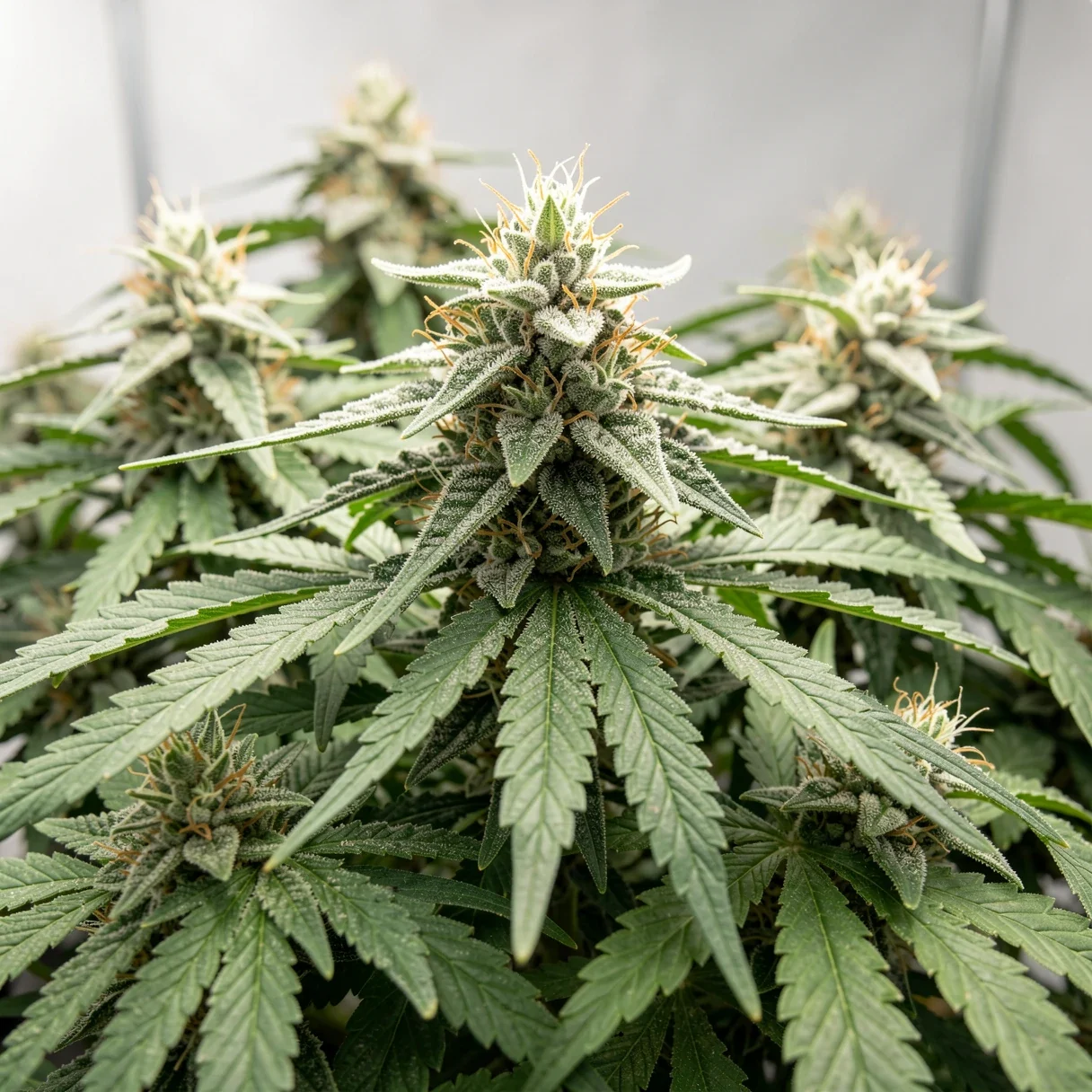
Water demand climbs as the canopy fills out and buds swell — a flowering plant transpires hard and can drink daily in a warm room. Keep cycling — watering cannabis plants in flower just means doing it more often.
Two cautions late in flower: stagnant moisture around dense buds invites bud rot, so airflow matters as much as the watering itself; and some growers run a deliberate, mild dry-down in the final week to nudge resin production. That’s an advanced, easy-to-overdo tactic with real trade-offs — we break down what the science actually shows in our piece on drought stress and THC. For everyone else, steady, even watering right up to your pre-harvest flush is the safer play.
Most growers top-water: pour onto the surface and let gravity pull it down through the root zone. It’s simple, it flushes salts on the way through, and it’s what the wet-dry cycle is built around. For everyday watering cannabis plants, it’s the default for good reason.
Bottom watering — setting the pot in a tray of water and letting the medium wick it up from below — has a niche use. It draws roots downward and can rescue a pot that’s gone so dry the medium has shrunk from the walls and repels top water (hydrophobic soil, where water just runs down the gap and out the bottom without wetting anything). For a stubborn dried-out pot, a bottom soak rehydrates the medium evenly from below.
The downside is it doesn’t flush salts — those get drawn up and concentrate near the surface — so it’s a recovery tool, not a full-time method. Top-water as your default for watering cannabis plants; reach for a bottom soak to save a pot that’s dried out too far.
While you’re getting the feel for watering cannabis plants, it helps to grow something tough. Hardy, vigorous genetics shrug off the occasional too-wet or too-dry week far better than finicky boutique cuts, which buys you room to learn the rhythm of watering cannabis plants without losing a crop. White Widow and Afghani are classic resilient indicas, and Northern Lights Skunk is a long-standing beginner favorite for exactly this reason — sturdy plants that tolerate small mistakes.
Autoflowers are a special case. Because they run on a fixed clock and don’t pause to recover from stress the way photoperiod plants do, watering mistakes cost more — but a robust auto like Gorilla Glue Auto or White Widow Auto is about as forgiving as autos get. Whatever you grow, the principles of watering cannabis plants are the same; tougher genetics just widen your margin for error. Browse the full feminized seed collection or autoflower seeds to find a sturdy starter.
The honest answer to how often to be watering cannabis plants is: only when the pot tells you to — not on a fixed schedule. Lift the pot; when it feels light and the top inch or two of medium is dry, water. In practice that’s anywhere from daily (large plant, hot room, coco) to every four or five days (small plant, cool room, soil), and it changes constantly through the grow.
Drooping leaves that feel firm and puffy and curl down from the stem, on a pot that’s still heavy and wet, with slow growth. The giveaway is the heavy pot — a thirsty plant droops too, but its pot is light and dry. Check the weight before you decide, because that single habit prevents most mistakes in watering cannabis plants.
Usually yes — tap water is fine for watering cannabis plants. Let it reach room temperature, and if your utility uses chloramine or you grow in living soil, run it through a carbon filter or add a dechlorinator first. Adjust the pH before pouring and most municipal tap water works fine.
Only if the pot needs it that often — which does happen with large flowering plants or fast-draining coco. For most soil grows, daily watering cannabis plants keeps the medium too wet and starves the roots of oxygen. Let the dry-down decide.
Watering cannabis plants is the most basic skill in growing and the one most people overthink. Forget the schedule. Soak the pot thoroughly, let it dry down until it’s light and the top is dry, then soak it again — and let the plant’s pot weight, not the calendar, set the pace. Err slightly dry rather than wet, learn the difference between a droopy-and-heavy pot and a droopy-and-light one, and use clean, room-temperature, pH-adjusted water. Nail that rhythm and you’ve cleared the hurdle that trips up more first-time growers than anything else — because watering cannabis plants well is really just paying attention to the pot.
For how watering cannabis plants ties into feeding, climate, and the rest of a healthy grow, dig into the rest of our cannabis growing guides.
Shop Feminized Seeds | The Right pH for Cannabis | Spot & Fix Nutrient Deficiencies | All Growing Guides
Sources: US EPA — Chloramines in Drinking Water; Waterlogging (agriculture) — root oxygen and anaerobic soil conditions.
Want to keep learning? Browse our full library of our cannabis growing guides — everything from germination to harvest, in one place.
Ready to grow? Browse premium seeds from Lighthouse Genetics:
Designed & Built by Wynne Web Design