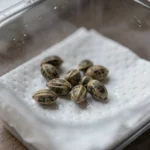
Walk into any grow shop and you’ll find a shelf of little bags promising bigger roots, bigger plants, and bigger harvests for a few dollars. Most of them are selling mycorrhizae — the fungi that wrap around plant roots and trade nutrients for sugars. The pitch is everywhere, the science behind the concept is real, and yet most growers who buy a packet never see a thing change.
So which is it? Are mycorrhizae a genuine yield tool or just expensive brown dust? There’s actually a controlled cannabis study that answers the first half of that question, and a pile of product-testing research that explains the second half. Both matter, because the gap between “mycorrhizae work” and “this packet works” is where most growers lose their money.

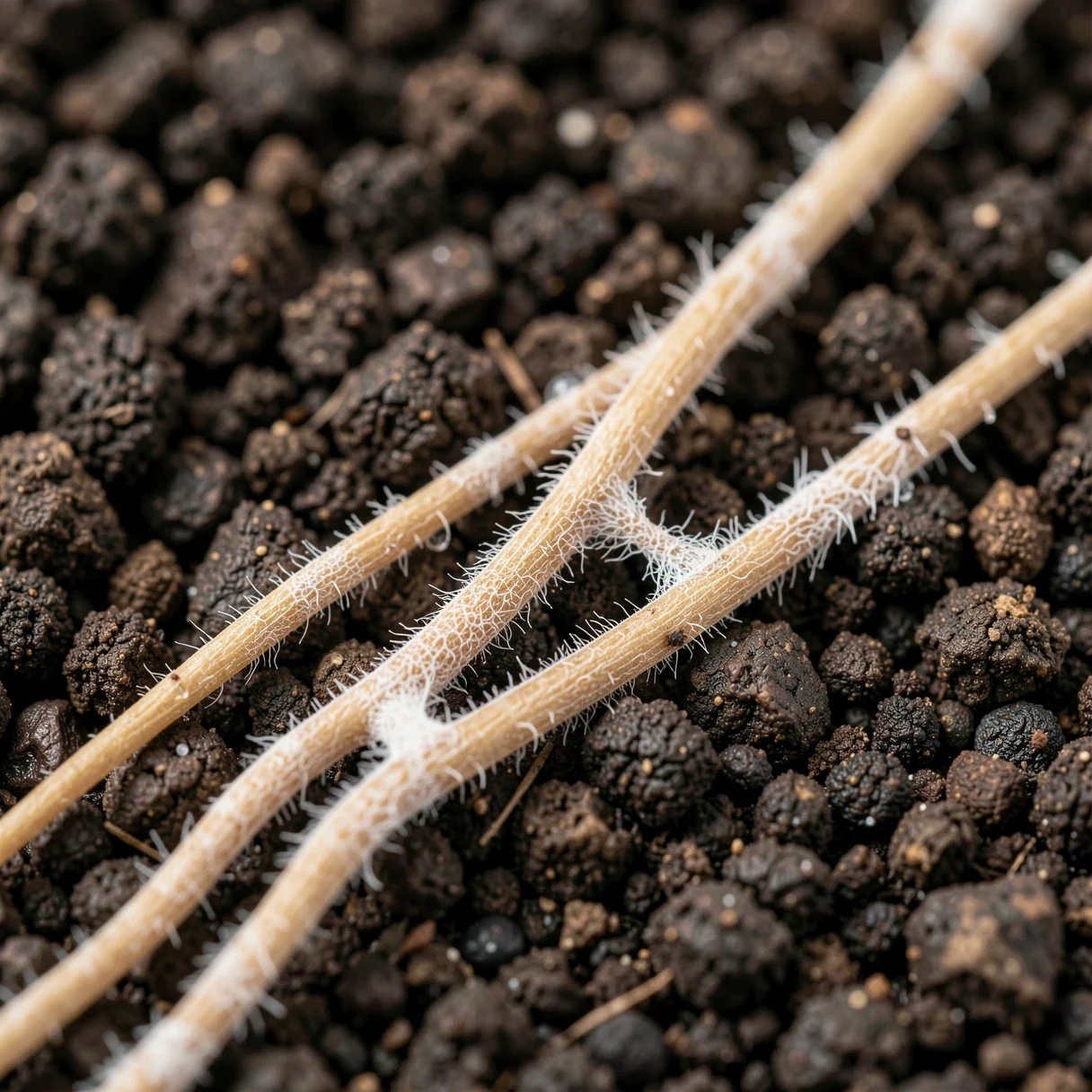
The word means “fungus-root,” and that’s exactly what it is: a partnership. Arbuscular mycorrhizal fungi colonize the inside of a plant’s roots and then push a web of microscopic threads — hyphae — out into the surrounding soil. Those threads are far thinner than root hairs, so they reach into pockets of soil and films of water the roots can’t physically access.
The plant feeds the fungus sugars from photosynthesis. In exchange, the fungus hands back water and nutrients it scavenges from that extended network — phosphorus above all, but also zinc, copper, and a steadier water supply. Phosphorus is the headline because it barely moves in soil; a root sits in a tiny depleted zone and waits. Mycorrhizae effectively give the plant a much larger surface area to mine, which is why the effect shows up most in lean or low-phosphorus soils.
That’s the mechanism, and it’s not controversial. The argument is whether it translates into measurably bigger cannabis plants — and whether the product you bought can actually deliver the fungi to your roots alive.
The most useful study here is Seemakram and colleagues (2022), published in Frontiers in Plant Science. They grew Cannabis sativa and tested two species of mycorrhizae — Rhizophagus prolifer and Rhizophagus aggregatus — against a conventional chemical (NPK) fertilizer to see whether the fungi could match or beat the bottle.
The results split cleanly by species, and that split is the whole story. R. prolifer performed about the same as the synthetic fertilizer — no significant difference in biomass or cannabinoid levels. Useful to know, but not a reason to switch. R. aggregatus was the standout. Plants inoculated with it didn’t just match the fertilizer; they beat it.
Compared with the fertilized control, the best-performing mycorrhizae produced plants roughly 37% taller (about 80 cm versus 58 cm), with CBD concentration up about 22% and THC concentration up about 38%. Total CBD content per plant — concentration multiplied by biomass — climbed around 60%. Those are real, measured differences against a fertilizer baseline, not against bare soil, which is what makes them notable.
Before you read those cannabinoid numbers as a promise, here’s the honest part. Seemakram’s plants were a low-THC hemp cultivar, the kind grown for fiber and CBD, not a 25% THC drug strain. The THC figures in the study are tiny in absolute terms — we’re talking about a jump from roughly 1.2 to 1.65 milligrams per gram, not from 20% to 28%.
So nobody has shown that mycorrhizae will push a high-potency strain several points higher. What the study does show is the part that travels: the same species, the same root symbiosis, and a clear improvement in plant size and nutrient uptake against a fertilized control. The growth and vigor benefit is the reliable takeaway. Treat any specific potency bump on your drug strains as unproven until someone runs that trial — the mechanism is general, but the cannabinoid response was measured in hemp.
That’s also a healthier way to think about most “potency hacks.” Genetics set the ceiling. Inputs like mycorrhizae help a plant reach its potential by feeding it better, not by rewriting what the strain can do. If raw strength is the goal, the levers that actually move it are covered in our guide to maximizing THC potency.
This is the part the shelf tags never mention, and it’s the reason so many growers try mycorrhizae once and shrug. The product has to contain living, viable fungi of a species that will actually colonize your plant. A startling share of them don’t.
In one global evaluation, Salomon and colleagues (2022) tested 25 commercial mycorrhizal inoculants from Australia and Europe under greenhouse conditions designed to favor the fungi. Over 80% of those products failed to establish any mycorrhizal colonization at all — even in sterilized soil where there was nothing to compete with them. Later product audits have found the same pattern repeatedly: low or dead propagule counts, label numbers that don’t match what’s in the bag, and in some cases contamination with plant pathogens.
Read that again, because it reframes the whole question. The science says mycorrhizae can help. The market says most of the bags can’t deliver them. That’s not a contradiction — it’s a quality-control problem. The fungi are fragile; if a product was made poorly, stored hot, or sat on a shelf for two years, the spores inside are simply dead. You’re spreading inert filler.
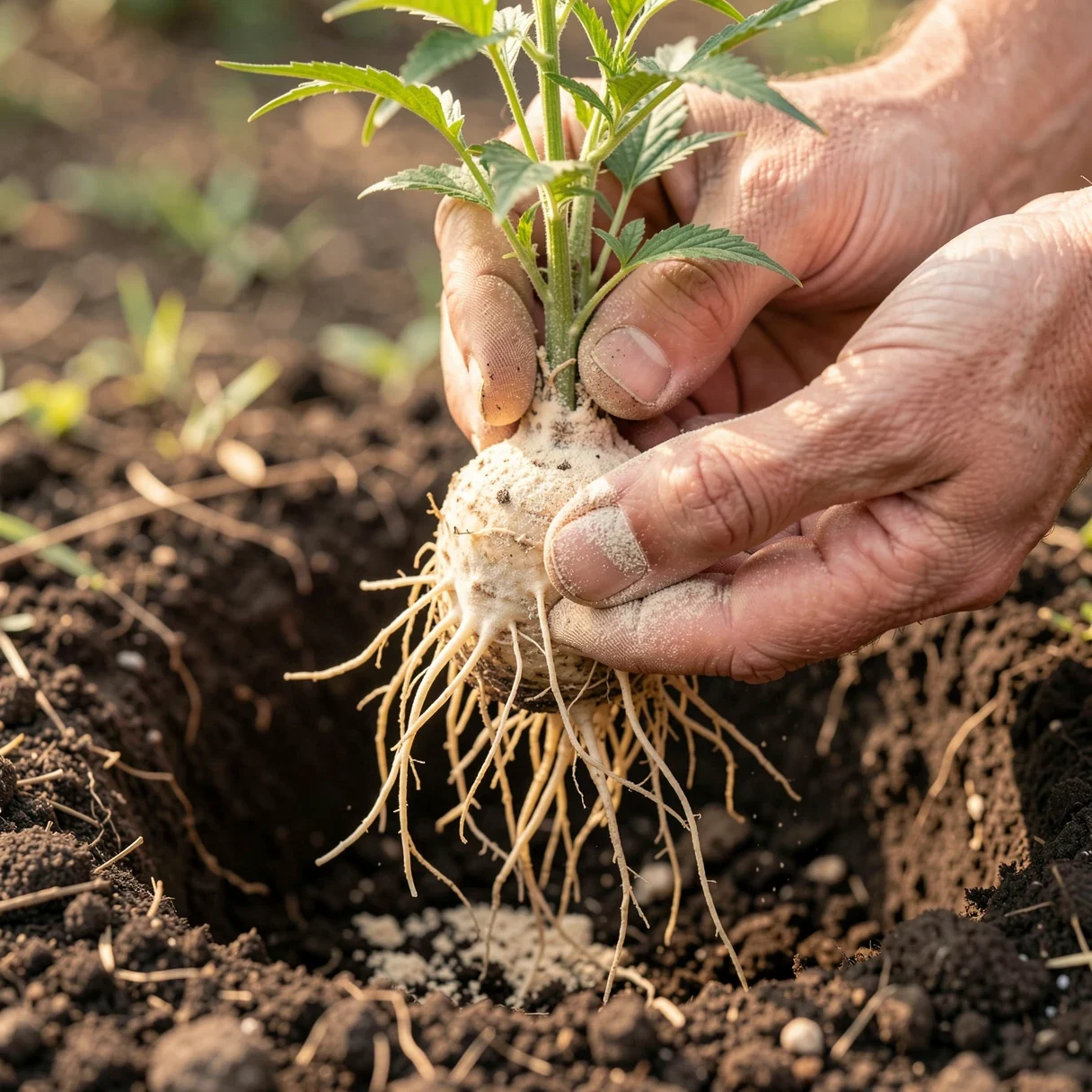
If you want to give the symbiosis a fair shot, the application matters as much as the product. Mycorrhizae aren’t a foliar feed or a top-dress — they have to make physical contact with the root zone to colonize anything.
One honest expectation-setter: in a rich, well-fed indoor pot, mycorrhizae may do very little, because you’re already handing the plant everything it needs. The benefit is largest where the plant would otherwise struggle to find nutrients and water on its own — outdoor beds, living soil, organic grows, and anywhere the root zone runs lean. If your plants are already cruising, the missing yield is more likely sitting in your light levels or your feeding program than in a fungus packet. Our breakdown of maximizing yield in cannabis walks through the bigger levers, and how much nitrogen a cannabis plant actually needs covers the nutrition side.
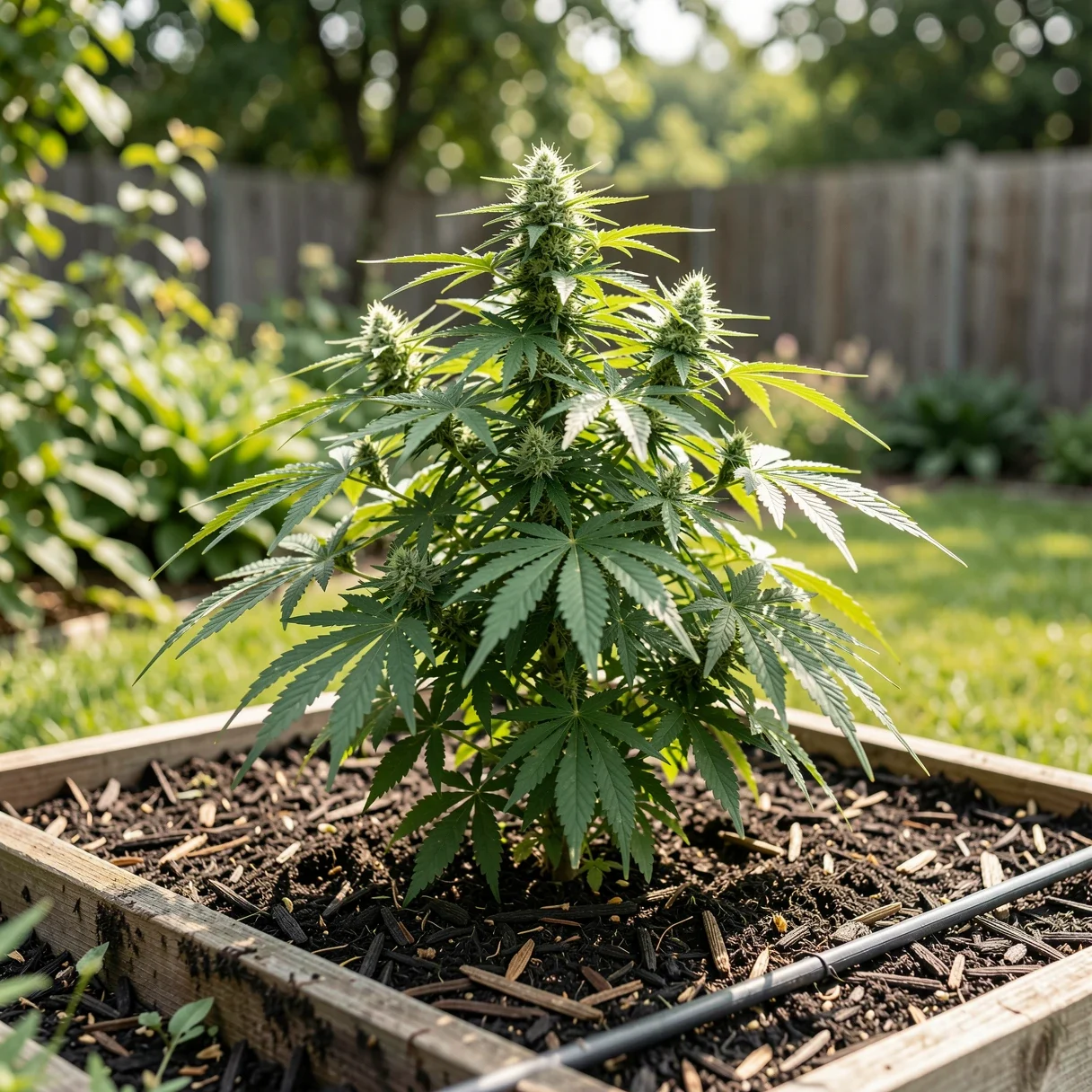
If there’s one grower who should care about mycorrhizae, it’s the outdoor and organic-soil crowd. Plant a seedling into a living bed and a good inoculant helps it punch above its weight all season — more drought tolerance during a dry August, better access to the phosphorus locked in the soil, a bigger effective root system heading into flower. Hardy, vigorous strains make the most obvious test subjects.
Rugged classics like Afghani and Northern Lights Skunk were bred to thrive without coddling, which makes them forgiving partners for a living-soil setup. Vigorous, beginner-friendly producers like Blue Dream, Green Crack, and AK-47 put on enough size to actually show a difference when the root zone is healthy. If you’re running autoflowers in soil, a fast finisher like Mandarin Cookies Autoflower benefits from anything that helps a short-lived plant feed efficiently from day one.
Mac’s own in-house genetics are built for exactly this kind of full-season, soil-grown patience — strains like Grape Skunk, Blue Monkey Dick, and Neptune’s Wedding reward a grower who feeds the soil rather than just the plant. Browse the full feminized seed collection or the autoflower lineup to match a strain to your setup.
There’s no strong evidence that mycorrhizae raise THC in high-potency drug strains. The one controlled cannabis study measured cannabinoid gains in low-THC hemp, where the absolute numbers are tiny. What mycorrhizae reliably do is improve nutrient and water uptake, which supports a bigger, healthier plant — the potency ceiling is still set by genetics.
Often not. Product testing has repeatedly found that the majority of commercial inoculants fail to colonize roots, usually because the fungi inside are dead or the wrong species. If you buy, choose a product that names its species, lists a propagule count, and has a fresh production date — those quality markers matter far more than price.
At transplant or germination, when young roots are exposed and easy to contact. Mycorrhizae have to physically touch the root to colonize it, so dusting the roots or dropping granules into the planting hole beats sprinkling it on the soil surface.
Less than in soil. Mycorrhizae evolved for living soil and thrive on the natural nutrient scarcity there. In a heavily fed coco or hydro system with abundant soluble phosphorus, the plant has little reason to form the partnership, and colonization tends to stay low.
Mycorrhizae are real science, not snake oil — the controlled cannabis research shows the right fungal partner can beat synthetic fertilizer for plant size and nutrient uptake. The problem isn’t the biology; it’s the bottle. Most of what’s on the shelf is dead or ineffective, so a generic cheap packet is a coin flip at best.
If you grow in living soil or outdoors, it’s worth doing properly: buy a reputable, species-specific inoculant, apply it at transplant, and ease off the synthetic phosphorus so the plant actually wants the partnership. If you run a rich indoor pot and your plants are already thriving, your next gain is almost certainly somewhere else. Either way, it starts with strong genetics in healthy soil — and that begins with the seed.
Shop Feminized Seeds | Maximizing Yield in Cannabis | Nitrogen for Cannabis Flower
Want to keep learning? Browse our full library of guides to growing cannabis — everything from germination to harvest, in one place.
Ready to grow? Browse premium seeds from Lighthouse Genetics:
Designed & Built by Wynne Web Design