Left alone, a cannabis plant grows like a Christmas tree. One dominant cola shoots up the middle, the side branches stay short and shaded, and most of the lower plant produces airy, larva-sized buds that never see direct light. That single tall cola gets all the glory and most of the weight — and you waste half the plant. Low stress training cannabis is the fix, and it costs nothing but a few minutes a week and a handful of clips or soft ties.
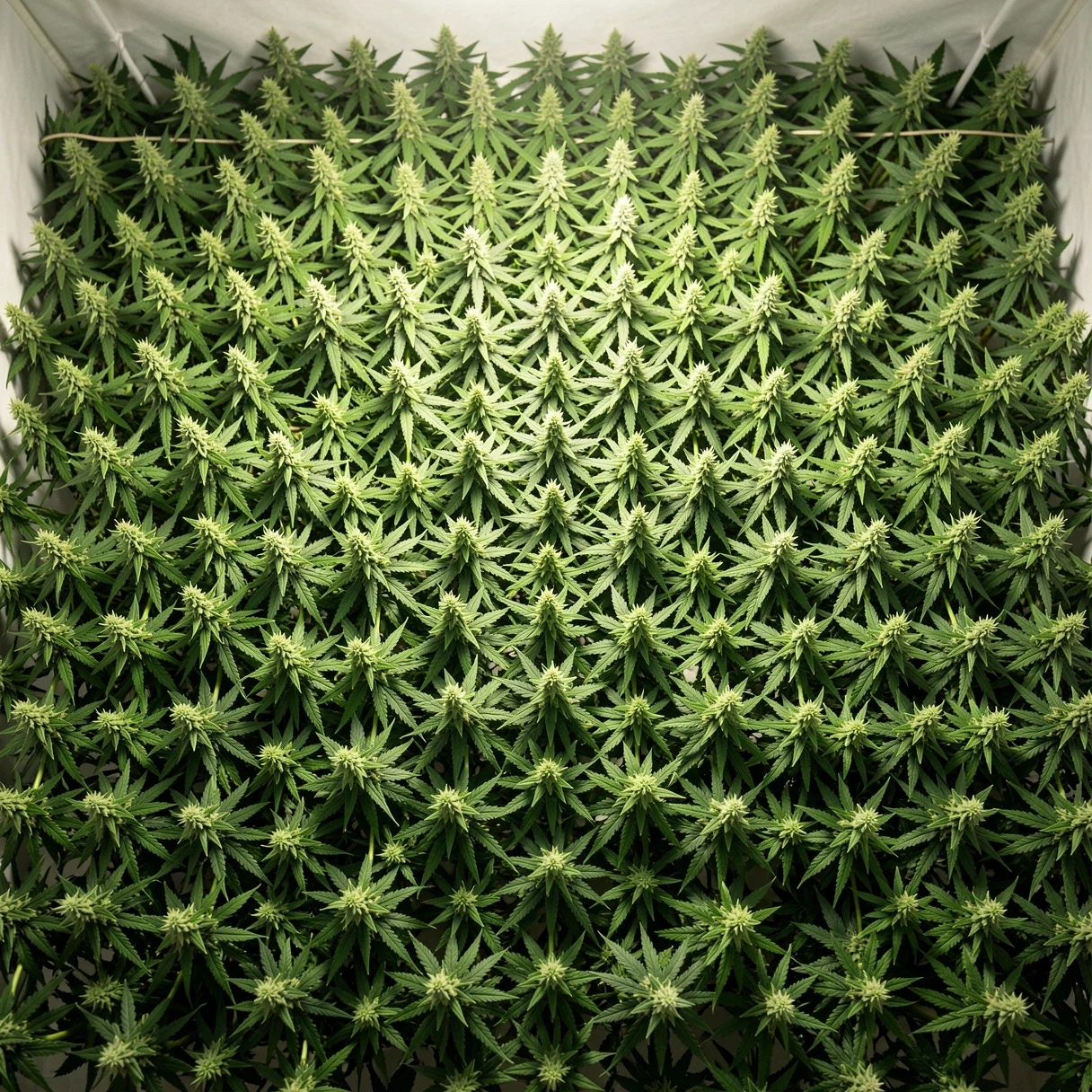
The idea is simple: instead of letting the plant pick one winner, you bend it sideways and tie it down so every branch gets a shot at the light. No cutting, no shock, no lost grow time. Done right, low stress training cannabis turns one fat top into a flat table of evenly-sized colas — and a flat, well-lit canopy is the single biggest lever a home grower has over total yield. This is how to do it, when to start, the free tool we send you to make it easy, and the mistakes that turn a good plan into a snapped stem.
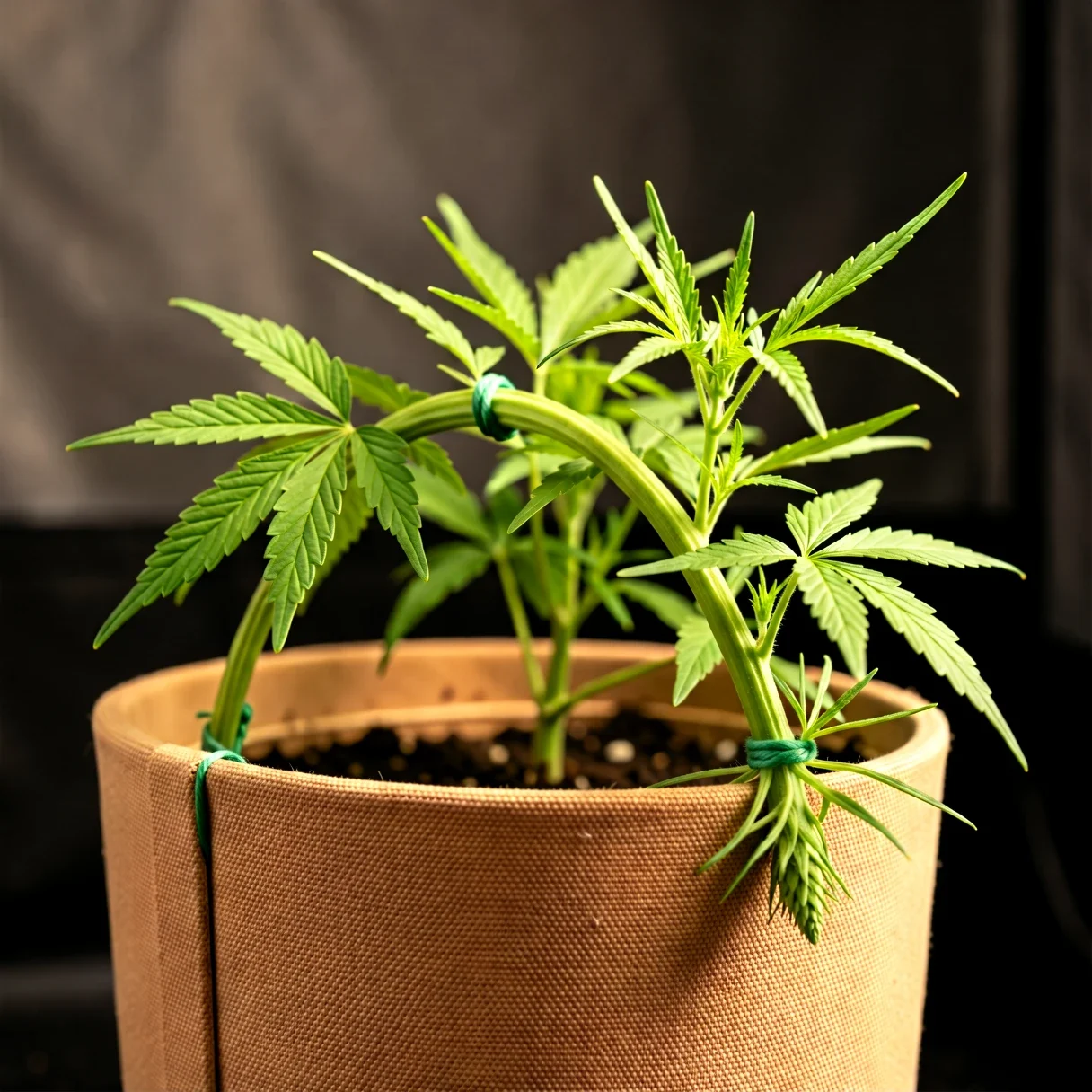
Low stress training — LST for short — is the practice of gently bending and tying down a cannabis plant’s stems to reshape how it grows, without cutting or removing any of it. You take the tall central stem, bend it down toward horizontal, and secure it. The plant responds by sending its side branches upward to fill the space, and within a week you have a wide, flat plant instead of a tall, narrow one.
The “low stress” part is the whole point. High-stress training (HST) — topping, FIMming, super cropping — works by injuring the plant on purpose and letting it recover stronger. That recovery costs time and carries risk. Bending a flexible green stem doesn’t injure anything. There’s no wound to heal, no days of stalled growth, no chance of stunting a plant that was already struggling. That’s why low stress training cannabis is the technique most growers reach for first, especially anyone on their first or second grow.
Low stress training cannabis works for two reasons: hormones and light.
Every cannabis plant has a built-in pecking order called apical dominance. The growing tip at the very top of the main stem produces auxin, a plant hormone that tells the lower side branches to stay subordinate. As long as that top tip is the highest point, it hogs the plant’s energy and the lower branches stay short. It’s an evolutionary holdover — in the wild, racing a single shoot toward the sun beats your neighbors. In a grow tent, it just wastes your floor space.
When you bend the main stem over so it’s no longer the tallest point, you interrupt that hormonal signal. The plant treats the now-upright side branches as new leaders and pushes growth into all of them. The result is multiple main colas instead of one. That’s the hormone half of why low stress training cannabis works.
The light half matters even more. Light intensity falls off fast with distance — a bud sitting six inches below the canopy gets a fraction of the light the top cola gets, and it fills out accordingly. By flattening the plant into an even canopy, low stress training cannabis puts every bud site at roughly the same distance from the lamp. Research on cannabis plant architecture has shown that manipulating a plant’s shape to spread the canopy improves light distribution to lower flowering sites and evens out the crop, rather than leaving you with one premium top and a handful of “popcorn” buds underneath. More bud sites getting strong, direct light is simply more usable weight at harvest.
People lump all plant training together, but bending and cutting are different tools. Topping and FIMming are high-stress methods — you cut the growing tip off to force the plant to split into multiple stems. They’re effective, but they stall the plant for a few days and they’re risky on anything that’s already stressed.
Low stress training cannabis bends instead of cuts, so there’s no recovery window and no real downside if you go slow. The two aren’t rivals, though — most serious growers combine them. Top the plant once early to create four or six main stems, let it recover, then use LST to spread those stems out flat and keep the canopy even. If you only ever learn one, make it low stress training cannabis: it’s forgiving, it works on every plant, and it pairs with everything else. Strategic defoliation stacks on top of it once the canopy fills in.
Here’s the actual technique for low stress training cannabis. None of it is hard — the skill is in the timing and a light touch.
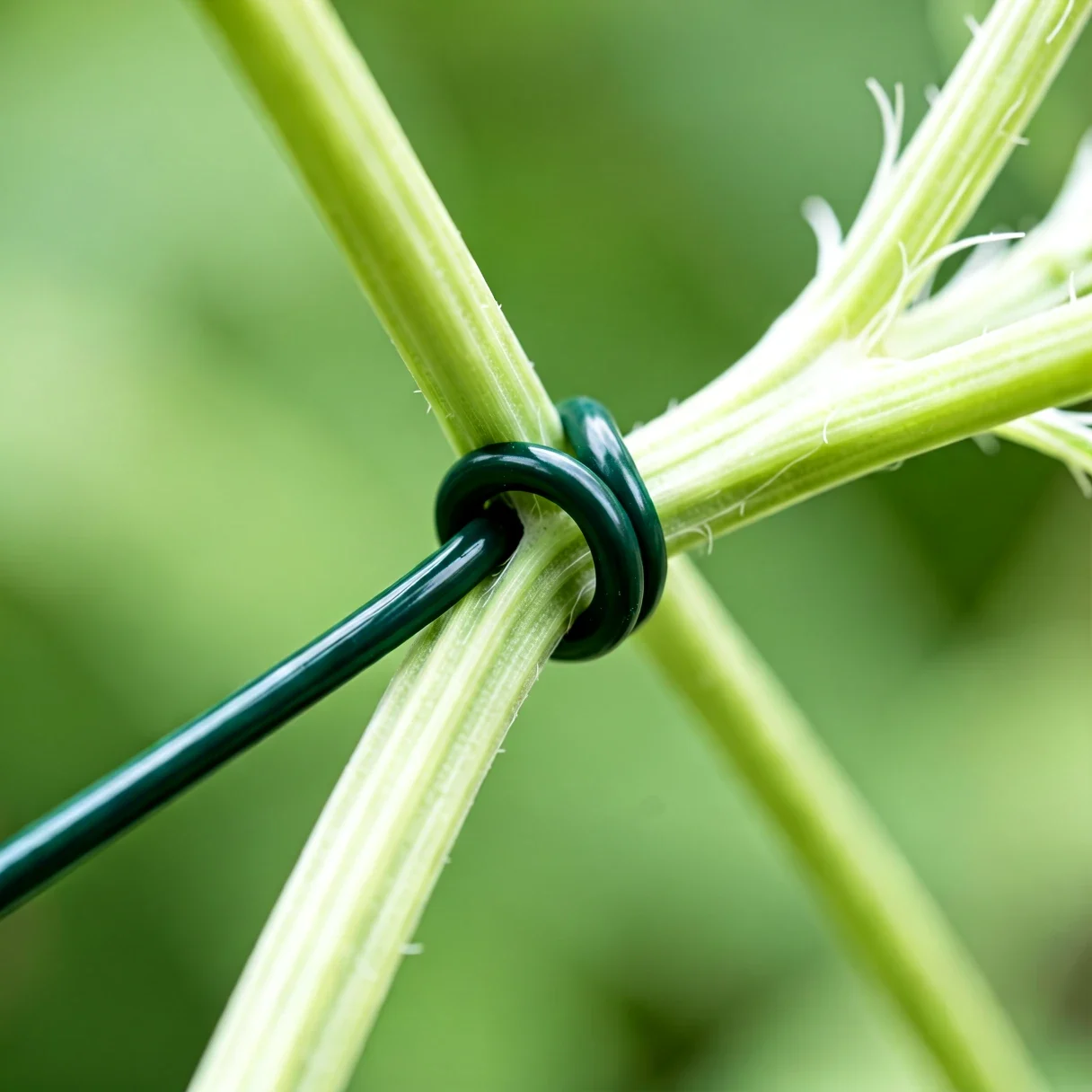
Here’s where we let you in on something. If you’ve ordered from Lighthouse Genetics, you’ve probably found a handful of small green plastic clips tucked into your package — and more than a few growers have messaged us asking what they are. They’re LST clips, and they’re one of the easiest ways to start low stress training cannabis without tying a single knot.
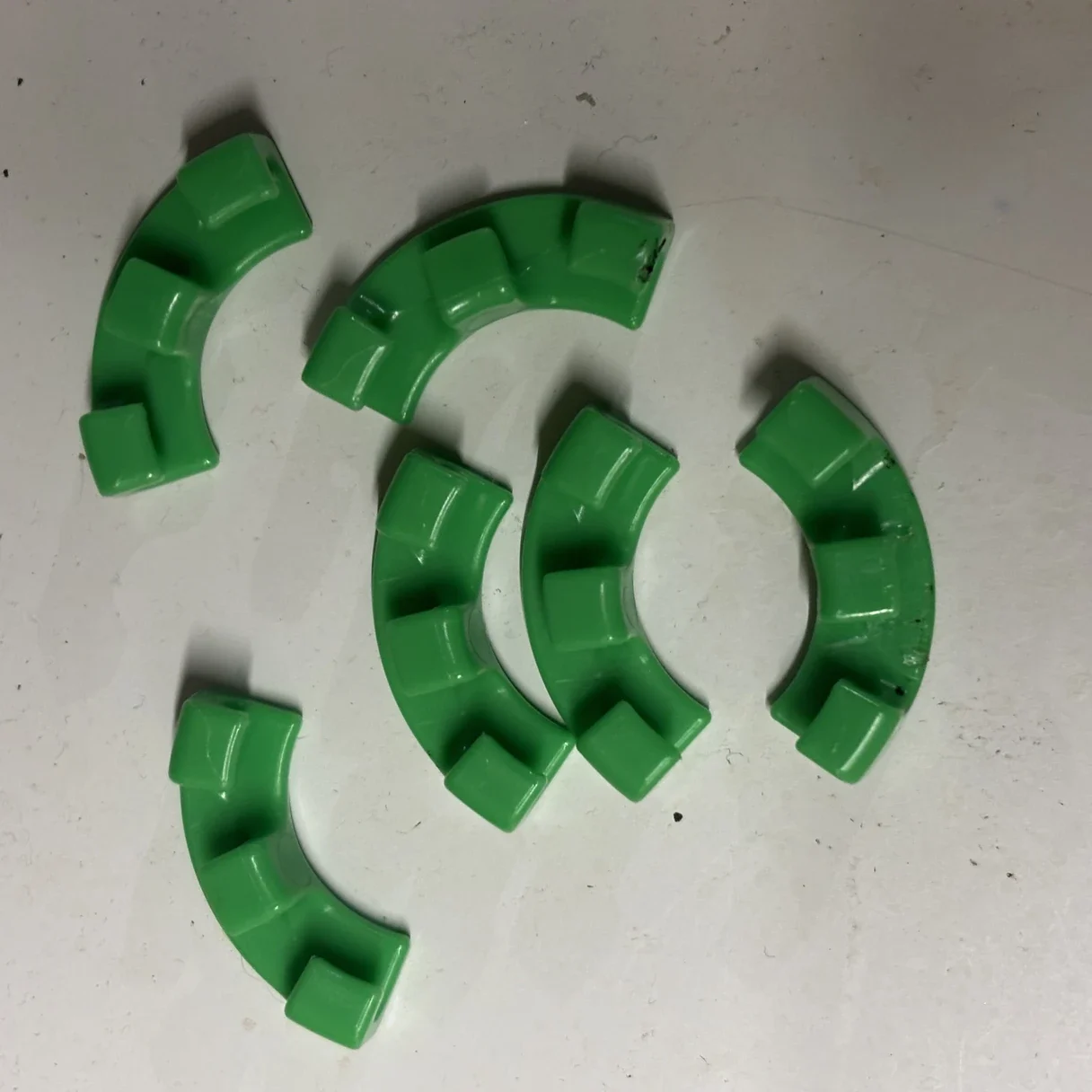
Each clip is a curved piece of plastic with a right-angle notch. You snap it over a soft young stem and it holds that stem bent at roughly 90 degrees — no ties, no drilling holes in your pot, no anchoring twine. Bend the stem gently, clip it, done. The little ridges inside grip the stem without pinching it, and because the bend is a gentle curve rather than a hard crease, the stem keeps its internal plumbing intact while it grows out sideways. They’re sized for young, bendy growth — which is exactly when you want to start training anyway.
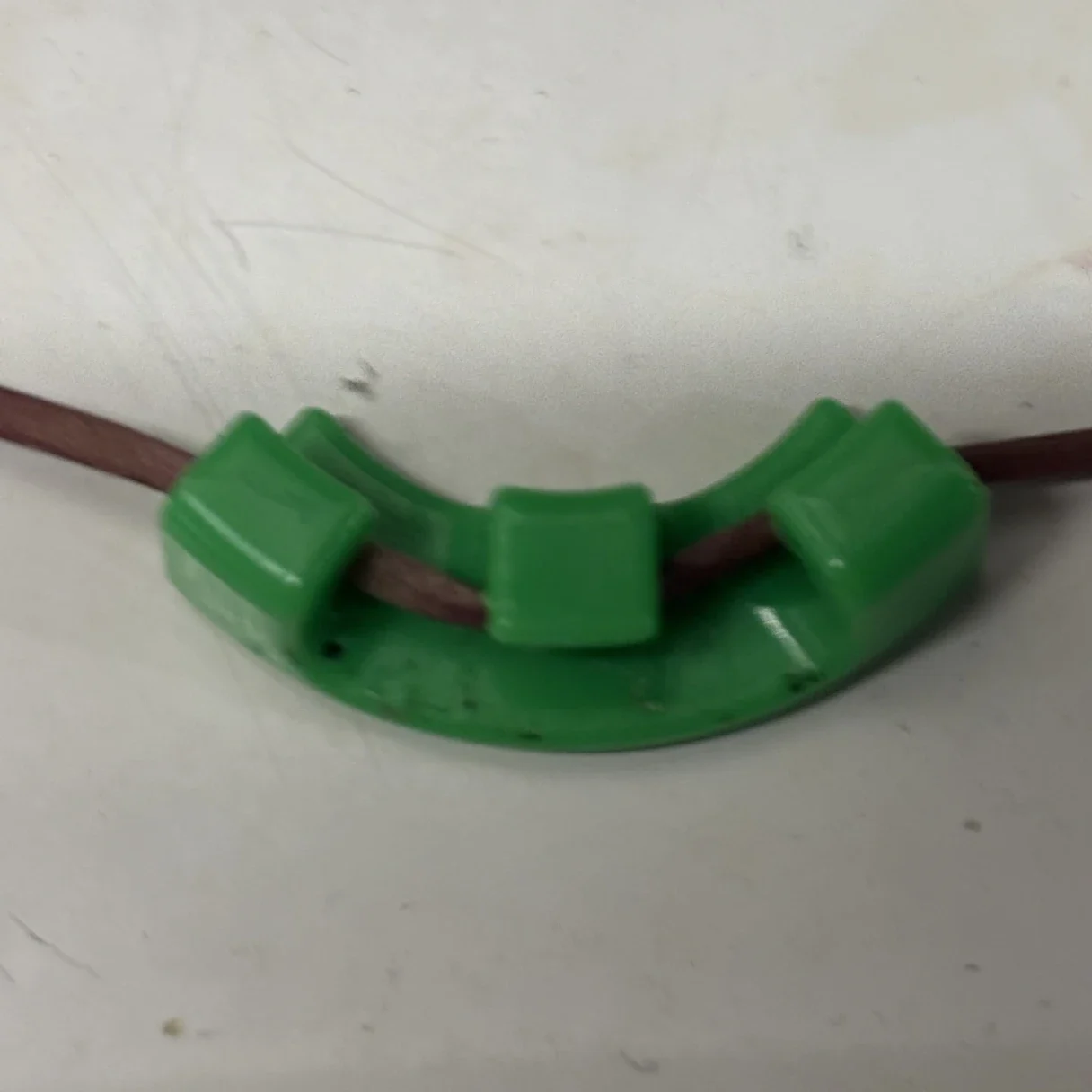
We include a set of these clips free with every order. It’s not a gimmick — clips are genuinely the fastest way for a first-timer to get comfortable bending a plant, and once you’ve reused them across a couple of grows you’ll see why experienced growers keep a jar of them around. For a brand-new grower nervous about snapping a stem, a clip takes most of the fear out of it: the angle is fixed, the pressure is gentle, and you can pop it off and reposition it in seconds. That’s low stress training cannabis stripped down to its simplest form.
The clips aren’t the only thing we throw in, either. Depending on what you order, you might also find some extra seeds, a cheap grinder, or a sticker in the box — and growers placing larger orders have opened their packages to a t-shirt, a hoodie, or a hat. We grow this stuff ourselves, and we’d rather send our customers home with more than they paid for. None of the surprise extras are guaranteed, but the clips are the one thing we try to put in every single order, because they actually help you grow a better plant.
If you grow autoflowers, LST isn’t just an option — it’s the only training method you should trust. Autos run on a fixed internal clock. They flower on age, not on a light switch, which means they don’t pause and wait for you to recover from a mistake. Top an autoflower at the wrong moment and it may simply flower early at half the size, with no time to bounce back.
Bending carries none of that risk, which is exactly why low stress training cannabis autoflowers is the standard advice — and it’s where those free clips earn their keep, since an auto’s short veg window rewards fast, gentle training. Start even earlier than you would on a photoperiod plant — around the third node — because an auto’s veg window is short and the stems firm up quickly.
Be gentle, train a little at a time, and stop once the plant transitions into flower on its own. Done right, LST lets a compact autoflower fill a surprising amount of canopy. New to autos? Our guide to the best autoflower strains for beginners pairs well with a gentle LST plan, and the difference between autoflower and feminized seeds is worth understanding before you start bending.
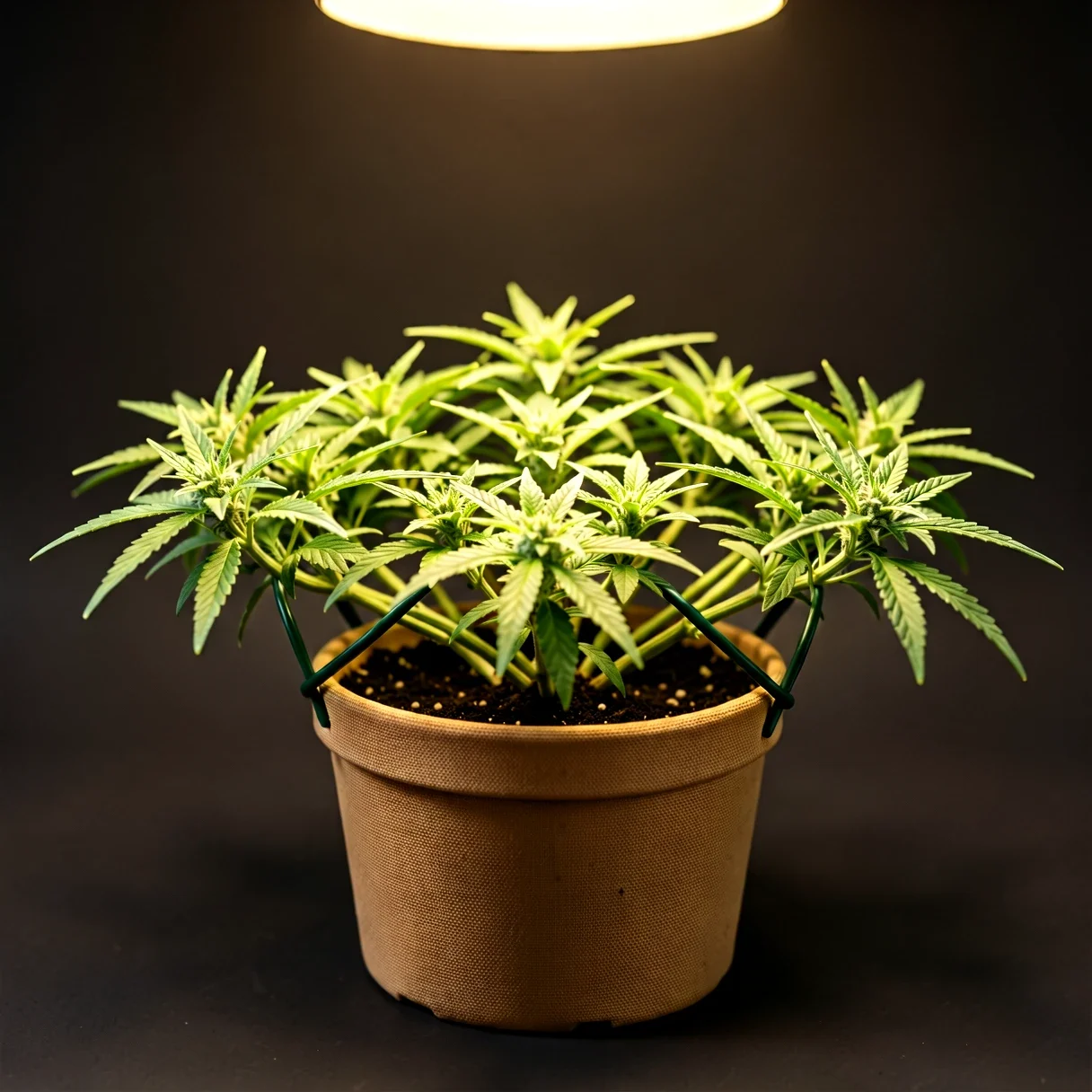
Most problems with low stress training cannabis come from impatience or heavy hands. A few to avoid:
You can train almost anything, but low stress training cannabis pays off most on two kinds of plant: tall, stretchy sativas that would otherwise hit the lights, and compact autos that need every bud site maximized.
Sativa-leaning plants stretch hard and grow tall, which makes them perfect candidates for bending. Classic landrace-style sativas like Durban Poison, Acapulco Gold, and Jack Herer can outgrow a tent fast — low stress training cannabis tames that height and turns the stretch into extra colas instead of wasted ceiling space. Green Crack responds the same way, rewarding a flat canopy with even, uniform tops.
On the autoflower side, vigorous hybrids take well to gentle early bending. Bruce Banner Autoflower and Moby Dick Autoflower both stretch enough to benefit, while a sturdy, well-built hybrid auto like Gorilla Glue Autoflower fills a canopy beautifully when you spread it early. If you’re chasing maximum weight from a small footprint, pairing one of these with LST and the rest of the playbook in our guide to maximizing yield in cannabis is about as efficient as home growing gets. Browse the full autoflower seed collection if you’re starting fresh.
Those are LST clips — small plastic clips that snap onto a young stem and hold it bent at about 90 degrees. They’re a tie-free way to start low stress training cannabis, they’re reusable, and we include a set free with every Lighthouse Genetics order. Bend a soft stem gently, clip it in place, and reposition it as the plant grows.
Start in early veg, once the plant has 3 to 5 nodes and the stems are still soft and green. For autoflowers, start even earlier — around the third node — because their veg window is short. The flexibility you need disappears as stems turn woody, so earlier is almost always better.
No, that’s the whole point. Unlike topping or FIMming, bending doesn’t wound the plant, so there’s no recovery period and no stalled growth. As long as you bend gently and don’t tie so tight the material bites into the stem, low stress training cannabis is essentially risk-free.
Absolutely, and many growers do. A common approach is to top once early to create multiple main stems, let the plant recover, then use LST to spread those stems into a flat, even canopy. The two techniques complement each other — cutting builds the structure, and low stress training cannabis arranges it.
LST clips, soft plant ties, foam-coated garden wire, or soft twine all work. Clips are the fastest for beginners; for tie-downs, many growers drill small holes around the rim of the pot as anchor points. The only hard rule is to avoid anything thin and rigid that can cut into the stem as it thickens.
If you do one thing to improve your harvest this grow, make it this. Low stress training cannabis is free, it’s forgiving, and it directly attacks the biggest source of wasted yield in a home grow — a tall, uneven plant where most of the bud never sees enough light. Done right, low stress training cannabis is mostly patience: bend early while the stems are green, clip or tie the canopy flat, ease off in flower, and let physics do the rest. A flat, well-lit table of colas will always out-yield a single tall cola, and you’ll get there without cutting a thing or losing a day of growth.
Pick a strain that suits your space, start gently, and use the clips we send you. For more techniques that stack on top of LST, dig into our cannabis growing guides — and if you’re ready to put it into practice, our feminized seed collection is the place to start.
Shop Autoflower Seeds | Topping vs FIMming | Maximizing Yield in Cannabis | All Growing Guides
Sources: Danziger & Bernstein 2021, Plants — plant architecture and light distribution in cannabis; Danziger & Bernstein 2021, Industrial Crops and Products — architecture manipulation and yield.
Want to keep learning? Browse our full library of cannabis growing guides — everything from germination to harvest, in one place.
Ready to grow? Browse premium seeds from Lighthouse Genetics:
Designed & Built by Wynne Web Design