Few topics split the cannabis growing community like defoliation. One camp swears that stripping fan leaves produces fatter buds, better light penetration, and higher yields. The other camp insists defoliation stresses the plant, cuts off photosynthesis, and leaves you with less weed. Fifteen years of forum arguments, YouTube rants, and grow journal debates have not settled it. So — does defoliation increase yield cannabis growers can actually measure? In 2021, researchers at Hebrew University finally ran the experiment properly. The results do settle the debate, just not the way either camp expected. Anyone asking does defoliation increase yield cannabis plants produce now has a real, peer-reviewed answer to work from.
The best peer-reviewed research we have (Danziger & Bernstein, 2021) found that defoliation alone does NOT reliably increase total cannabis yield compared to an untouched control plant. What it DOES do — and this is important — is improve the uniformity of cannabinoid concentration across different bud sites on the plant. In other words, defoliation and other architecture-manipulation techniques make the plant more consistent, not necessarily bigger. If the question is does defoliation increase yield cannabis growers pull per plant, the honest answer is usually no. If the question is does it make the lower buds more like the top colas, the answer is yes. These are very different claims — and most of the online arguments conflate them.
Danziger and Bernstein published “Plant architecture manipulation increases cannabinoid standardization in ‘drug-type’ medical cannabis” in Industrial Crops and Products, volume 164, in 2021. It was the first peer-reviewed experiment that applied architecture-modification treatments to drug-type medical cannabis in a controlled, replicated way and measured cannabinoid profiles across the plant.
They evaluated eight plant-architecture-modulation treatments on two drug-type medical cannabis cultivars, including:
An untouched control group served as the baseline for comparison.
Then they measured inflorescence yield, cannabinoid concentration (THC, CBD, etc.), and — critically — how those concentrations varied across different positions on the plant. Treatments were replicated and the numbers got crunched. The headline result the paper itself emphasizes: architecture manipulation increased cannabinoid standardization across the plant, raising concentrations in the lower bud sites so the plant became more uniform top-to-bottom. A dramatic total-yield boost from any single treatment was not the paper’s reported finding.
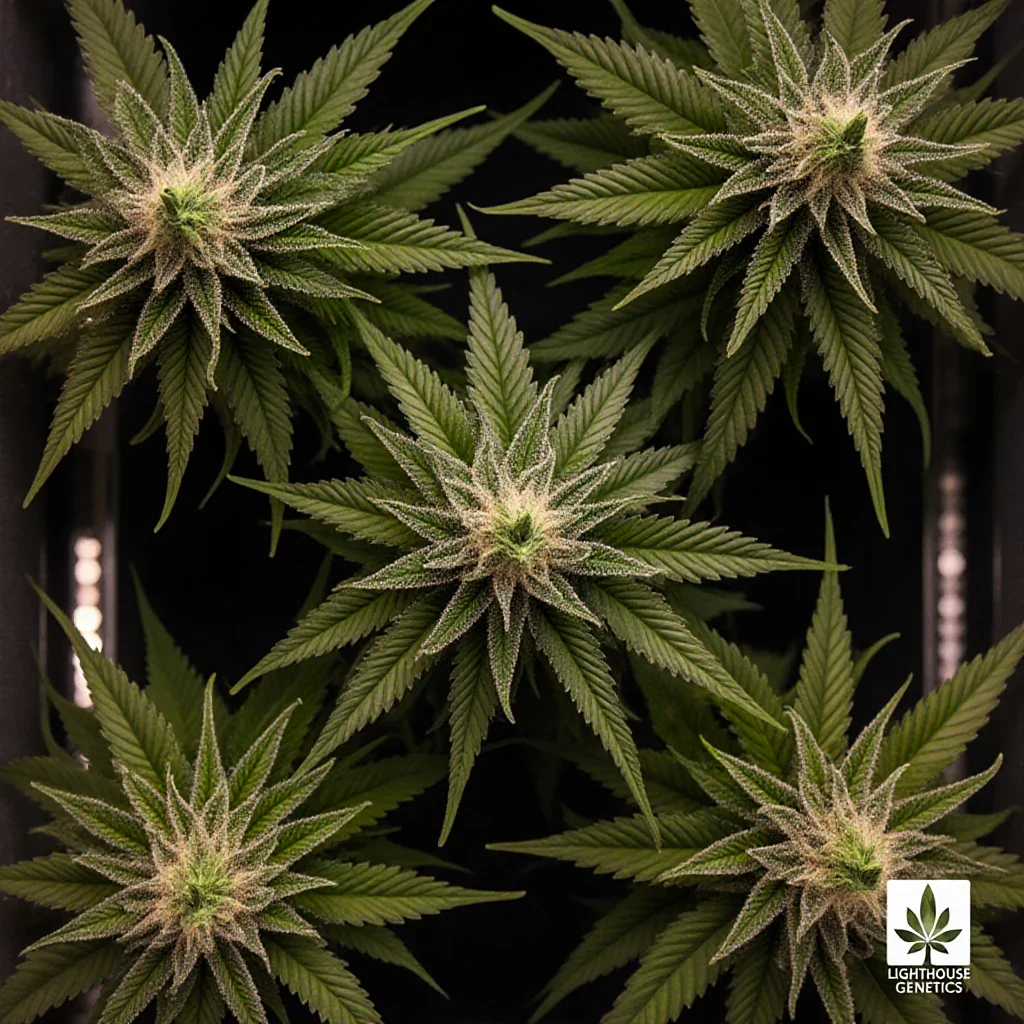
The headline findings from Danziger and Bernstein’s 2021 work:
Read that list carefully. The study does not say defoliation is worthless. It says defoliation is valuable for consistency, not for total weight. If you grow for your own stash and you blend the top colas with the bottom popcorn buds anyway, average potency may go up slightly from defoliation but total weight stays about the same. If you are a commercial grower who needs consistent potency across every gram, defoliation makes more sense. So when growers ask does defoliation increase yield cannabis plants produce, the question has to be asked with that context in mind.
If the science on does defoliation increase yield cannabis produces says it does not reliably boost total weight, why do so many growers swear it does? Four reasons:
The claim “does defoliation increase yield cannabis plants produce” is basically a myth unless you define yield as “useful potent flower.” By that narrower definition there is a small real effect from the research. By the broader “more grams off the plant” definition, not really.
Defoliation is not useless — it is just not a yield multiplier. There are scenarios where the 2021 study’s findings suggest it is worth doing:
Defoliating badly can cost you yield. Watch for:
In every one of these failure modes, the answer to does defoliation increase yield cannabis growers care about is a clear no. Bad defoliation is worse than no defoliation at all.
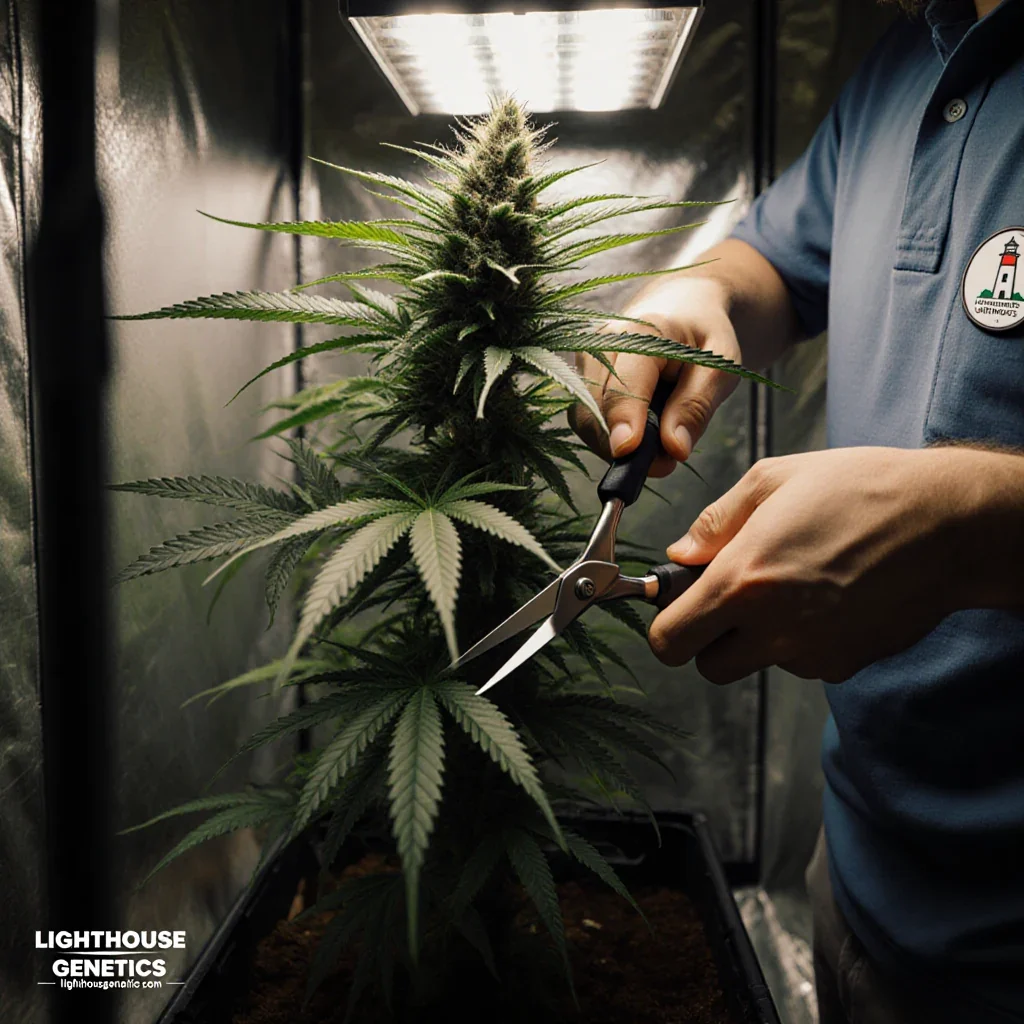
Even though the research answer to does defoliation increase yield cannabis growers pull per plant is basically no, moderate defoliation still has a real role in a dialed-in grow. Based on what the research supports, a conservative defoliation routine looks like this:
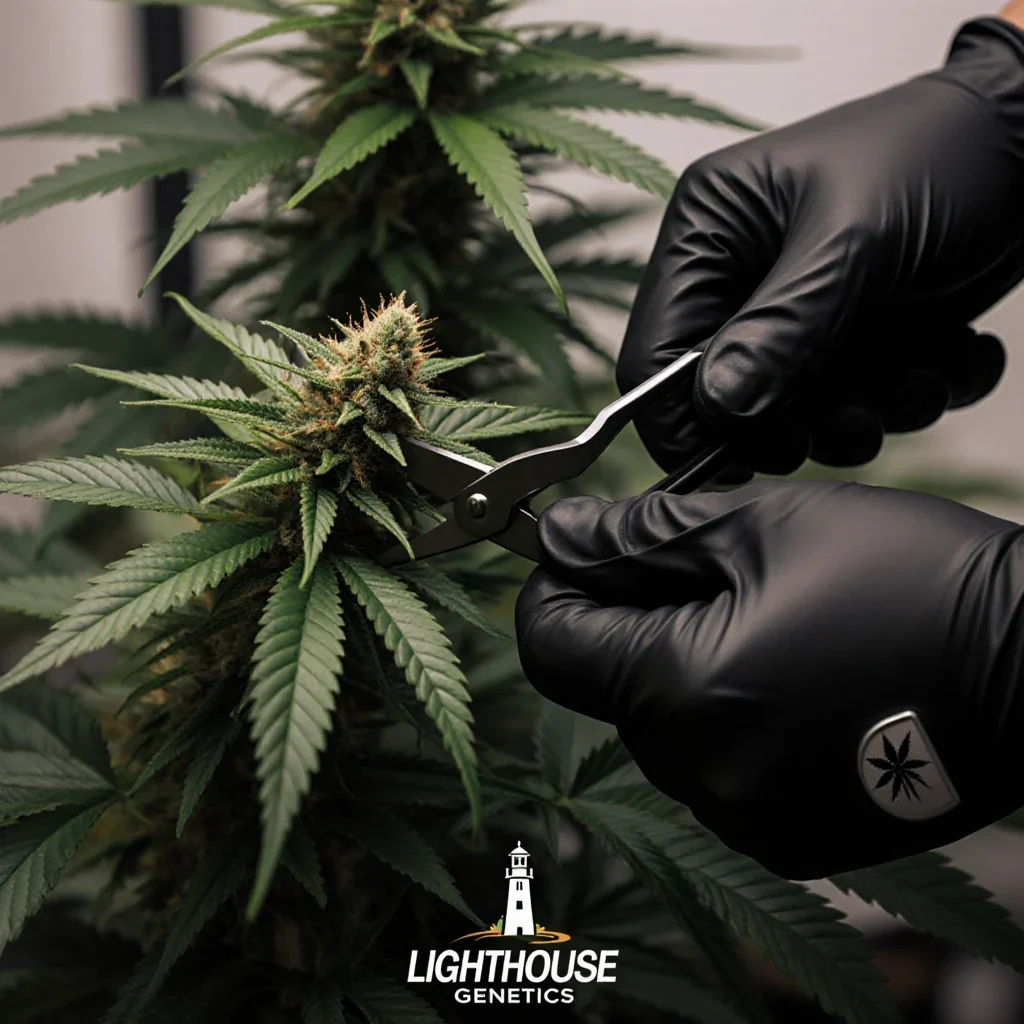
Use clean scissors. Do not tear. Do not strip the plant bare — the goal is strategic light access, not a naked stem. The research supports the “less is more” end of the spectrum. Heavy stripping does not answer does defoliation increase yield cannabis plants produce with a yes — usually it answers with a no.
Based on Danziger & Bernstein (2021), not significantly for total weight. Defoliation does improve lower-bud quality and cannabinoid uniformity across the plant, which growers sometimes perceive as “more yield” because more of the flower is high quality.
Very lightly, very early, or not at all. Autoflowers have no veg-length recovery time. A heavy defoliation can stunt them permanently. If you defoliate autos, do one careful pass in pre-flower stretch and stop.
Indica-dominant strains with dense leafing and short internode spacing benefit more because light penetration is their main bottleneck. Sativa-dominant strains are usually more open to begin with and need less intervention.
Not really. The heavy-strip approach popularized online is more aggressive than what the 2021 study tested, and the study’s moderate defoliation treatments did not show yield advantages. Proceed cautiously if you try it — the risk is greater than the evidenced reward.
Related but different. Lollipopping is removing the bottom third of the plant (branches, not just leaves) — a specific technique tested in the Danziger study. Defoliation is leaf-only removal. Both can improve lower-canopy light. Lollipopping is usually done once; defoliation is iterative.
Leaf tucking — gently folding or tying large fan leaves out of the way without removing them — preserves photosynthesis while improving light access. The 2021 study did not specifically test tucking, but it is a zero-stress alternative worth considering, especially for autoflowers and stressed plants. When asking does defoliation increase yield cannabis plants show, tucking often delivers the same lower-canopy benefits without the recovery stress.
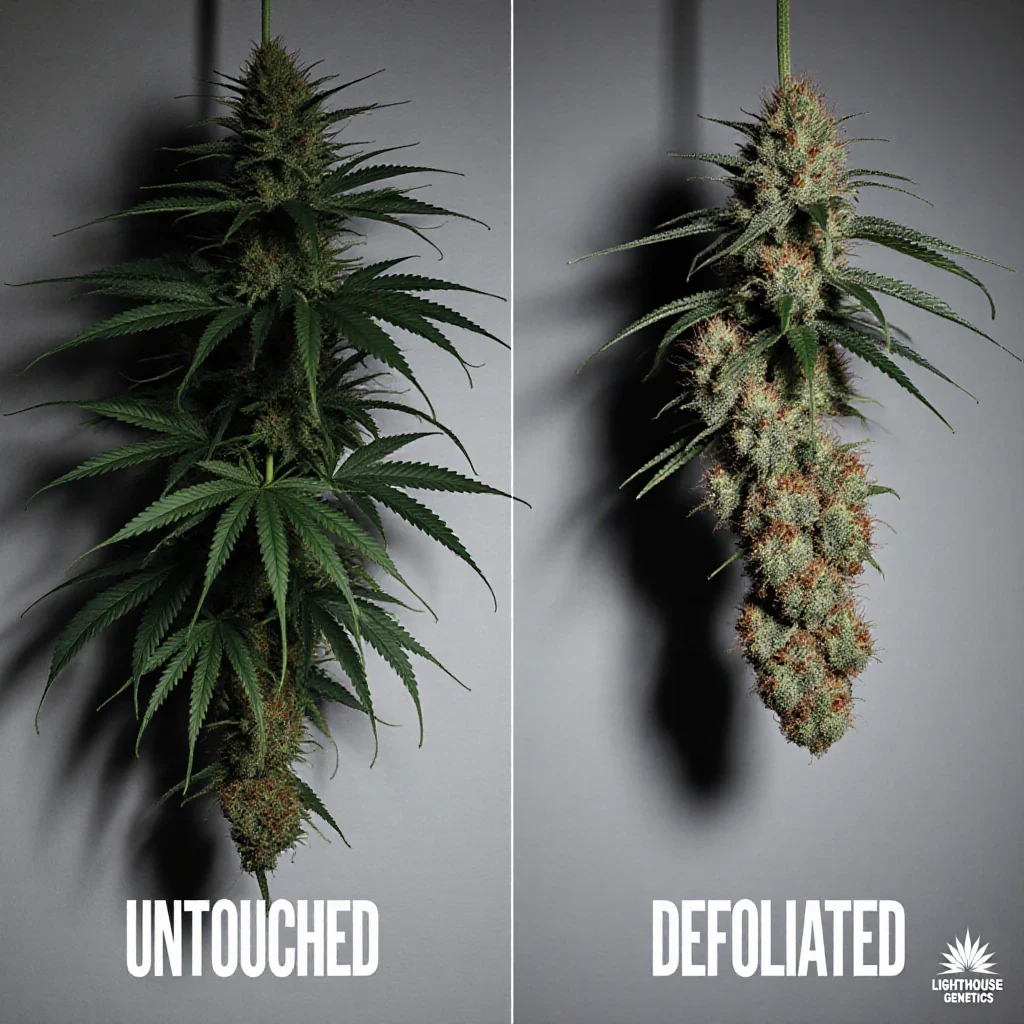
Does defoliation increase yield cannabis growers can measure on the scale? The peer-reviewed evidence says no — not reliably, not significantly, and not by the margins the internet claims. What defoliation DOES do is improve cannabinoid uniformity across the plant, thin out dense canopies for better airflow, and give lower bud sites a real shot at catching up to the top colas. Those are valuable effects — just not “more weed per plant” in the raw sense.
The next time someone insists does defoliation increase yield cannabis produces by some magical percentage, send them this post with the Danziger & Bernstein paper attached. If you grow for personal consumption, the time spent defoliating is probably better spent on dialing in your lighting and calibrating your nitrogen — both have bigger effects on total yield than any training technique. If you grow commercial or competition, defoliation earns its place in the toolkit for consistency. Either way, start with the right genetics — browse our full seed catalog or check our guide to choosing cannabis seeds for recommendations. Science first, folklore last.
Want to keep learning? Browse our full library of cannabis growing guides — everything from germination to harvest, in one place.
Ready to grow? Browse premium seeds from Lighthouse Genetics:
Designed & Built by Wynne Web Design