Every grow forum has the same thread. Someone posts a photo of near-black buds, someone asks how, and the top answer is “cold nights.” Drop the temperature in the last weeks of flower and any plant will purple up.
It isn’t that simple. Purple cannabis strains are purple because of their genes. Temperature can turn the colour up or down on a plant that’s built to make it, but nothing we found suggests it can hand colour to a plant that isn’t. And the one controlled cannabis trial we could find that tested the classic warm-day, cold-night trick didn’t find that cold nights added colour over steady warmth.
Below is what actually makes cannabis purple, what the research says about cold, what purple does and doesn’t tell you about a plant, and nine purple cannabis strains from our own catalogue that carry the genetics to do it.
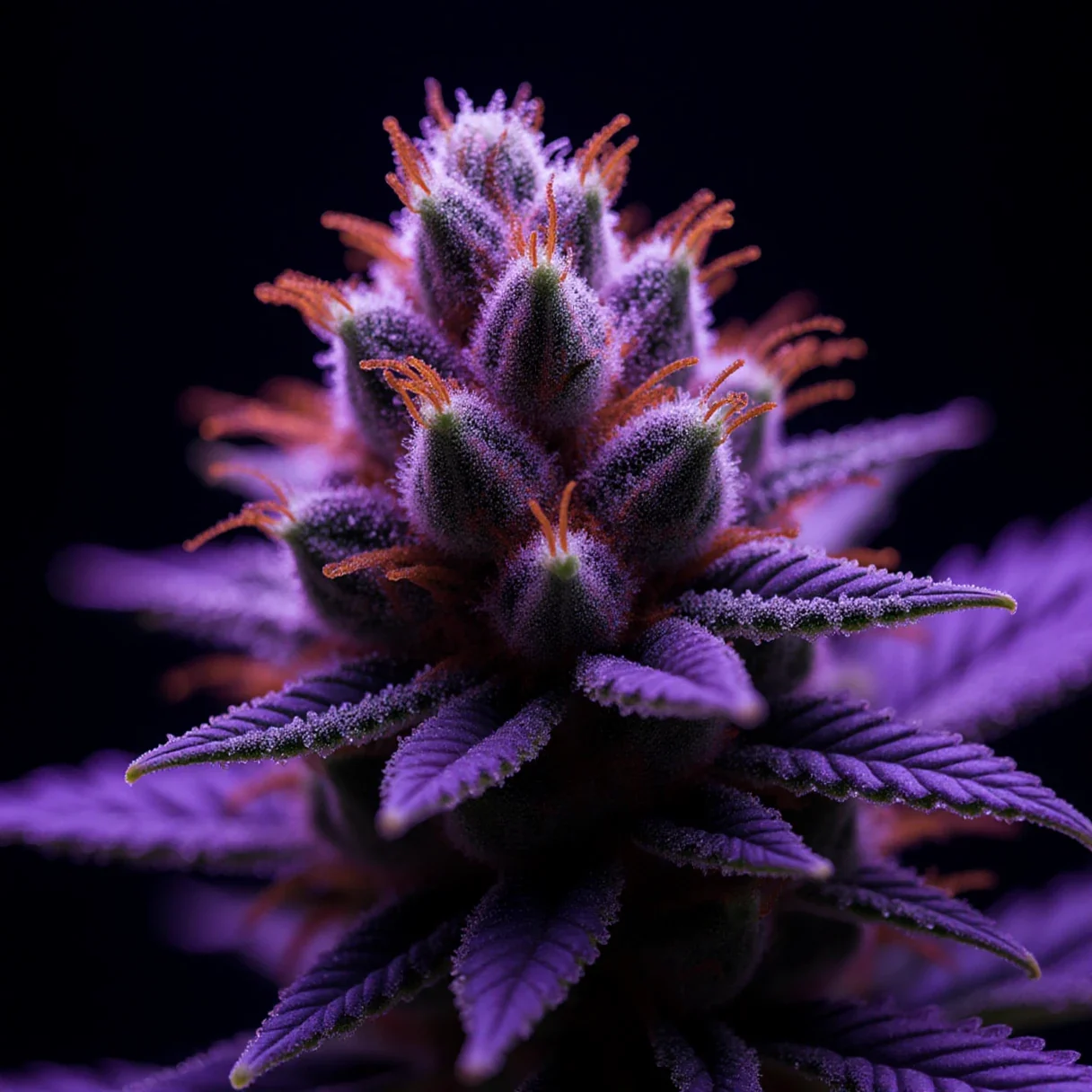
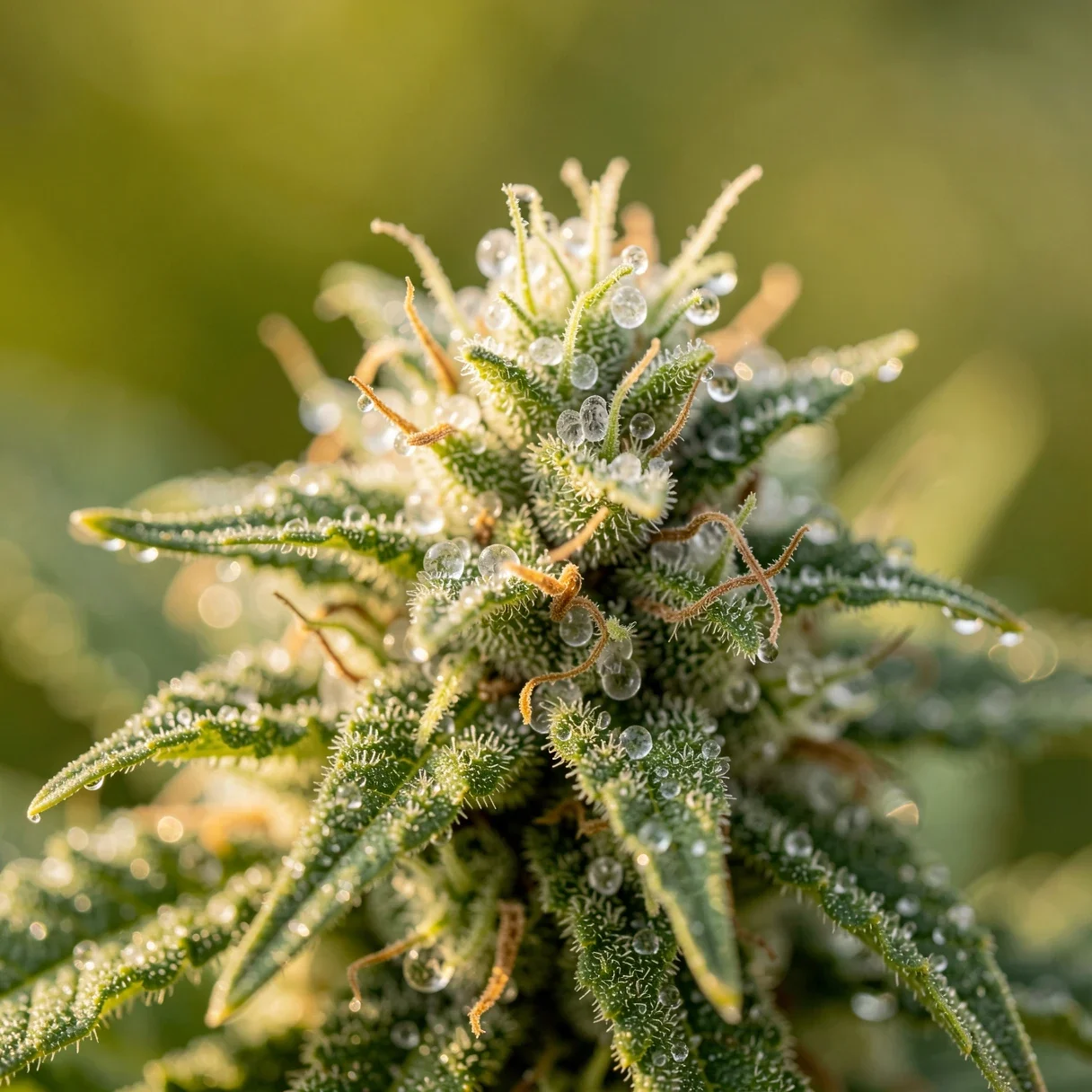
The colour comes from anthocyanins, the main pigments behind flower colour across the plant world. They’re water-soluble and stored inside the plant’s cells, in the vacuole, rather than in the resin.
Cannabis has its own main one. A 2023 study from Italy’s CREA research centre, published in Antioxidants, measured the pigments in green and purple tissue from several hemp genotypes grown outdoors near Bologna. The main anthocyanin in both leaves and flowers was cyanidin-3-rutinoside, also called keracyanin. The authors describe that as the first time it had been identified as cannabis’s major anthocyanin.
Two things follow from the chemistry. Purple isn’t a different kind of resin, and it isn’t a coating. It’s pigment in the plant tissue underneath. That’s why a purple bud can still look frosted white: the trichomes sit on top of the colour.
The cleanest evidence for “genes first” comes from British Columbia. In a 2024 study in Plant Direct, Gagalova and colleagues took four varieties grown under uniform conditions by a licensed producer and compared their leaves. Two had pronounced red-purple pigmentation. One had a moderate amount. The fourth had none at all.
Same uniform conditions, four different results. The difference tracked with the activity of the plants’ anthocyanin-building genes. That study looked at leaves rather than buds, but the principle carries: whether a plant can make colour is written into it before it ever sees a cold night.
The Italian study adds a twist about timing. In one of its lines, some plants were purple and some green during flowering. By the end of the season, as the Bologna autumn cooled from mid-September to late October, every plant in that line had coloured: stem, leaves and flowers. Another line went from red stems and petioles to a completely red plant by the end of the cycle.
The authors note that environmental cues trigger anthocyanin, so this isn’t a genes-only story. It shows a coloured line responding late and unevenly: colour can switch on late, and at different times from plant to plant, even within a coloured line. With purple cannabis strains, a plant that’s still green mid-flower isn’t necessarily a dud.
Plant-to-plant variation is also why breeders select. A line that colours early and evenly is one somebody worked on.
It’s also how Mac works. His Grape Skunk comes from Grape Ape x Skunk, and he selected the line over several generations to lock in the grape terpenes and the purple colour. Frosted Grape Shoes was chosen partly for its expressive purple. If you want to know what those generations actually do to a seed line, our explainer on F1 to F4 cannabis seeds walks through it.
The practical upshot is blunt. If you want purple, choose purple cannabis strains. Don’t count on environment tweaks to turn a line bred green into a purple one. The catalogue makes the point from the other side: our own page for Green Crack Autoflower describes it as having “none of the dark or purple tones found in indica-leaning strains.”
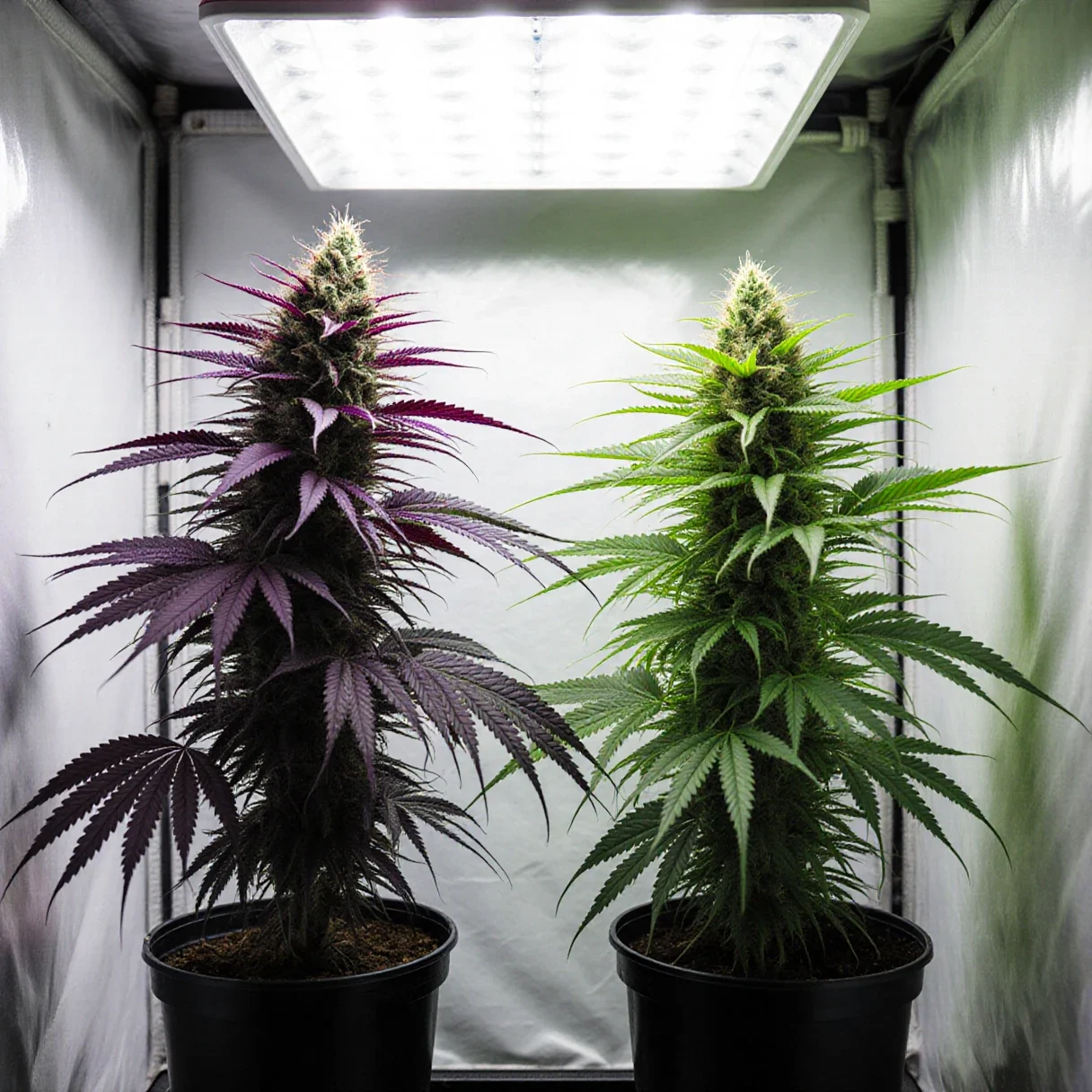
Here’s where the cold-nights story about purple cannabis strains gets interesting. A University of Wisconsin team published the most direct test we could find in 2025, in the Journal of Cannabis Research. Kim and colleagues used a line that had been self-pollinated for three generations to go purple reliably. According to the authors it turns purple about three weeks into flower even in a warm 25–30°C (77–86°F) greenhouse. So this was a plant that already had the genetics. The question was what temperature does to it.
After about six weeks in the greenhouse, before any purple showed, plants went into growth chambers for 30 days at steady temperatures of 0.5, 4, 8, 15 or 22°C (33, 39, 46, 59 or 72°F). A second round added two “fluctuating” treatments: a warm spell of 22°C (72°F) for either 5 or 15 hours inside the lit period, and 4°C (39°F) for the rest of each day. That’s a harsh version of the warm-day, cold-night idea.
What they found:
So should you ignore the cold-nights advice? Not quite, and it’s worth being careful about what this trial can and can’t tell you.
It was a CBD-type, day-neutral hemp line, grown as small plants in narrow cells inside growth chambers. Its cold period was 4°C (39°F), far colder than a typical tent. The trial didn’t test the gentler night drop growers usually talk about. Our own Grape Skunk page suggests nights of 15–18°C (59–64°F) for the last two weeks of flower, and our Grape Ape Autoflower page suggests 10–15°C (50–59°F).
Set those beside the trial and they land in different places. Grape Ape’s 10–15°C (50–59°F) sits inside the steady 8–15°C (46–59°F) range where the Wisconsin plants coloured best. Grape Skunk’s 15–18°C (59–64°F) starts at the top of it. But the trial held its temperatures around the clock, and our pages suggest a night drop only, so this study neither confirms nor rules out either figure.
What it does show is the shape of the thing. For a plant that already carries the genetics, cooler conditions turned colour up. Near-freezing held it back. Swinging between 22°C and 4°C (72°F and 39°F) each day didn’t produce the colour that steady cool did. Those plants made about as much anthocyanin as plants held at a constant 4°C or 22°C (39°F or 72°F). And in this 30-day trial, the cooler plants finished lighter.
Our read: with purple cannabis strains, a modestly cooler finish is a reasonable thing to try if your space allows it. Don’t chase a hard cold snap, and don’t expect it to rescue a line that isn’t bred for colour.
Not every purple plant is showing off its genetics. Before you count a plant among the purple cannabis strains, rule out the two common lookalikes.
Purple stems and petioles paired with dark, dull leaves and stalled growth point to phosphorus, not pedigree. Our guide to cannabis nutrient deficiencies covers how to tell it apart. Cold roots are a frequent hidden cause, because a chilled root zone struggles to pull phosphorus even when there’s plenty in the pot. The fix there is warming the roots, which our post on root zone temperature explains. A genuinely purple plant grows normally and keeps healthy leaves. A deficient one looks unwell.
Purple or red stems on a vigorous young plant can simply be genetics showing early. In the Italian study, one hemp variety’s petioles were green at 37 days and purple by 53. If the plant is growing well, leave it alone.
Blue and UV light can boost the genes that make anthocyanin. The Wisconsin team cites this from earlier work in other plants, and we couldn’t find a cannabis trial that tested it for colour. If you’re weighing a UV bar anyway, our breakdown of whether UV light increases THC covers what a controlled trial in modern cannabis actually found.
No. Colour is a pigment held in the plant’s own cells, while cannabinoids are built in the glandular trichomes. We couldn’t find a study linking purple colour to higher THC. The Wisconsin trial measured CBD alongside colour, and its warmest treatment, 22°C (72°F), gave the most CBD and among the least anthocyanin.
Our catalogue tells the same story for purple cannabis strains. Grand Daddy Purple and Grape Skunk both sit in our High THC bracket. So does Green Crack Feminized, whose page describes its buds as a bright, vivid green.
Purple doesn’t mean grape flavour either. Aroma comes from terpenes, a different set of compounds, which our guide to cannabis terpenes covers. Many purple cannabis strains do run grape or berry, but that’s because of the lines they descend from. The colour doesn’t cause the taste.
And purple isn’t a harvest signal. Judge ripeness by the trichomes, as our post on when to harvest cannabis explains, not by how dark the buds have turned.
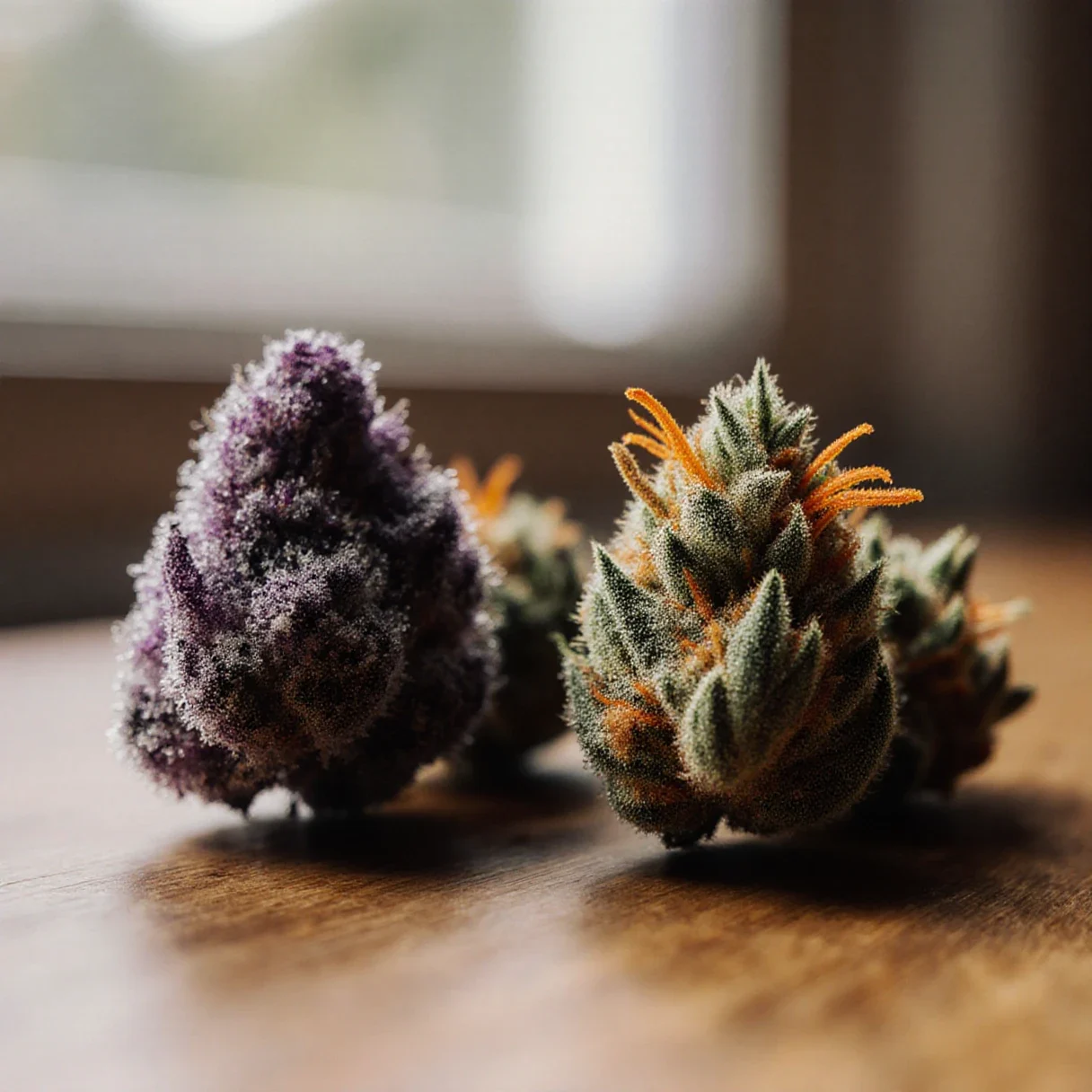
These are nine purple cannabis strains from our catalogue whose product pages describe purple as a defining trait or a signature colour feature. It isn’t every purple-leaning strain we carry, just the ones we’d start with. The figures come straight from each product page. All nine were in stock when we wrote this.
| Strain | Type | Flowering | Colour, per the product page |
|---|---|---|---|
| Grape Skunk | Feminized | 8–10 weeks | Deep purple to dark green; some phenotypes nearly black under cooler temperatures |
| Frosted Grape Shoes | Feminized | 9–11 weeks | Deep purples, violet streaks and grape hues in cooler late flower |
| Freaky Queen | Feminized | 9–10 weeks | Magenta petioles; plum and bronze sugar leaves late in flower |
| Grand Daddy Purple | Feminized | 8–10 weeks | Deep purple, from violet to near-plum |
| Grand Daddy Black | Feminized | 8–9 weeks | Purple deepening to near-black in cooler nights |
| Blackberry Kush | Feminized | 8–9 weeks | Deep green to dark purple, sometimes nearly black |
| Forbidden Fruit | Feminized | 8–10 weeks | Deep purple hues that dominate the flower |
| Grape Ape Autoflower | Autoflower | 8–10 weeks seed to harvest | Violet and lavender, subtle to fully saturated |
| Do-Si-Dos Autoflower | Autoflower | 70–75 days seed to harvest | Deep purple and lavender through olive green |
Three of these purple cannabis strains are Mac’s own originals, and they’re where we’d start. Grape Skunk is the purple line he built deliberately, and its page says some phenotypes go nearly black under cooler flowering temperatures. Frosted Grape Shoes crosses Grape Skunk with Cement Shoes and was chosen for its purple as much as its terpenes; it takes 9–11 weeks to flower and is rated Moderate to grow. Freaky Queen wears its colour differently, with magenta petioles and plum-and-bronze sugar leaves late in flower; its page’s headline trait is the fern-leaf mutation, so treat it as the colourful wildcard of the three.
Grand Daddy Purple is one of the best-known purple cannabis strains, and its page calls it a benchmark for what a premium purple indica should look like. Grand Daddy Black crosses GDP with Black Domina and is rated Easy; its page describes buds deepening from purple to near-black when nights cool. Blackberry Kush and Forbidden Fruit round it out, both rated Easy.
Purple cannabis strains come in autoflower form too. Grape Ape Autoflower gets its purple from its Mendocino Purps side, according to its page, and is rated Easy. Do-Si-Dos Autoflower runs purple and lavender through olive-green buds.
Browse the full range of feminized cannabis seeds or autoflower cannabis seeds if you want to compare beyond these nine.
Put the research and the catalogue together and growing purple cannabis strains for colour comes down to five steps.
Start with the genetics. This is most of the job. A line selected for colour will do more for you than any environment trick.
Pop more than one seed and pick. Colour varies plant to plant, even within a purple line. Running a few seeds and keeping the most colourful plant as a mother lets you clone that colour; breeders lock it into a seed line by selecting over several generations. Our guide to phenotype hunting shows how to do it properly.
Keep the plant healthy. A starving plant can go purple for the wrong reasons and yield badly while it does. Rule out phosphorus and cold-root problems first.
Try a modestly cooler finish, not a cold snap. Several of the product pages above say cooler late-flower nights deepen the colour of purple cannabis strains. Keep it moderate. The Wisconsin plants at near-freezing barely coloured, and in that 30-day trial the cooler plants finished lighter, which the authors put down to slower maturing.
Harvest on trichomes. Don’t hold a plant past ripeness waiting for more purple.
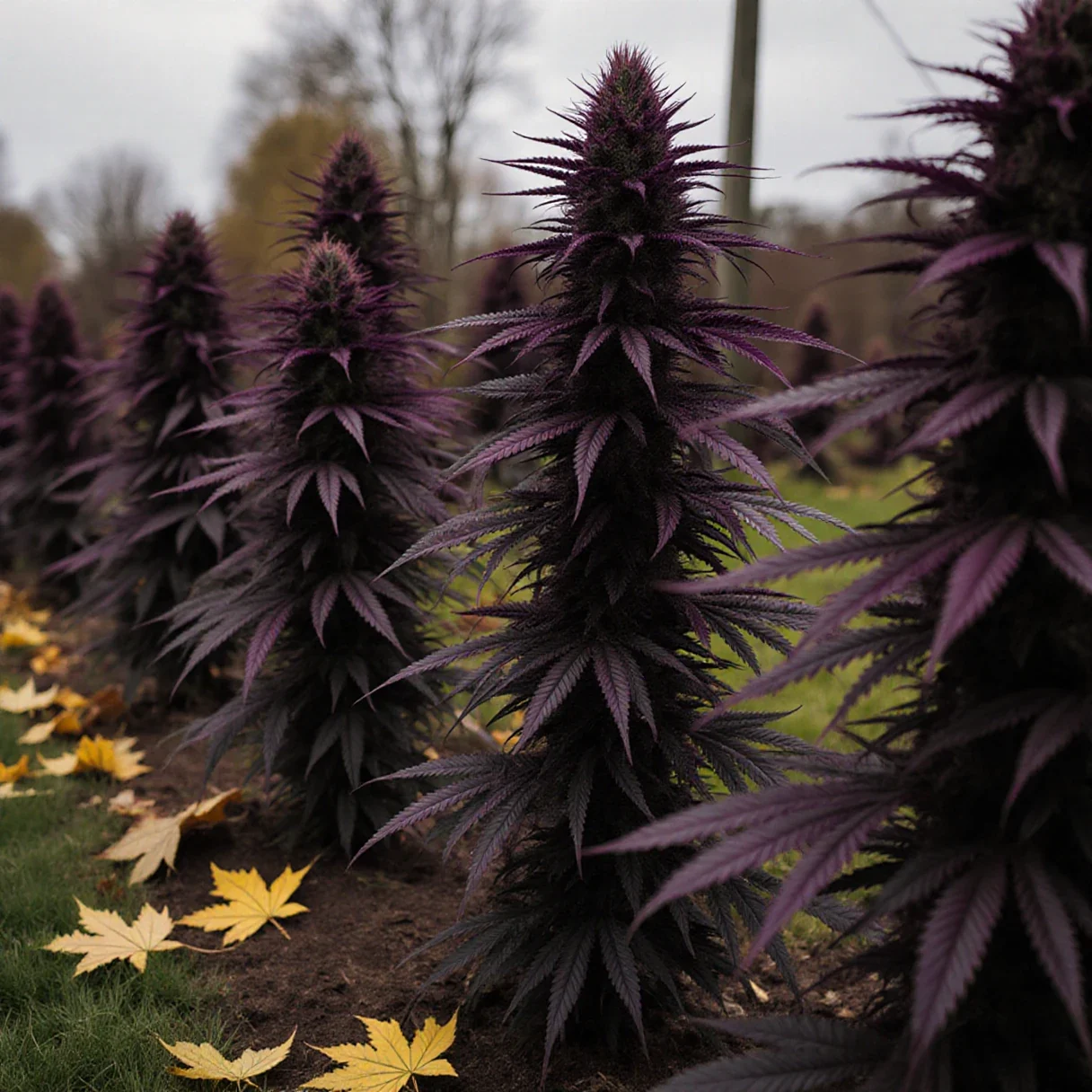
Don’t count on it. Colour starts with the genetics to make anthocyanin. In the British Columbia study, the unpigmented variety stayed green under the same conditions that left two others deeply coloured, though that study didn’t test cold. If a green-bred plant goes purple late, look at phosphorus and root temperature before you credit the weather.
Not because of the colour. We couldn’t find any research linking purple to higher THC, and purple and green strains share the same THC bands in our catalogue. Choose on genetics, effect and grow traits; enjoy the colour as a bonus.
Yes, if the genetics are there. Grape Ape Autoflower and Do-Si-Dos Autoflower both list purple as part of their normal appearance.
On a healthy, fast-growing plant it’s usually genetics. On a plant with dark, dull leaves and slow growth, it’s more likely a phosphorus problem, often caused by cold roots.
Purple is genetic first. The research is consistent on that: in the British Columbia study, uniform conditions produced green and purple plants side by side, and the one controlled test of temperature we found showed cool conditions dialling colour up in a plant already built for it, while near-freezing stopped it developing. Pick purple cannabis strains, select the most colourful plants, keep them healthy and finish them a little cool if you can. That beats any cold-night trick on a green line.
Start with Mac’s Grape Skunk if you want the line built for it, and see our other cannabis grow guides for the rest of the season.
Feminized Seeds | Phenotype Hunting | Cannabis Terpenes
Keep reading
 Cannabis Terpenes
 Cannabis Strain Names Explained
 What Does 420 Mean? The Origin and Culture of Cannabis’ Most Famous Number
Browse all cannabis growing guides by topic, from germination to harvest.
Ready to grow? Browse premium seeds from Lighthouse Genetics:
Designed & Built by Wynne Web Design