Ask almost any experienced grower whether UV light increases THC and you will get the same answer: yes, definitely, add UV in late flower for frostier buds. The claim is everywhere — grow forums, YouTube tutorials, LED manufacturer marketing, even some respected cultivation books. But when you dig into the actual peer-reviewed research, the story gets a lot more complicated. So does UV light increase THC in cannabis, or is this one of those cultivation myths that refuses to die? We pulled the studies, read them properly, and the short answer will probably surprise you.
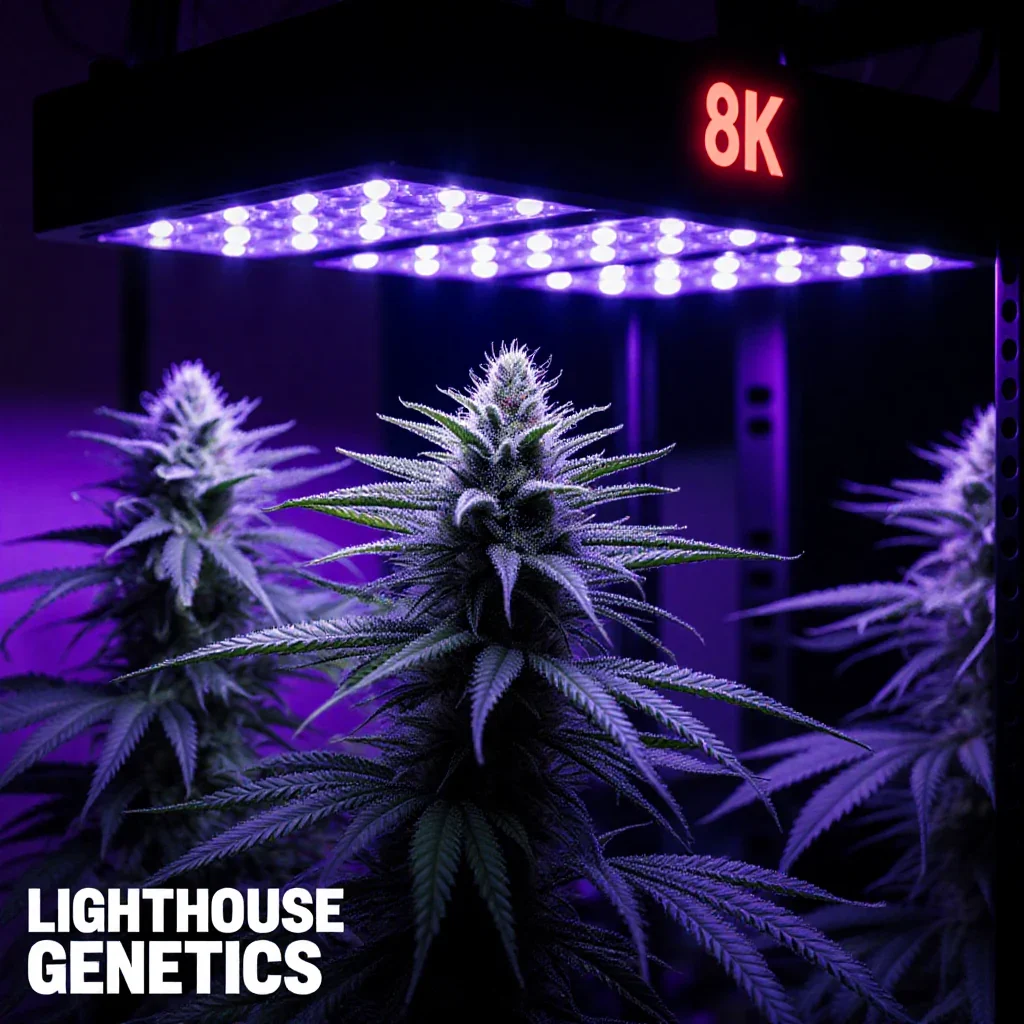
For modern high-THC cannabis cultivars, the best peer-reviewed evidence says UV-B light does NOT increase THC, CBD, or overall cannabinoid content. The idea that UV boosts potency comes from a single 1987 study on low-THC cannabis varieties (around 3% THC) — varieties that barely exist in the commercial market anymore. When researchers repeated the experiment in 2021 using modern high-potency genetics, the effect completely disappeared. So no, UV light does not increase THC in the strains you are actually growing. The question of does UV light increase THC needs a harder look at what the research actually found.
The entire belief traces back to one paper: Lydon, Teramura, and Coffman, published in Photochemistry and Photobiology in 1987. They exposed two chemotypes of Cannabis sativa to supplemental UV-B radiation and measured cannabinoid content. In the drug-type chemotype — which had a baseline THC content of around 2.5% — they reported that floral THC rose to about 3.1% at the highest UV-B dose tested, roughly a 24% relative increase. The paper became one of the most-cited cultivation references in the industry, and the answer to does UV light increase THC looked settled from there.
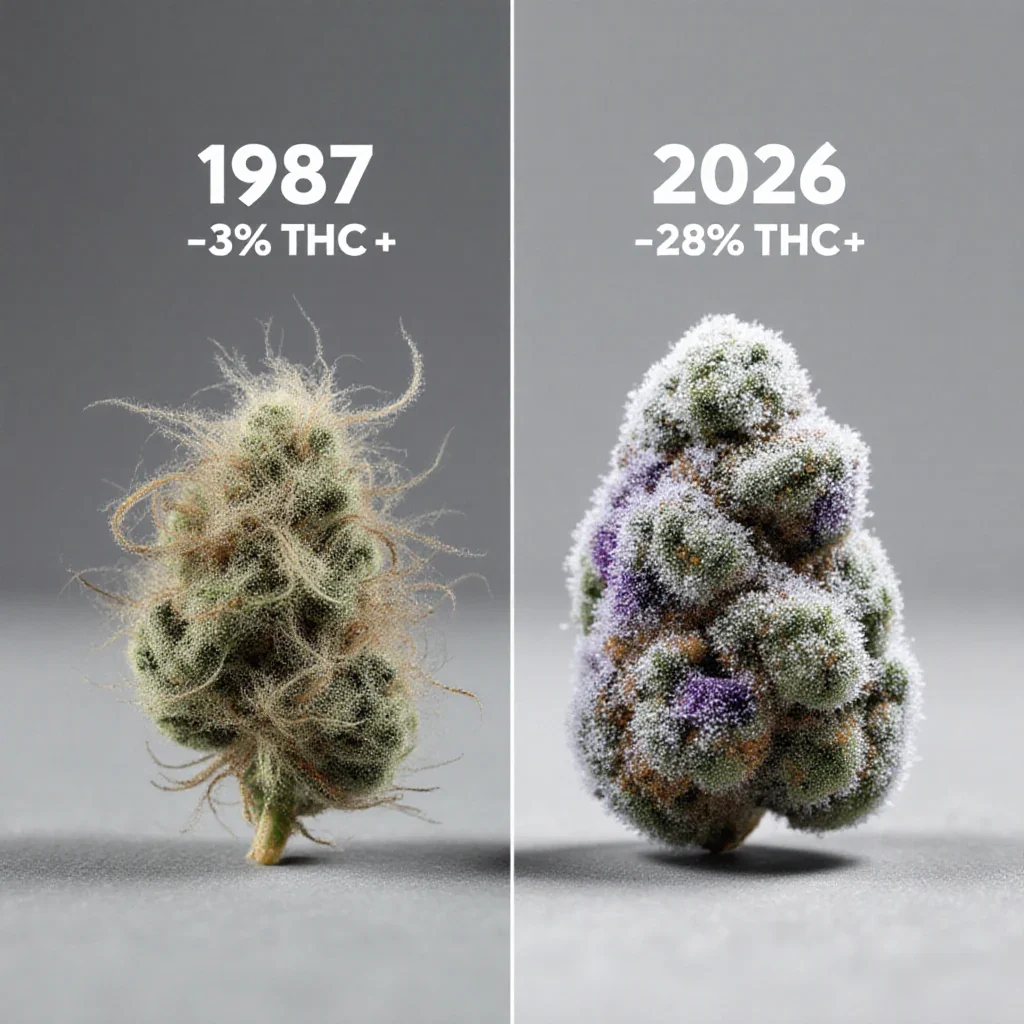
Here is the thing nobody mentions when they cite that 1987 study: it was done on plants with a baseline around 2.5% THC, rising to about 3.1% under UV-B. That was near the industry standard nearly forty years ago. If you are asking does UV light increase THC today, you need to ask what genetics were being tested. Modern commercial cannabis cultivars routinely hit 20%, 25%, even 30% THC. Strains like Gorilla Glue #4 Feminized, Godfather OG, Cement Shoes, and Train Wreck all sit comfortably in the 25-30% range without any special UV treatment. The cultivars Lydon tested in 1987 are not the plants you are growing in your tent in 2026.
In 2021, researchers Rodriguez-Morrison, Llewellyn, and Zheng at the University of Guelph published a paper in Frontiers in Plant Science titled “Cannabis Inflorescence Yield and Cannabinoid Concentration Are Not Increased With Exposure to Short-Wavelength Ultraviolet-B Radiation.” The title alone tells you where this one lands on does UV light increase THC.
They grew two modern cannabis cultivars — called ‘Low Tide’ and ‘Breaking Wave’ — under a controlled canopy PPFD of roughly 400 μmol/m²/s during flower, then added supplemental UV-B at various intensities from 0.01 up to 0.8 μmol/m²/s, delivered by LEDs peaking at 287 nm. The UV was on for 3.5 hours a day for nine weeks of flowering. This is a serious, well-designed experiment — the kind the 1987 paper, for all its historical value, simply was not.
The findings were unambiguous. UV-B exposure did not increase yield. It did not increase THC concentration. It did not increase CBD, CBG, or total cannabinoid content. What it did do was damage the plants — reduced photosynthesis, leaf necrosis, stunted growth at the higher intensities. In other words, the only effects the researchers found were negative. Zero upside, real downside. Does UV light increase THC? For these modern cultivars, the answer was a clean no.
A 2024 follow-up study by Huebner and colleagues in the same journal looked at different UV wavelengths and intensities and came to a very similar conclusion — none of the investigated UV treatments altered the cannabinoid profile in modern high-THC genetics. On does UV light increase THC, the pattern is consistent across multiple contemporary studies.
Why would UV-B affect 3%-THC cannabis in 1987 but not 25%-THC cannabis in 2021? The most likely explanation involves a concept called metabolic ceiling. The plants Lydon tested were producing cannabinoids at maybe a tenth of what modern genetics produce. They had enormous headroom to increase production in response to stress signals, including UV-B. Modern cultivars, bred over decades specifically for maximum cannabinoid output, are already operating close to the biological maximum their metabolism can sustain. There is simply nothing left to squeeze out with stress.
This ceiling effect shows up in other crops too. Decades of selective breeding push a plant toward its physiological limits. Once you get there, stress-based tricks that worked on wild-type or low-yield varieties stop working. The question of what happens when you expose a 2.5%-THC 1987 chemotype to UV is a totally different question from does UV light increase THC in Cement Shoes or Bruce Banner Auto. One says maybe yes. The other says no.
There is another subtle factor. The 1987 study measured a “percentage increase” over a very low baseline. Going from 2.5% THC to 3.1% THC is only a 0.6 percentage-point absolute change, even though it looks like a ~24% relative increase. Apply that same ~24% relative uplift to a 25% modern cultivar and you would expect 31% — but the 2021 study showed no change at all. Modern genetics simply do not respond to UV the way the old landraces did.
If you have already invested in a grow light that includes UV-A or UV-B diodes, you have not thrown your money away — UV-A at modest intensities appears to be relatively benign and may play a small role in overall plant morphology. But if you are asking whether you should buy a separate UV-B supplement bar specifically to boost THC, the evidence says no. Not only is there no measurable cannabinoid benefit in modern genetics, there is a real risk of reducing yield and damaging plant tissue if you run UV too intense or too long.
Some growers still swear by UV supplementation, and when you ask them does UV light increase THC they will insist it does based on what they see in their own tent. Part of that is confirmation bias — you paid for the gear, of course it seems to work. Part of it is that UV does increase visible trichome density in some cases, which looks impressive but is not the same thing as actually increasing THC content. A plant can produce more trichomes with less cannabinoid in each one, and end up with no potency gain. This is exactly the pattern Rodriguez-Morrison’s team observed in several of their treatments.
The practical takeaway on does UV light increase THC: do not pay extra for UV. Spend that money on better genetics, better environment, and better nutrition instead. If you are new to growing, our beginner strain guide is a smarter place to start than a UV supplement light.
If the answer to does UV light increase THC is no, what actually drives potency? The peer-reviewed literature on cannabinoid production points at four factors that actually matter, in descending order of impact:
Notice what is not on this list: UV light. Ask does UV light increase THC compared to any of those four factors, and the answer is a distant “not even close.” The question of does UV light increase THC in a meaningful way, for any grower using modern genetics, keeps coming back with the same answer from the research.
The same biology applies. The 2021 Rodriguez-Morrison study did not specifically test autoflowers, but the underlying reason UV does not boost THC in modern photoperiod strains — metabolic ceiling — applies equally to autoflowers. Modern autoflower genetics like Gorilla Glue Auto and Bruce Banner Auto easily produce 25%+ THC without any UV supplement.
Most studies showing any positive plant response have used UV-B (280-315 nm). UV-A (315-400 nm) is lower energy and has never been shown to increase cannabinoids in modern cultivars in any peer-reviewed study. Many commercial grow lights include a small amount of UV-A because it may slightly affect plant morphology, but it is not a THC booster.
Three reasons. First, the 1987 Lydon study is still widely repeated in cultivation books and articles written by people who have not read the more recent research. Second, confirmation bias — if you paid for UV, you will notice any frostier-looking bud and attribute it to UV. Third, UV can increase visible trichome density in some plants even when cannabinoid content does not rise, so the plant looks more impressive without actually being more potent.
At high intensities or long exposure times, yes. The 2021 Guelph study observed leaf necrosis, reduced photosynthesis, and reduced yield at the upper end of their UV-B intensity range. Like a sunburn on a human, a little UV is tolerable but too much causes real damage. The risk-to-reward ratio for supplemental UV-B is bad.
Outdoor sun delivers far more UV than any indoor UV supplement, and outdoor-grown cannabis still varies in THC based almost entirely on genetics, not sun exposure. This is another data point suggesting UV is not a meaningful lever for potency.
Possibly. Ongoing studies continue to test different UV wavelengths, durations, and cultivars. A 2024 Frontiers in Plant Science paper looking at various UV spectra essentially confirmed the 2021 finding. For now, the best available evidence on does UV light increase THC says no for modern genetics. If that changes, we will update this post.
Does UV light increase THC? Based on the best peer-reviewed research available today, no. The 1987 study that started the myth was done on cannabis varieties with a tenth of the THC content of modern cultivars. When researchers repeated the experiment in 2021 with modern genetics, the effect was gone. A 2024 follow-up confirmed the result. The real drivers of THC content are, in order: genetics, light intensity in the PAR range, proper drying and curing, and smart environmental stress management. UV is not on the list.
If you want high-THC buds, pick the right seed first. Our full catalog has dozens of strains in the 20-30% THC range — and none of them need UV supplementation to hit their genetic potential. If you are just getting started, the germination guide and seed storage guide will do more for your final result than any UV bar. The next time someone tells you does UV light increase THC and the answer is “yes, definitely,” you can send them this post with the 2021 and 2024 studies attached. Science over folklore — always.
Want to keep learning? Browse our full library of cannabis grow guides — everything from germination to harvest, in one place.
Ready to grow? Browse premium seeds from Lighthouse Genetics:
Designed & Built by Wynne Web Design