Scroll any seed catalog and the names start to blur together. OG this, Kush that, a Haze, a Diesel, something called Girl Scout Cookies, and a dozen desserts that sound like a bakery menu. It looks like chaos, but most cannabis strain names actually follow a handful of patterns — once you know them, you can read a name and make a rough guess about where a plant came from and what it might be like.
The catch is that the system is loose, half-marketing, and full of myths growers repeat as fact. So this is a guide to what the common strain names usually mean, where the big families came from, and — just as important — where the names stop telling you anything useful at all.
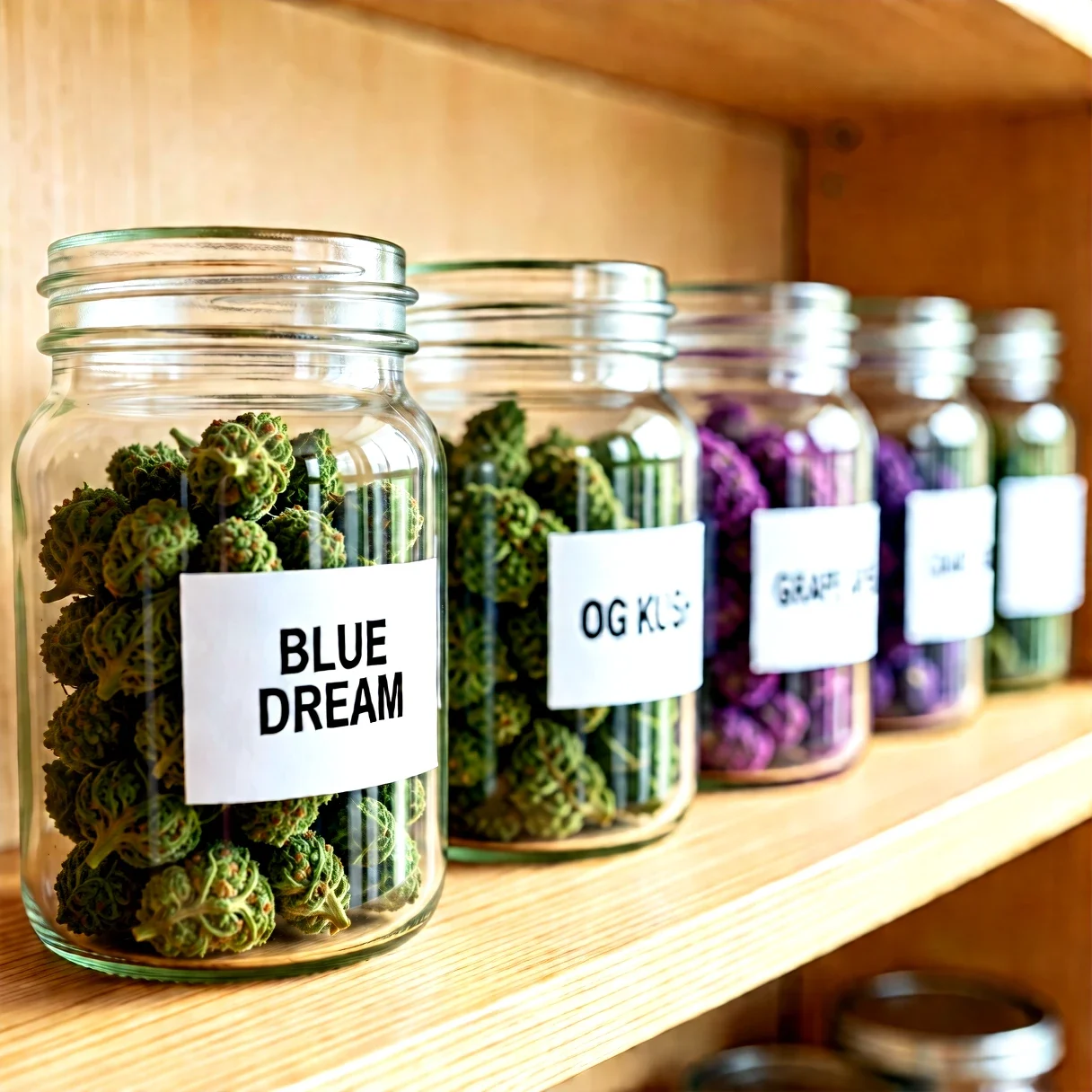
There’s no official authority naming cannabis the way botanists name plants. Breeders name their own crosses, and over the years a rough grammar emerged. Most cannabis strain names are built from one or more of these pieces:
Read a name like “Blueberry Lemon Haze Autoflower” and you can already decode it: blueberry-and-lemon flavor, Haze sativa heritage, in an autoflowering version. That’s the whole trick — the rest of the work in reading cannabis strain names is learning what the family surnames mean.
“Kush” is the one name with a genuinely solid origin. It points to the Hindu Kush mountain range straddling Afghanistan and Pakistan, home to the squat, resinous, cold-hardy indica landraces that breeders carried west. When you see Kush in a name — Banana Kush, Blueberry Kush, Kush XL — it’s signaling that heavy, relaxing, indica-leaning lineage. The pure end of that line is something like Afghani, an unembellished landrace name.
“OG” is the opposite — the most argued-over two letters in cannabis. You’ll hear it stands for “Ocean Grown” or “Original Gangster,” but there’s little real evidence for either. The growers credited with the original OG Kush, Josh Del Rosso and Matt Berger, have said it simply meant original — their authentic Kush, set apart from the imitations, cultivated around the early 1990s. So treat “OG” as a badge of pedigree, not a literal description. Modern OG-line strains like Godfather OG and Bubble OG carry that dense, potent, fuel-and-pine character forward.
If Kush is the indica surname, Haze is the sativa one. Haze took root in 1960s–70s California, pulling together sativa landraces from Colombia, Mexico, Thailand, and South India into a soaring, cerebral, long-flowering line. The romantic “Haze Brothers” backstory is partly myth — the origins are genuinely murky — but the genetics are real and everywhere. A name carrying Haze (Haze XL, Mexican Haze, White Amnesia Haze) is telling you to expect an energetic, heady, sativa-forward plant that usually takes longer to finish.
Diesel is the pungent one. Sour Diesel surfaced in the early-1990s East Coast scene, and its origin story is as foggy as Haze’s — several growers claim it. What the name reliably promises is aroma: sharp, gassy, fuel-like. NYC Sour Diesel wears that loud, skunky-fuel nose like a badge.
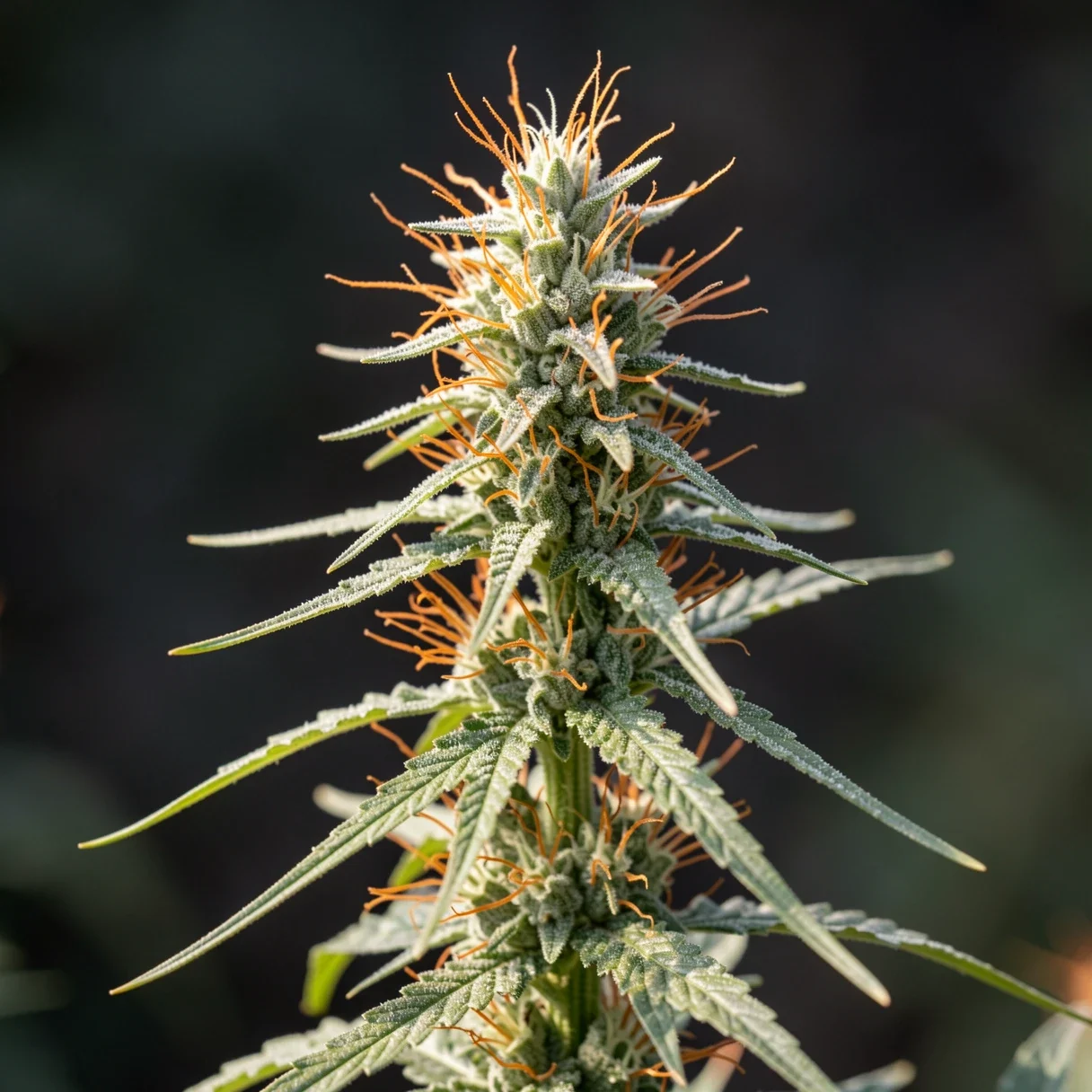
Somewhere around 2012, cannabis naming went to the dessert table. The strain that kicked it off was Girl Scout Cookies — GSC — bred by Northern California’s Cookie Family from a cross of OG Kush and a Durban Poison line. It was so successful that “Cookies,” “Cake,” “Gelato,” and “Sherbert” became their own naming wave, signaling sweet, candy-like terpene profiles and usually a chunk of that OG/Cookies heritage underneath.
These are the modern hybrids: Animal Cookies, Mandarin Cookies, Birthday Cake, Cheesecake. The dessert name is a flavor promise more than a genetic one, but most trace back through the Cookies/OG world. If sweet and potent is what you’re after, the bakery aisle is a decent place to start — and our list of best cannabis strains for beginners includes a few of these easygoing hybrids.
Before the desserts, there was Skunk. Skunk #1 was one of the first truly stabilized hybrids, built in the 1970s and widely credited as a cross of Afghani, Acapulco Gold, and Colombian Gold — an indica steadied with two classic sativas. It became a foundation block for countless modern strains, which is why “Skunk” shows up across so many cannabis strain names as a marker of that pungent, reliable, old-school vigor.
The name now signals heritage and a loud aroma more than a single genetic line. You’ll see it riding alongside other families — Northern Lights Skunk, Super Skunk Kush, Acapulco Gold Skunk — and in Mac’s own Grape Skunk, which pairs that classic skunk backbone with a sweet grape front end. The “#1” tag, by the way, is just a breeder marking a specific stabilized selection — Skunk #1, not Skunk #2.
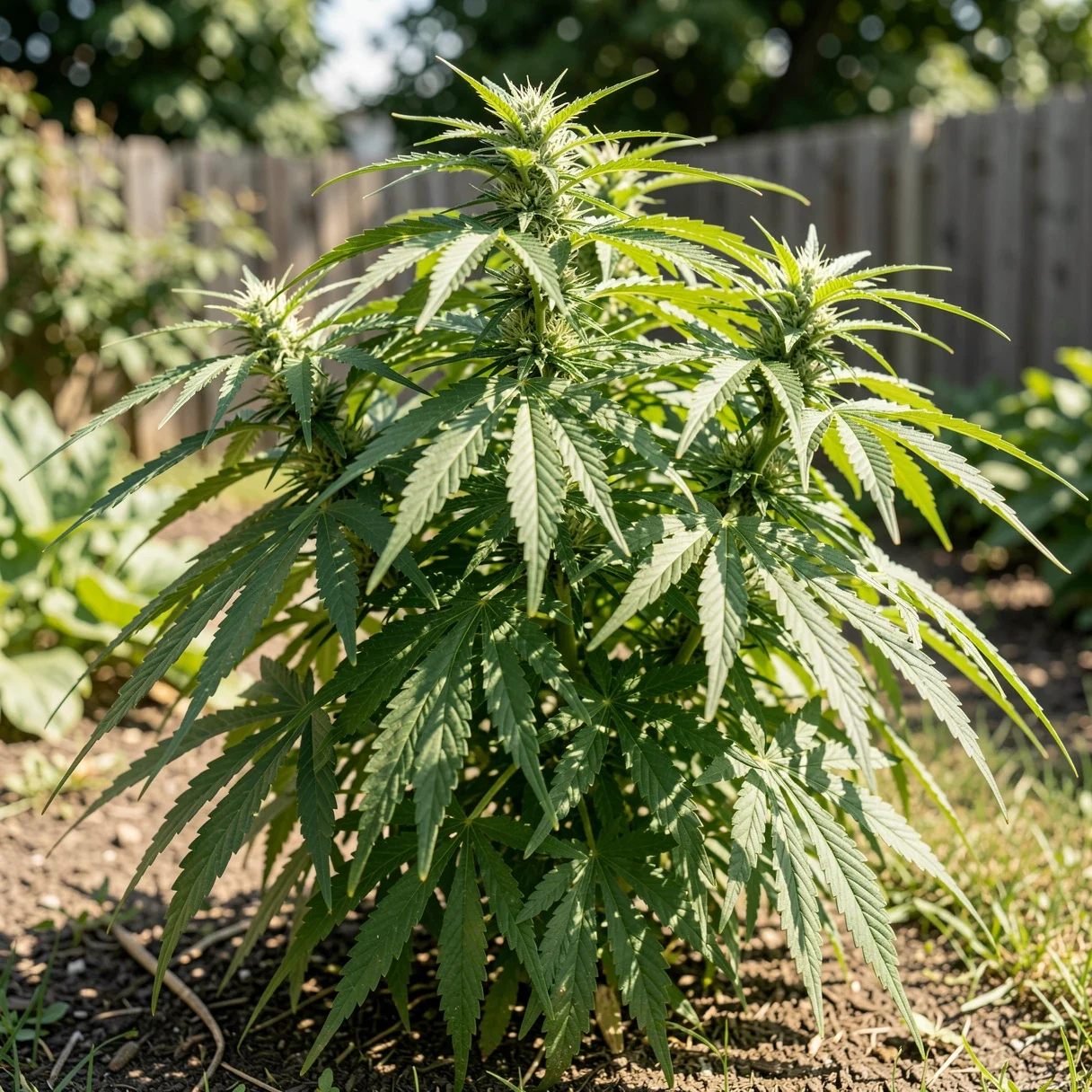
The tags on the end of a name are the most literal, factual part of the whole system. These actually mean something specific every time:
| Tag | What it tells you |
|---|---|
| Auto / Autoflower | Carries ruderalis genetics, so it flowers by age instead of a light-schedule change. Faster, smaller, beginner-friendly. |
| Fem / Feminized | Seeds bred to produce almost only female (bud-bearing) plants. |
| CBD | Selected for high CBD and low THC — calmer, clear-headed, less intoxicating. |
| XL | Marketing for a high-yield selection. No genetic standard — just “expect bigger.” |
| #1, S1, F2 | Breeder shorthand for a specific selection or generation. |
If the difference between Auto and Fem is new to you, we cover it in full in autoflower vs feminized seeds. The CBD seed collection and the autoflower lineup are good places to see those tags in action.
Here’s the honest part. Cannabis strain names are a rough guide, not a guarantee. Naming isn’t regulated, so two breeders can sell completely different plants under the same name, and a hyped name gets slapped on lookalikes constantly. The family surname (Kush, Haze, Skunk) is usually the most trustworthy signal because it points at real heritage. The flavor and “XL”-style marketing words are the least reliable.
So use the name to narrow the field, then judge the plant on what matters: the stated genetics, the THC and CBD levels, the grow difficulty, and the flowering time. That’s why every product on this site lists those specs instead of leaning on the name alone. If you want a framework for weighing them, start with how to choose cannabis seeds or shop by the result you want in cannabis seeds by effect.
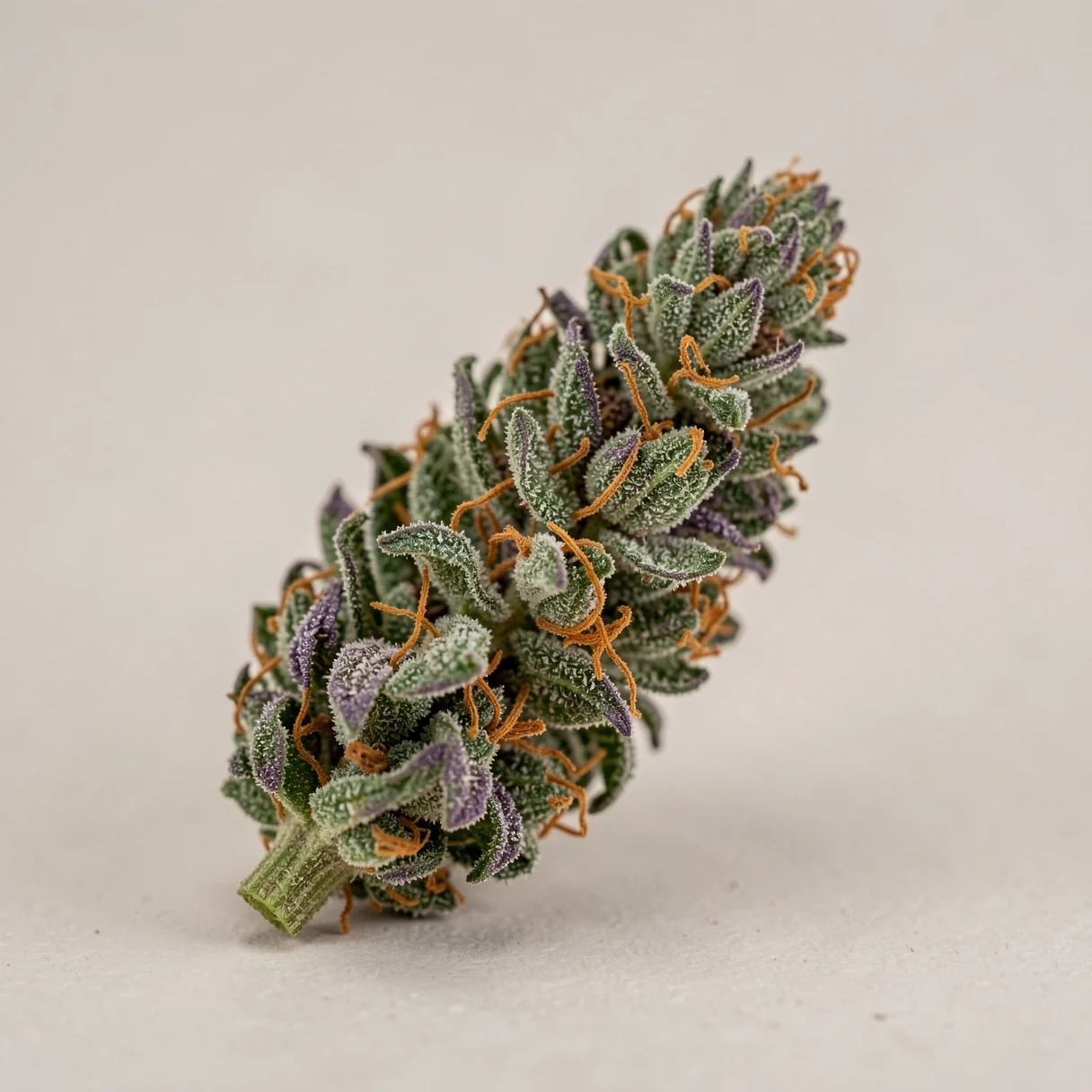
It’s disputed. The popular guesses are “Ocean Grown” and “Original Gangster,” but there’s little evidence for either, and the originators of OG Kush have said it just meant “original” — their authentic Kush. Treat OG as a mark of pedigree rather than a literal description.
No. There’s no governing body for cannabis strain names. Breeders name their own crosses, which is why the same name can appear on different plants from different sellers. The genetics, cannabinoid levels, and grow specs are far more reliable than the name itself.
They’re shorthand for opposite ends of the spectrum. Kush points to indica landraces from the Hindu Kush region — relaxing, heavy, fast-ish. Haze points to a sativa lineage — energetic, cerebral, and usually longer to flower.
It started with Girl Scout Cookies around 2012. Its success launched a wave of sweet, candy-flavored hybrids — Cookies, Cake, Gelato, Sherbert — and the dessert name became shorthand for that sweet terpene profile, usually with OG/Cookies genetics underneath.
Cannabis strain names aren’t random, but they aren’t a spec sheet either. Cannabis strain names are a layered shorthand — genetics, flavor, place, and marketing — and the genetic surnames carry the real information. Learn the big families, read the suffixes literally, and treat everything else as a hint.
Once you can read the names, the catalog stops looking like noise and starts looking like a map. Then you pick on the things that actually decide your grow: the lineage, the numbers, and the seed in your hand.
Shop All Seeds | How to Choose Cannabis Seeds | Seeds by Effect
Want to keep learning? Browse our full library of cannabis grow guides — everything from germination to harvest, in one place.
Ready to grow? Browse premium seeds from Lighthouse Genetics:
Designed & Built by Wynne Web Design