Ask this question on any grow forum and you will get three confident answers, all of them citing yields nobody measured. 18/6 because plants “need to rest.” 20/4 because it is the sweet spot. 24/0 because more light equals more weed. Everyone is certain, and almost nobody is pointing at data. Picking an autoflower light schedule should not be this contested.
Here is the part that gets skipped: an autoflower light schedule cannot switch flowering on, hold it off, or reveg your plant. That whole lever — the one that makes photoperiod growers obsess over timers and light leaks — simply is not connected to anything in an auto. The flowering clock is genetic and it runs on age.
So the argument is not really about photoperiod at all. It is about how much total light you deliver in a day, how much heat you dump into the tent, and what your electricity meter does about it. Three things you can actually calculate.
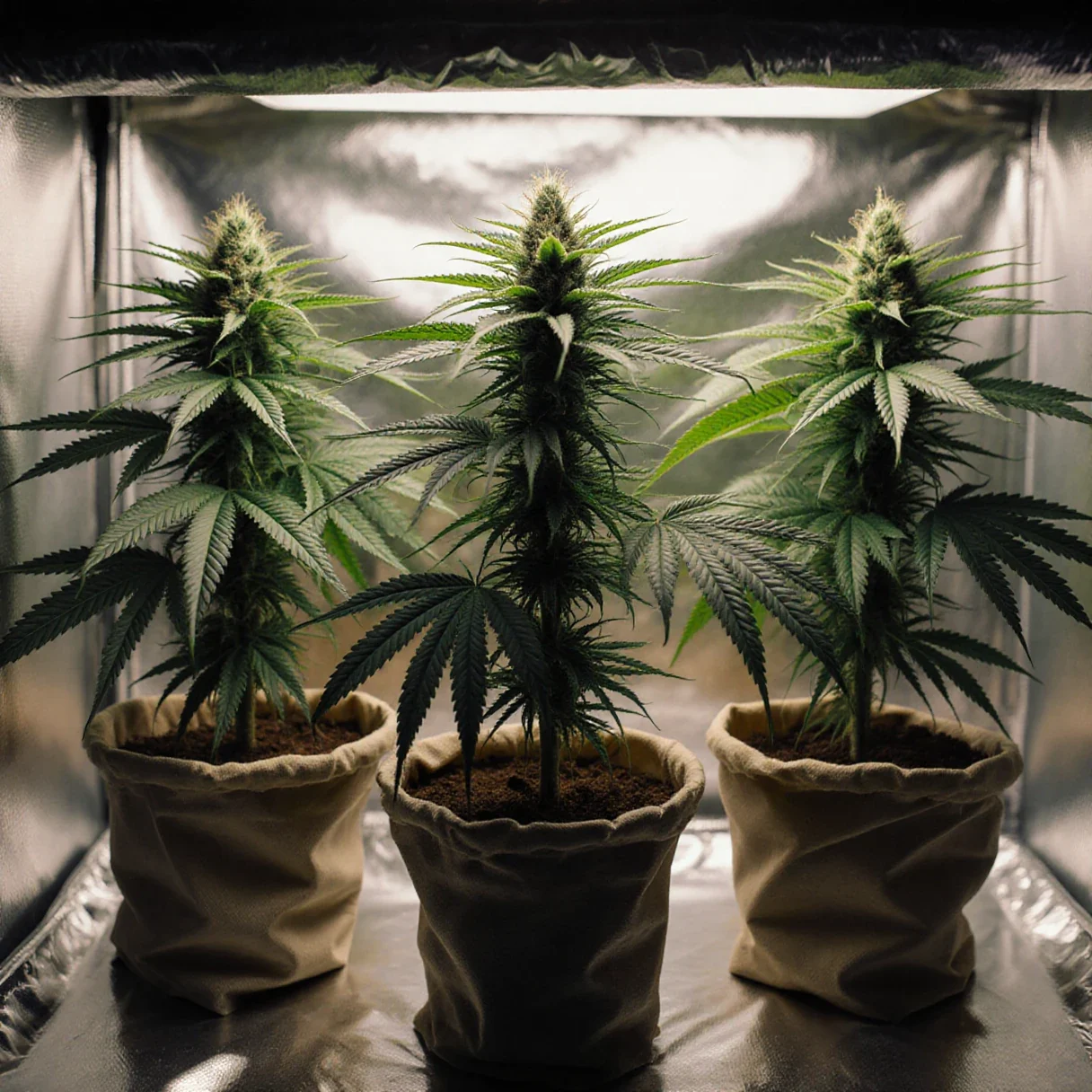
Photoperiod cannabis flowers when the dark period gets long enough. Autoflowers do not. The trait is genetic, and it has been mapped: Toth and colleagues at Cornell identified a major-effect locus they named Autoflower1 and found it segregates as a simple recessive, single-locus trait. On the continuous-light question their wording is precise: “Most high-cannabinoid cultivars did not flower under continuous light, except for those homozygous for Autoflower1.” Carry two copies of the autoflowering allele, and 24 hours of light a day with no dark period at all will not stop the plant flowering.
That is the whole ballgame for this question. If a plant flowers under 24/0, then no autoflower light schedule you pick is going to keep it in veg or push it into bloom. You are not managing a trigger. You are managing a dose.
It also means the usual photoperiod anxieties do not transfer. Interrupting the dark period does not disturb an auto’s flowering the way it disturbs a photoperiod plant’s, because there is no photoperiod response there to disturb. If you have been running blackout discipline on a tent full of autos, you can stop — we cover what the dark period actually does for photoperiod plants in our piece on the 13 hour photoperiod research, and none of it applies here.
Autos trade that flexibility for a fixed clock. They finish when they finish, which is also why you should not top them to control size — the plant has no spare weeks to recover. That is covered separately in autoflower plant height. So the autoflower light schedule is doing none of the work growers assume it is doing.
Daily light integral is the number that matters. DLI is the total quantity of usable photons landing on a square metre over a full day, and it is simple arithmetic:
DLI (mol/m²/day) = PPFD (µmol/m²/s) × hours of light × 3600 ÷ 1,000,000
Your autoflower light schedule supplies the hours term and nothing else. PPFD is the instantaneous intensity your light puts out at canopy height. Hours is your timer. Multiply them and you get the dose. Which means your autoflower light schedule and your light intensity are two dials controlling one number — and the plant only experiences the number.
Run that at a typical flowering intensity of 600 µmol/m²/s and the three schedules land here:
| Schedule | Hours on | DLI at 600 PPFD | Change vs 18/6 |
|---|---|---|---|
| 18/6 | 18 | 38.9 mol/m²/day | — |
| 20/4 | 20 | 43.2 mol/m²/day | +11% |
| 24/0 | 24 | 51.8 mol/m²/day | +33% |
Now flip it around, because this is the point most schedule arguments miss entirely. If your light is only strong enough to hit 450 µmol/m²/s, running 24/0 gets you to 38.9 mol — exactly what an 18/6 grower gets from a stronger fixture. Same dose — and roughly the same energy, because the dimmer fixture draws proportionally less to begin with. What the extra six hours actually bought was a tent that never cools down.
A weak light running around the clock is not a strategy. It reaches the same daily dose and spends your dark window doing it. Fixing intensity first is almost always the better move, and our guide to cannabis light intensity has the per-stage PPFD targets.
Direct evidence on this exact question is thin. We could not find a controlled cannabis trial comparing 18/6, 20/4 and 24/0 side by side in autoflowers — and that matters, because the percentage yield gains you see quoted for one schedule over another are not traceable to a published experiment that we could locate. Treat every “20/4 gives you 15% more” claim about an autoflower light schedule as a forum opinion wearing a lab coat.
What there is evidence for is the underlying mechanism: vegetative DLI drives final flower yield. Grover, Haiden and Berkowitz tested a “night break” method in Plants in 2025, comparing an 18-hour photoperiod against a 12-hour photoperiod interrupted by a one-hour light break. The night-break treatment kept plants vegetative but delivered a lower daily photon dose — 21.2 mol/m²/day versus 29.4 for the control.
The control produced 1,295 g of flower against 1,015 g — per tent, with a single tent per treatment — which the authors put at a 21.6 percent advantage. Their reading of it is explicit: the night break “reduced the daily photon dose, limiting carbon assimilation,” and that is what cost the yield — not the shape of the schedule.
Two honest caveats before anyone runs with that number. It was a photoperiod-sensitive, high-CBDA hemp cultivar called “Wife,” not an autoflower and not a high-THC drug-type plant. And the comparison was 18 hours versus a 12-hour-plus-night-break setup, not 18 versus 20 versus 24. So it does not tell you which autoflower light schedule wins. What it does support is the principle that more daily photons during vegetative growth produced more flower, in cannabis, under controlled conditions.
Apply that principle to autos and the logic is straightforward: a longer autoflower light schedule raises DLI, and raising DLI tends to raise yield — right up until something else becomes the limiting factor.
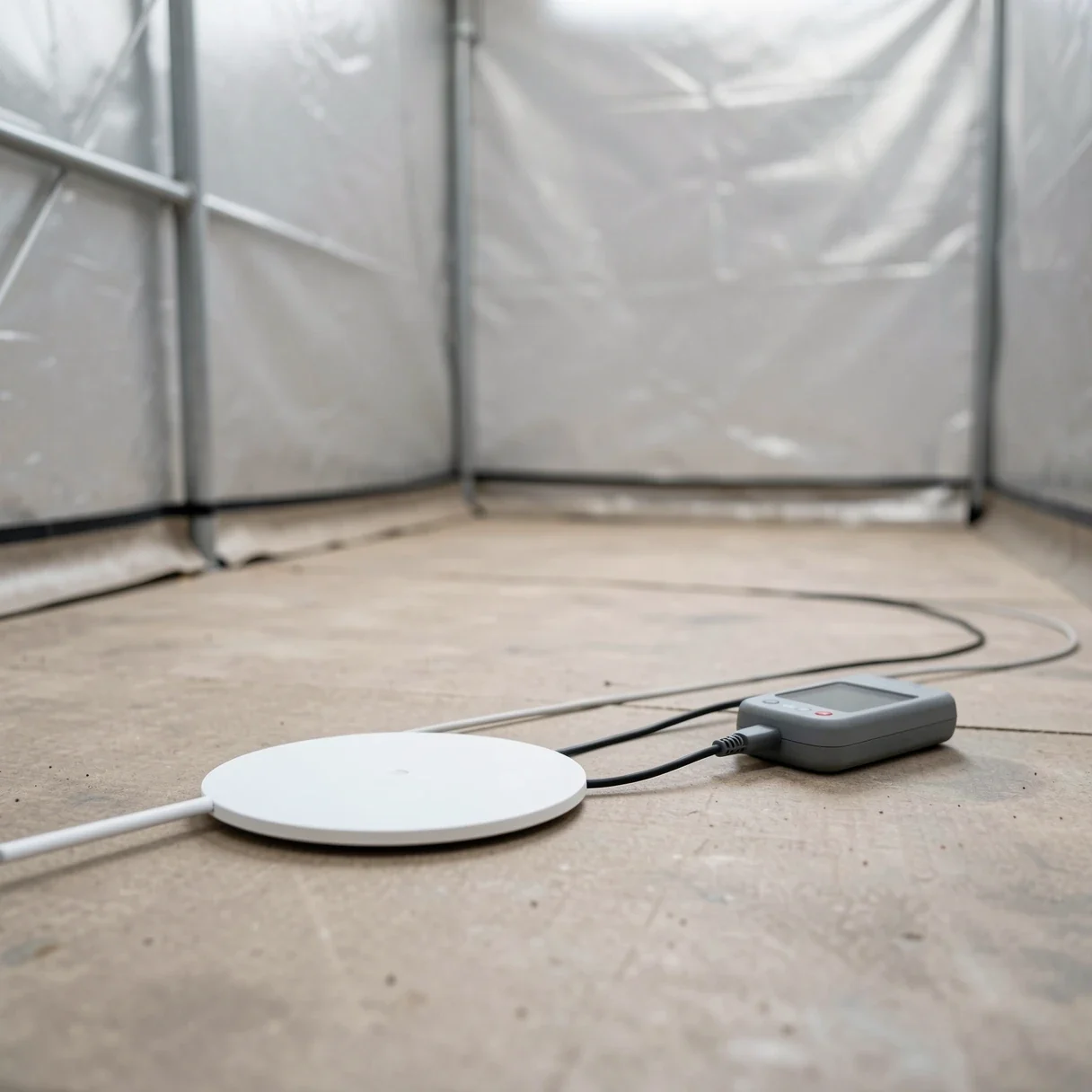
The “plants need to rest” argument against a round-the-clock autoflower light schedule is not entirely folklore — but the evidence behind it comes from tomatoes, not cannabis.
Continuous light injury is a real, documented phenomenon. Lanoue and colleagues, writing in Frontiers in Plant Science in 2019, describe lighting longer than 18 hours causing leaf injury in tomato: interveinal chlorosis, early leaf senescence, and falling photosynthetic efficiency, driven by excess carbohydrate accumulation and a drop in photosystem II quantum efficiency. They also found the injury was preventable — alternating red and blue LEDs eliminated it completely, and a temperature swing across the day has been shown to cancel continuous-light injury in many species.
Cannabis is not mentioned anywhere in that paper. So the honest position is this: continuous light damages some crops through a mechanism that plausibly could apply to cannabis, and we could not find it tested in cannabis either way. That is a reason for caution about 24/0, not proof that it hurts your plants.
If you do want to run a long autoflower light schedule, the mitigations from the tomato work are free to copy — let the tent temperature drop a few degrees during the quiet hours, and do not run a spectrum-starved cheap fixture flat out around the clock.
Every watt your fixture draws ends up as heat in the room. A 300 W LED running 18 hours puts 5.4 kWh of energy into your tent daily. At 24/0 that becomes 7.2 kWh, and — this is the part that bites — there is no lights-off window for the space to shed it.
In a small tent in summer, those six dark hours are when the room recovers. Take them away and your daytime peak becomes your only temperature. Once canopy temperatures drift into the low 30s °C (upper 80s to low 90s °F) you start losing more to the heat than the extra photons are worth, and the symptoms look a lot like other problems — see cannabis heat stress and light burn for telling them apart, and VPD for cannabis for the humidity half of it.
This is why 18/6 survives as autoflower light schedule advice despite the weak “plants need sleep” reasoning behind it. The schedule is often doing something real — it is just doing it to the room, not to the plant.
This one you can settle exactly, because it is multiplication. Each autoflower light schedule has a fixed, knowable price. Take a 300 W fixture over a 70-day auto run, and substitute your own rate — the example below uses $0.15 per kWh, which is only a placeholder.
| Schedule | kWh per day | kWh over 70 days | Cost at $0.15/kWh |
|---|---|---|---|
| 18/6 | 5.4 | 378 | $56.70 |
| 20/4 | 6.0 | 420 | $63.00 |
| 24/0 | 7.2 | 504 | $75.60 |
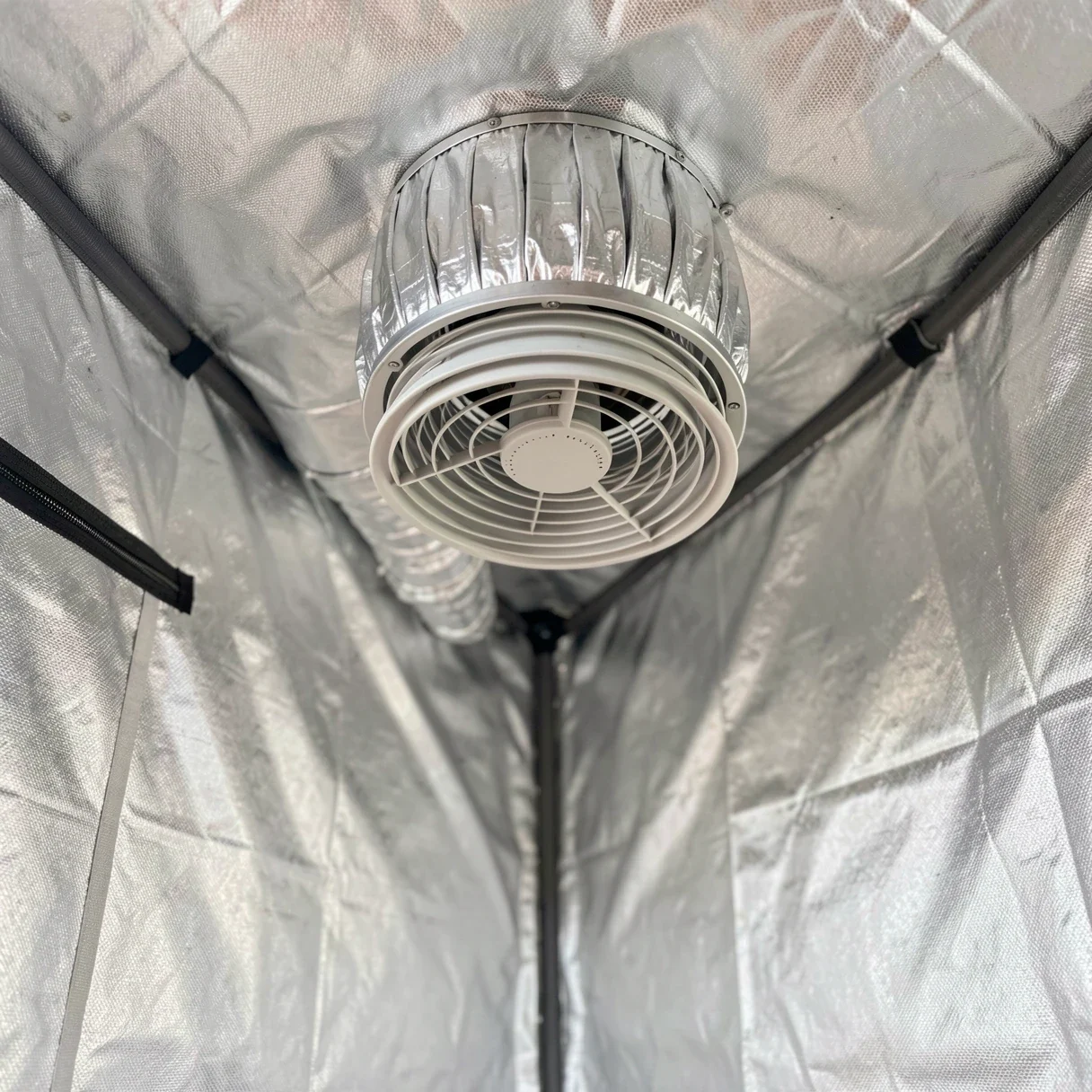
Going from 18/6 to 24/0 costs about $19 more per run on those numbers, before the extra cooling. Scale it to your own wattage and rate and you will have a real figure instead of a vibe.
Whether that $19 buys you $19 of extra flower is precisely the thing nobody has measured. Which is why we would rather spend it on a better fixture than on more hours from a mediocre one.
An opinion, clearly labelled as one.
18/6 is the default we would pick for most home grows. It delivers a strong DLI, it gives the tent a daily cooling window, it keeps the power bill sane, and it sidesteps the continuous-light question entirely. If you only ever run one autoflower light schedule, run this one.
20/4 is a reasonable upgrade if heat is under control. You gain about 11% more daily photons for about 11% more electricity, and you still keep a short dark period. This is the schedule we would use in a cool basement with headroom on the exhaust fan.
24/0 is the one we would skip. Not because it is proven harmful in cannabis — it is not — but because the upside is unmeasured, the power cost is arithmetic, the heat penalty follows from where the watts go, and you give up your only thermal recovery window to get it. That is three known costs against one hypothetical benefit.
One thing worth saying plainly: none of these choices matter as much as getting your intensity, your temperature and your medium right. The autoflower light schedule is a small dial. Growers reach for it because it is easy to change, not because it is where the yield is.
If you have the light and the cooling to run 20/4 properly, the autos that repay it are the ones with the size to use the extra photons. Do-Si-Dos Autoflower is listed at 550–650 g/m² indoors over 70–75 days, and Gorilla Glue Autoflower at 500–600 g/m² over the same window — both suit a grower who already has the environment dialled.
Devil XXL Autoflower runs 110–160 cm (43–63 inches) and is listed at 425–650 g/m², still rated Easy. Give it headroom or it will find your light.
For a tighter space where heat builds fast, shorter and quicker is the smarter trade. White Widow Autoflower finishes in 8–9 weeks at 50–80 cm (20–31 inches). Green Crack Autoflower lists 7–8 weeks at 60–125 cm (24–49 inches) and 350–550 g/m². Mandarin Cookies Autoflower comes in at 7–8 weeks and under 100 cm (39 inches), which is about as forgiving as a tent gets.
First auto ever? Start with something rated Easy and short before you start optimising timers — our beginner autoflower shortlist is built for exactly that, and you can browse the full range of autoflower cannabis seeds if you already know what you are after.
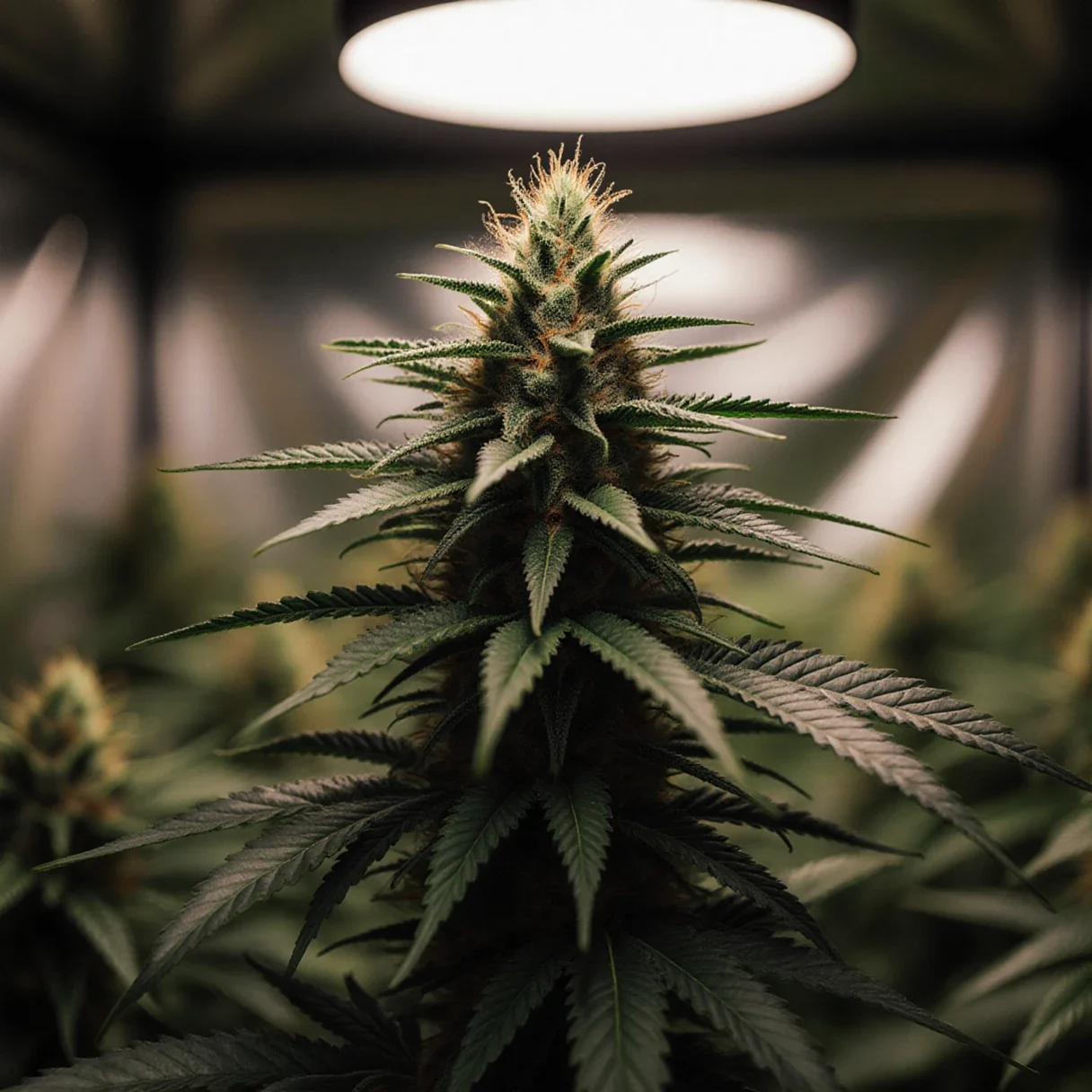
Not to flower. Toth and colleagues found that the high-cannabinoid cultivars homozygous for Autoflower1 flowered under continuous light, while most of the photoperiod-sensitive cultivars did not. Whether a dark period benefits the plant in other ways is not settled in cannabis — the continuous-light injury research exists in tomato, not here.
Yes, and nothing dramatic happens. Autos do not respond to the change the way a photoperiod plant would. Dropping from 20/4 to 18/6 in a summer heatwave is a perfectly sensible move.
The same one you plan to run all the way through — there is no stage switch with autos. Keep intensity low for the first couple of weeks, which is a PPFD question rather than an hours question. Our guide to the cannabis seedling stage covers the first fortnight.
We have no evidence that it does, and we would not claim it. Potency is far more genetics than timer.
No — that is their main outdoor advantage. They run on age, so they will finish regardless of what the season is doing to daylength, which is what makes multiple harvests per year possible. Our fast flowering cannabis rundown covers picking for a short season.
The autoflower light schedule question has a boring answer, and boring answers are usually the true ones. Your timer is not a flowering switch — it is a dose-and-heat dial, and it works through DLI like every other lighting decision you make.
Run an 18/6 autoflower light schedule unless you have a specific reason not to. Step up to 20/4 if your temperatures have room and your fixture is strong enough to be worth running longer. Skip 24/0, because it buys you an unmeasured gain at a measurable cost.
And if you are still chasing yield after that, put the money into intensity, not hours. That is where the bigger lever is — a point our cannabis growing guides keep arriving at from different directions.
Sources: Toth et al. 2022, Frontiers in Plant Science 13:991680 · Grover et al. 2025, Plants 14(19):3095 · Lanoue et al. 2019, Frontiers in Plant Science 10:1114
Shop Autoflower Seeds | Cannabis Light Intensity | Autoflower Plant Height | 13 Hour Photoperiod
Want to keep learning? Browse our full library of cannabis growing guides — everything from germination to harvest, in one place.
Ready to grow? Browse premium seeds from Lighthouse Genetics:
Designed & Built by Wynne Web Design