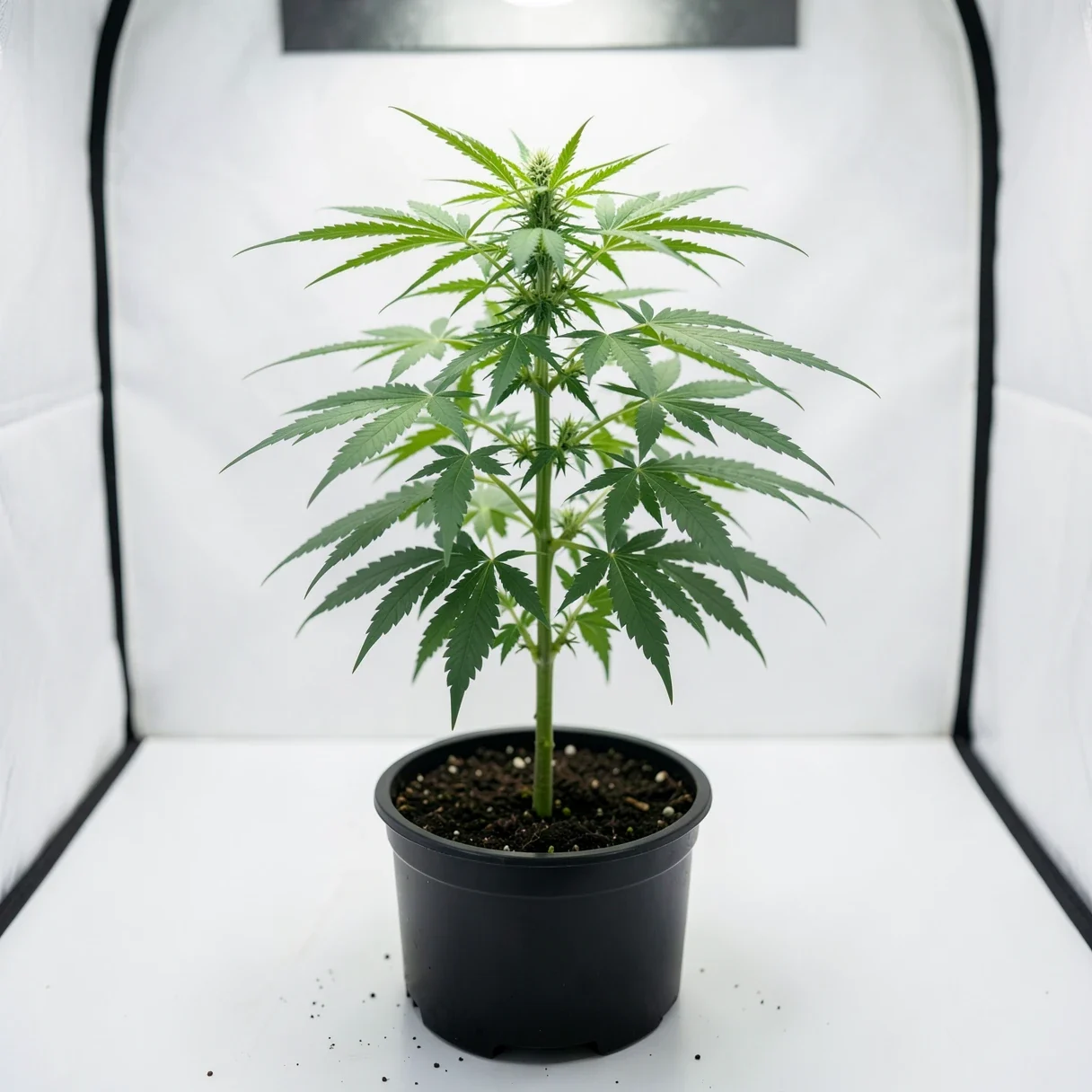
Ask ten cannabis growers what to plant your seeds in and you’ll get ten confident, contradictory answers. One swears by living soil and won’t touch anything else. Another runs coco and feeds every single day. A third has a humming hydro setup in the corner pulling down monster yields. They’re all right — for their own grow. The soil vs coco question, with true hydro as the third option, isn’t about which medium is “best.” It’s about which one fits how much time you have, how hands-on you want to be, and how much you’re willing to learn before harvest.
This guide breaks down the real trade-offs in the soil vs coco vs hydro decision — and especially the soil vs coco call that trips up most home growers: what each medium actually does, how often you’ll be feeding and watering, how forgiving each one is when you make a mistake, and which setup makes sense for your first grow versus your fifth. We’ll keep the pH details light here on purpose — that’s its own deep topic, and we’ve already covered the right pH for cannabis by medium in detail. The focus here is the choice itself.

The soil vs coco vs hydro answer isn’t one-size-fits-all, but here’s the short version before we dig in: grow in soil if this is your first plant and you want the most forgiving, lowest-maintenance start. Grow in coco if you’ve got a grow or two under your belt and you want more control over feeding without jumping into a full water system. Run hydro if you love dialing things in, you’ll check your plants daily without fail, and you want the tightest control over what the roots get.
The soil vs coco part of that is the decision most home growers actually wrestle with, because the two look similar in a pot but behave very differently. Hydro is a bigger commitment that pulls in pumps, reservoirs, and constant monitoring, which is why the soil vs coco choice is where most people actually start. Here’s how all three compare at a glance:
| Factor | Soil | Coco Coir | Hydro |
|---|---|---|---|
| Beginner-friendly | Best | Medium | Hardest |
| Feeding | Light, infrequent | Every watering | Constant, precise |
| Watering frequency | Every few days | Often daily | Continuous / recirculating |
| Forgiveness | High | Medium | Low |
| Growth speed (grower experience) | Steady | Fast when fed well | Fastest when dialed in |
| Upfront cost | Lowest | Low | Highest |
Soil is what most growers start with, and for good reason. A good organic potting mix comes with a reserve of nutrients, so it can carry the plant for a while before you need to feed. That buffer is the whole reason soil is so forgiving — when you overfeed or underfeed slightly, the soil smooths it out instead of slamming the plant. Miss a watering by a day? Soil holds moisture long enough to ride it out. That cushion is the single biggest reason soil wins the soil vs coco comparison for anyone still learning.
That buffering is also why soil sits at the easy end of the soil vs coco spectrum. Coco carries little nutrient reserve, so it gives you little for free; soil comes pre-loaded. For a first grow, that margin for error is worth more than any yield advantage. You’ll water every few days, depending on plant size, pot and room, and for the first three or four weeks in a quality mix you may not need to add nutrients at all.
The trade-off is control and speed. Because soil holds onto water and releases nutrients slowly, you can’t fine-tune the way you can in a soilless system, and many growers find growth a touch slower. Soil also holds water long enough that overwatering is a classic beginner mistake — the fix is learning the wet-dry cycle, which we cover in watering cannabis plants the right way. Soil is the medium that lets you make mistakes and still pull a harvest, which is exactly what a new grower needs.

Coco coir is made from the fibrous husk of coconuts — a renewable byproduct that, once washed and processed, becomes a clean, low-nutrient soilless growing medium that holds plenty of air even when it’s wet, though whether it holds less water than peat-based potting mix depends on how it was processed (University of Maryland Extension). That air is the appeal of coco: roots need oxygen as well as water, and coco keeps both around them.
Here’s the catch, and it’s the heart of the soil vs coco decision. Coco gives the plant very little on its own: it carries some potassium but no real food reserve, so you feed a complete nutrient solution every single time you water — and because coco growers usually water more often than soil growers, that’s often every day once the plants are big. Coco also grabs onto calcium and magnesium, so coco-specific or Cal-Mag-supplemented nutrients aren’t optional. You’re essentially doing hydroponics in a pot.
What you get for that effort is real, and it’s the whole reason the soil vs coco trade-off tempts experienced growers: what many growers find is fast growth when it’s fed well, and more control over exactly what the plant eats. Coco sits right between the two extremes — more hands-on than soil, far simpler than running a reservoir. The pH target is tighter than soil too (coco likes it lower), which is why nailing your pH by medium matters more here than it does in dirt. If soil vs coco is the question and you’ve already grown a plant or two, coco is the natural next step up.

True hydroponics feeds the roots directly with nutrient solution, either with no medium at all or with an inert one like clay pebbles or rockwool. Growing plants without soil, with nutrients delivered directly in water, removes the middleman: the feed reaches the roots directly, with nothing in between. Deep water culture (DWC), where roots dangle into an aerated reservoir, is a popular home version, but ebb-and-flow, drip, and NFT systems all fall under the hydro umbrella.
When it’s dialed in, many growers find hydro the fastest way to grow, because the roots sit in oxygenated feed with nothing in between — as long as the water stays cool and the air keeps running. That’s the appeal. The cost is that there is almost no buffer: a 2025 review of soilless growing rates the pH buffering of hydroponic solution as low, against very high for soil.
The nutrient reserve that makes soil forgiving and the medium that gives coco a little slack are both gone. Your reservoir’s pH and nutrient strength (EC) can drift noticeably within a day, and a problem you’d never notice in soil becomes a sick plant by morning. Root-rot risk is real if your water gets warm or your air pump quits.
Hydro isn’t harder to understand than coco — the daily mechanics are similar — but it punishes neglect immediately. It rewards growers who genuinely enjoy measuring, adjusting, and checking in every day. If that’s not you yet, there’s no shame in getting there through soil and coco first. The skills you build managing a soil vs coco grow are exactly the skills hydro demands, minus the safety net — which is why many growers work through soil vs coco before trying hydro.

For the vast majority of home growers, the actual choice isn’t really three-way — it’s soil vs coco. Hydro is a deliberate step you take when you want to chase maximums and you know you’ll show up daily. So let’s settle the soil vs coco question on the things that matter:
Put plainly: pick soil for your first grow or two, then move to coco when you want more control and you’re ready to feed on a schedule. There’s no wrong answer in the soil vs coco choice — there’s only the one that matches where you are as a grower right now. Plenty of experienced growers run soil for life because they love how low-stress it is. Plenty run coco because they love the pace. The soil vs coco answer is personal, and both pull beautiful weed.
The medium and the seed work together. A forgiving, hardy strain in forgiving soil is the gentlest possible learning curve; a vigorous plant in coco or hydro gives that extra control something to work on. A few pairings that make sense:
New grower in soil: reach for genetics rated easy to grow. Northern Lights Skunk and White Widow are both rated Easy in our catalogue. For an even simpler timeline, an autoflower our catalogue rates Easy, like Mazar Autoflower or White Widow Autoflower, finishes on its own clock.
Stepping up to coco: if you want to push a feminized photoperiod with an every-watering feed, Bruce Banner, Gorilla Glue #4, and Blue Dream are good candidates. Not sure which to start with? Our guide to choosing cannabis seeds walks through it.
Hydro and high control: if you’re running a reservoir, a fast finisher like AK-47 (listed at 8–9 weeks of flower) keeps the run short, while White Amnesia Haze (listed at about 480 g/m², or 1.6 oz/ft², indoors) gives that tight control a solid indoor yield to work on. Pair either with the techniques in maximizing cannabis yield.
Whichever way the soil vs coco call goes, the medium won’t make a poor seed great — but the right medium lets good genetics reach their potential. Browse the full feminized seed collection or the autoflower seeds to match a strain to your setup.
There’s no trophy for growing the hard way. The soil vs coco vs hydro choice — and really, for most people, the soil vs coco choice — is a match between a medium’s demands and your appetite for hands-on work — pick the one that fits, not the one that sounds most advanced. Start in soil, graduate to coco when you want more control and you’re ready to feed on a schedule, and step into hydro only when checking your plants daily feels like a pleasure rather than a chore. Get the medium right for where you are now, and the grow gets easier and the buds get better.
Once your medium is sorted, the rest of the setup matters too — our grow tent setup guide covers the environment your medium lives in, and the full library of cannabis growing guides walks through everything from seed to harvest.
Shop Cannabis Seeds | The Right pH for Cannabis | Grow Tent Setup Guide | All Cannabis Growing Guides
Not better — different. In the soil vs coco comparison, coco can grow fast when fed every watering and gives you more control, but that feeding never lets up and it forgives far less than soil. Soil is slower but far more forgiving. In the soil vs coco call, “better” depends on your experience and how hands-on you want to be.
No. Hydro rewards skilled hands, and for a beginner it’s the easiest way to lose a crop fast. Light and genetics drive most of your yield, and training adds a smaller boost. A healthy plant in soil or coco will out-yield a neglected hydro plant.
Not automatically. Many growers find hydro grows fastest when it’s dialed in, but we found no published trial comparing hydroponics and soil on flower yield in drug-type cannabis (searched October 2026). What is clear is the trade: hydro gives you the most control and the least margin for error, while soil is slower to go wrong and slower to fix.
Soil holds moisture, so you water every few days, depending on plant size, pot and room. Coco growers usually water more often, and once plants are large that is often daily, with feed every time. That difference in cadence is one of the biggest practical parts of the soil vs coco decision.
Soil can be amended and reused or composted between grows. Coco can be rinsed, re-buffered, and reused for a cycle or two. Hydro has little or no medium to reuse, though net-pot media like clay pebbles clean up and last for years.
Yes — each medium has its own ideal range, and getting it wrong locks out nutrients no matter how well you feed. We cover the exact numbers in the right pH for cannabis, and pH problems are a common cause of the symptoms in our nutrient deficiency guide.
Keep reading
Browse all cannabis grow guides by topic, from germination to harvest.
Ready to grow? Browse premium seeds from Lighthouse Genetics:
Designed & Built by Wynne Web Design