There’s a particular sinking feeling that comes with finding bud rot. The plant looked perfect yesterday. Today there’s a leaf gone crispy and brown in the middle of your fattest cola, and when you tug it, the bud underneath comes away as gray mush. Rot can develop deep inside a bud before much shows on the surface, so by the time you spot it, it may have been working for days. Close to harvest, it can take a whole plant within a week.
Cannabis bud rot is the single most heartbreaking way to lose a crop, because it hits hardest right at the finish line, when your colas are at their biggest and tightest. The good news is that cannabis bud rot is largely preventable once you understand what it is and what it needs. This guide covers what cannabis bud rot actually is, what causes it, how to catch it early, what to do the moment you find it, and how to keep it out of your grow indoors and out.
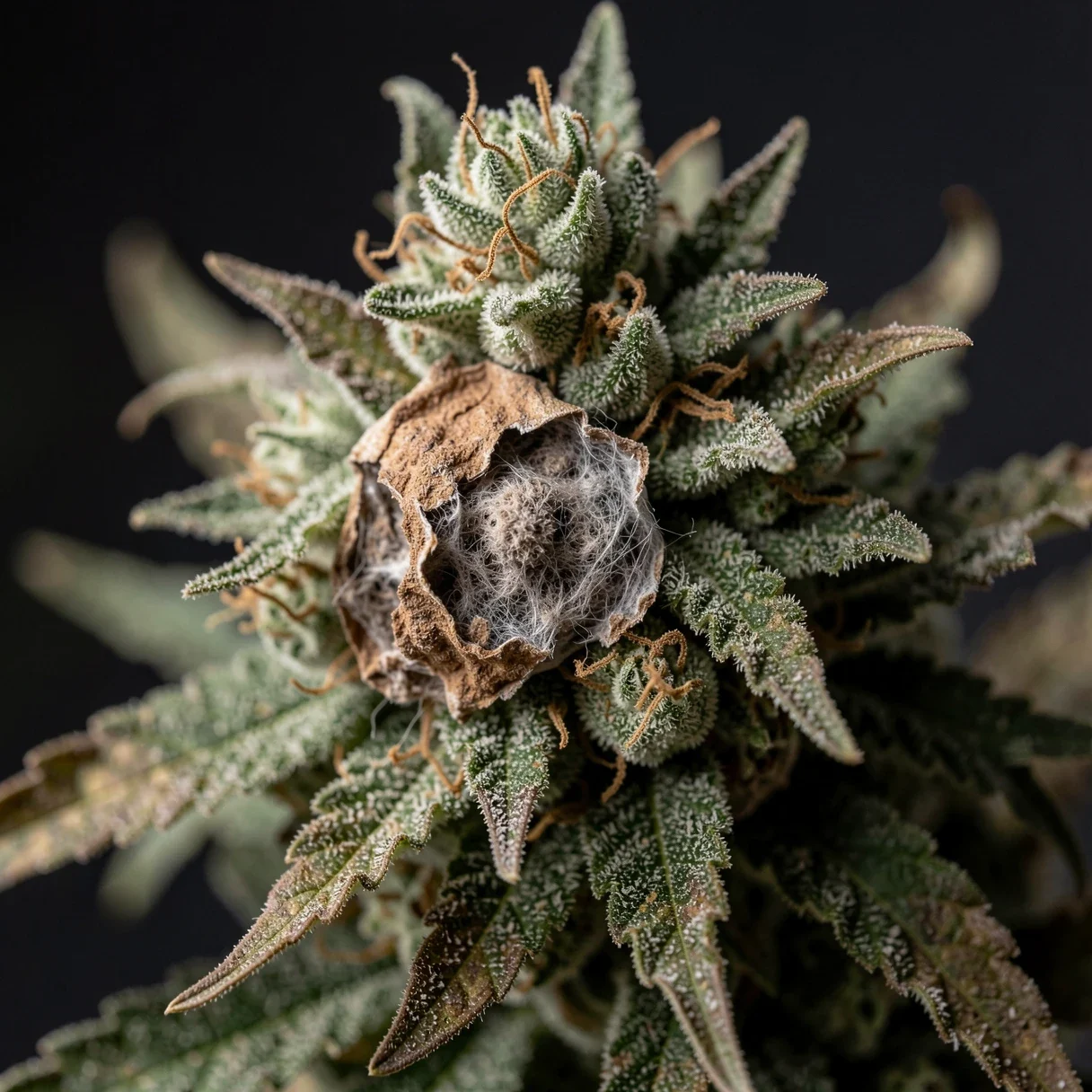
Cannabis bud rot is a fungal infection caused by Botrytis cinerea, the same gray-mold fungus behind bunch rot in grapevines, as Punja’s 2021 review points out. The Pacific Northwest plant disease handbook calls it an opportunistic pathogen that easily invades weak, damaged, or dying tissue, and Utah State University Extension says it gets in only through wounds or dying plant parts. On cannabis it goes for the flowers, which is exactly why it’s so destructive: it attacks the only part of the plant you’re growing for.
What makes cannabis bud rot so sneaky is that it can grow inside the bud, out of sight, so the first thing you notice (a dead leaf, a bit of discoloration) may be the outside edge of an infection that’s already spread through the flower. Researchers have documented it in commercial crops: in a greenhouse production facility, Punja and colleagues described Botrytis bud rot severe enough to affect up to half the plants, and noted it carries over as a post-harvest problem if infected buds go into drying.
Botrytis spores are produced all season long, so in practice you can’t keep them out of a grow. It doesn’t infect because the spores arrived; it infects when you give it the conditions it wants. Moisture is the one it can’t do without, and the rest stack the odds in its favor:
That’s why cannabis bud rot is mostly a late-flower problem. Early on, buds are small. As they swell and pack on weight in the last few weeks, they hold moisture and block airflow, and a humid tent or a damp autumn night is all Botrytis needs. USU Extension flags bud rot as a concern during flower formation under prolonged (a week or longer) greenhouse humidity or cool outdoor rains. Manage humidity and airflow and you’ve solved most of the problem before it starts, the same air-and-moisture balance behind VPD for cannabis.
Catching cannabis bud rot early is everything, because it spreads fast and the spores travel. Get in the habit of scouting your plants daily in late flower: Buirs and Punja’s 2024 greenhouse guide recommends daily scouting for bud rot from the sixth week of flowering onwards. Check the biggest, densest colas first. Here’s what to look for, roughly in the order it shows up:
Train your eye on that first dying leaf. It’s the cheapest early-warning system you have, and a daily scout that watches for it catches cannabis bud rot while it’s still one bud and not a whole plant.
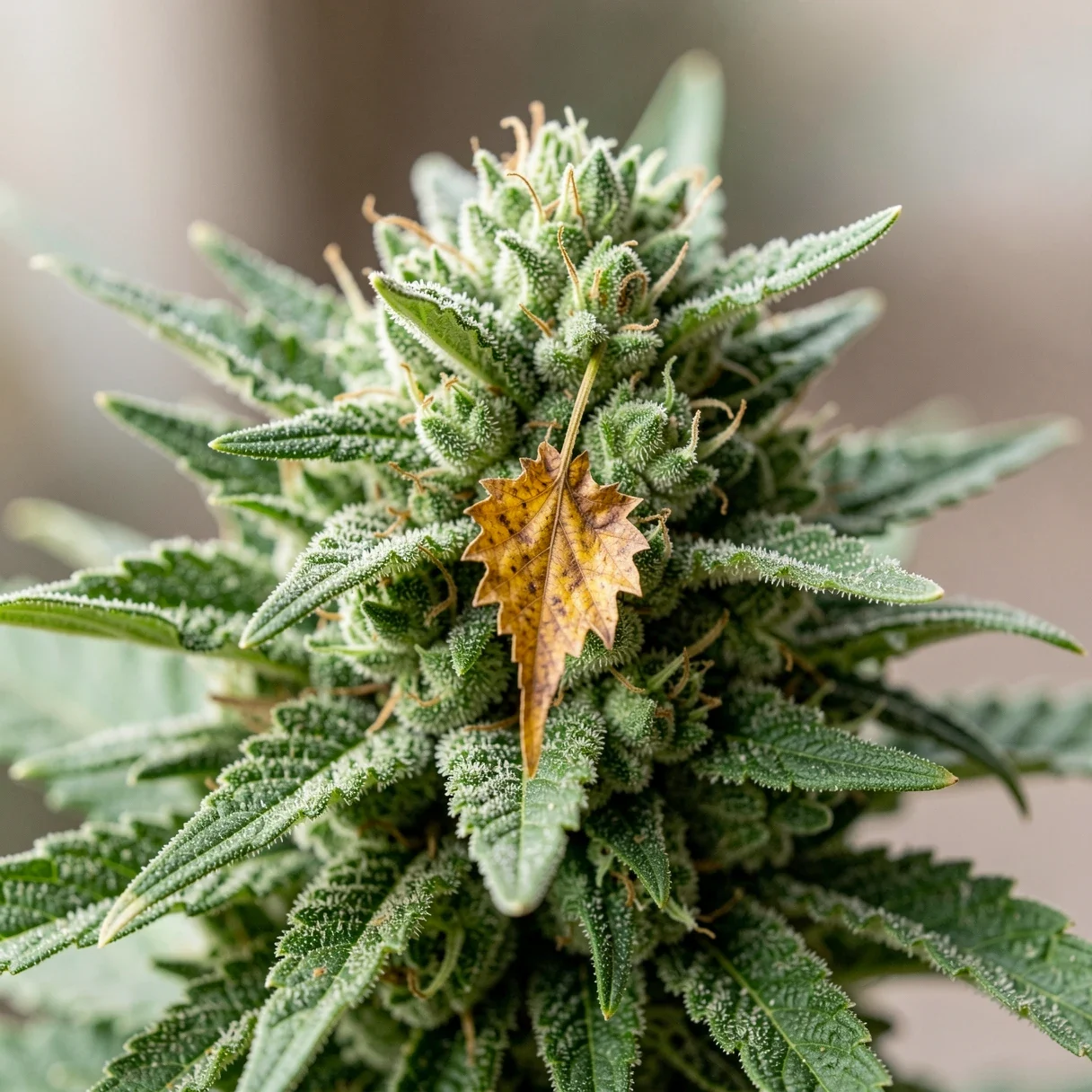
If you find cannabis bud rot, act right away, not tomorrow. Here’s the response:
One hard rule: do not smoke or consume rotted buds. Moldy cannabis can carry fungal spores and other contaminants you don’t want in your lungs (USU Extension notes Botrytis spores may cause an allergic reaction), and no amount of trimming “around” it makes a rotted bud safe. Cannabis bud rot ruins whatever it touches, so when in doubt, throw it out. It’s not worth the risk.
Indoors you hold most of the cards, so cannabis bud rot is far easier to prevent there than outside, though even climate-controlled commercial greenhouses still deal with it. The whole game is humidity and airflow:
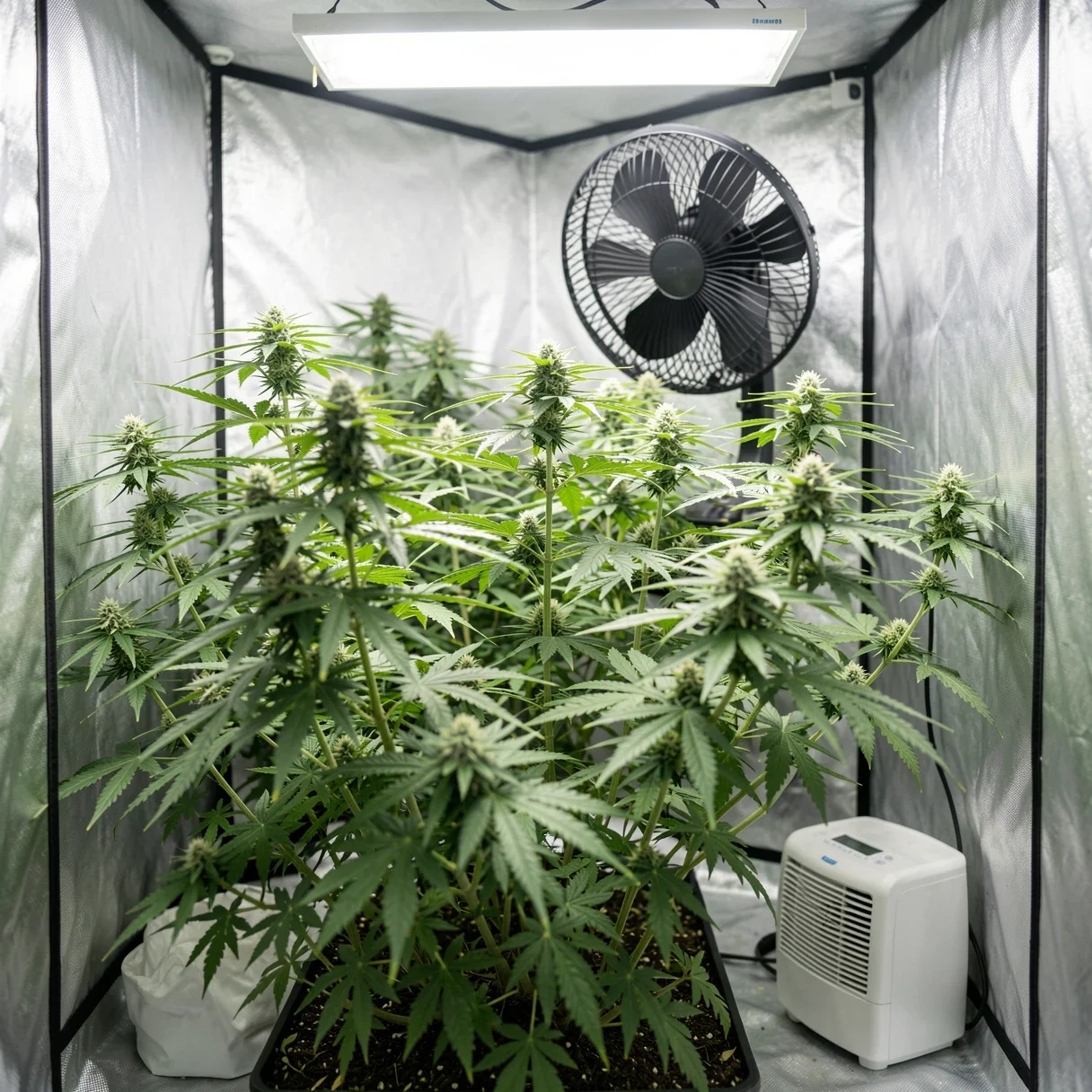
A well-set-up tent makes most of this automatic, with airflow, exhaust, and humidity control built in from the start, which we walk through in our cannabis grow tent setup guide.
Search for the “right” flowering humidity and you’ll find numbers that don’t agree. They don’t agree because they’re answering different questions. Here are the main figures side by side, from extension and research sources plus our own VPD guide:
| Source | Humidity figure | What it’s for |
|---|---|---|
| USU Extension (hemp bud rot) | Below 50% | Preventing bud rot in a greenhouse |
| PNW Plant Disease Handbook (hemp gray mold) | Below 50% | Preventing gray mold in a greenhouse, with warm temperatures and high light |
| Buirs & Punja 2024 (commercial greenhouse guide) | 50–70% | General growing conditions for the whole flowering stage |
| Our VPD guide (late-flower band 1.4–1.6 kPa, a common grower chart range, not a trial result) | About 46–53% at 75°F (24°C) | Drier late-flower air for growth and rot protection, read at air temperature |
The 50–70% range is a production setting for keeping plants growing well. The two sources written specifically against cannabis bud rot both say under 50%. Our take: if cannabis bud rot is your risk (dense colas, a humid room, or rot in a past grow), the last few weeks are where the under-50% advice should win, especially overnight.
At 75°F (24°C), dropping below about 46% nudges VPD a little above the late-flower band; in a cooler room the same humidity lands inside the band, or even below it. Either way, a slightly high VPD for a few weeks costs far less than a rotted cola does. If you’ve never had rot and your room holds steady near 50%, you don’t need to chase the number lower.
Outdoors you can’t dial the humidity, so preventing cannabis bud rot is about timing, placement, and plant handling. The danger window is late season, when nights turn cold and damp and morning dew or autumn rain soaks the buds. The PNW handbook notes that rainy periods during bud maturation can bring on large outbreaks.
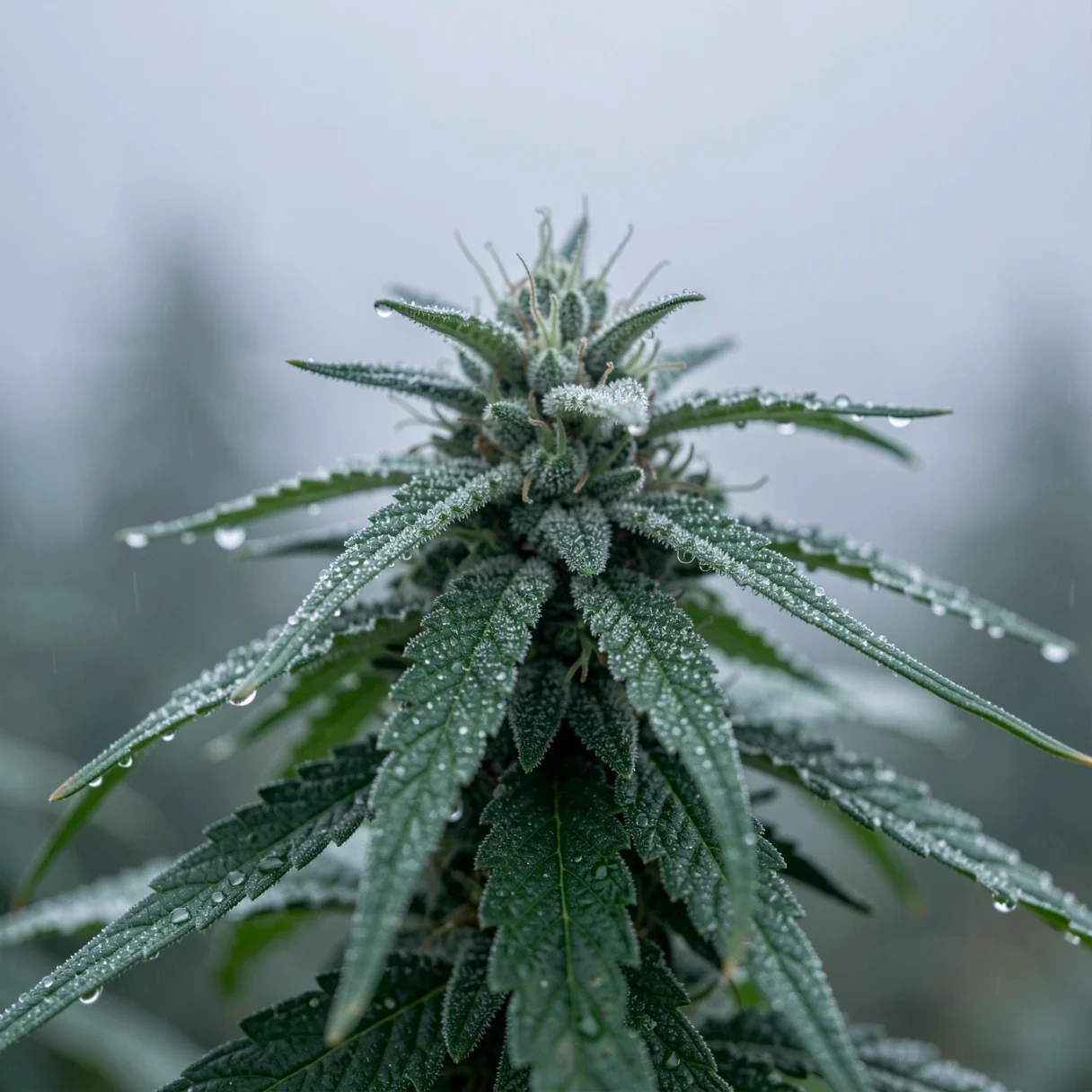
This is a big part of why regional timing matters so much for outdoor growers. Our guides on growing cannabis outdoors in Canada and growing cannabis outdoors in the Eastern US both come back to harvesting ahead of the damp.
Strains do differ. In Punja’s 2021 review, cannabis strains showed noticeable differences in bud rot susceptibility, and the ones with large, tightly packed flowers developed more disease than those with smaller, looser ones. Two cautions come with that. First, there’s no clean indica-versus-sativa rule: plenty of sativa-dominant strains grow dense buds. Second, researchers have compared coded commercial genotypes in greenhouses and saw differences in bud rot between them (Buirs and Punja 2024, in unreplicated observation trials), but no published trial we found ranks the named strains seed banks sell, so the cannabis bud rot resistance lines you’ll see in seed listings are breeder claims, not test results.
What you can choose on with confidence is finishing time. For outdoor growers racing the weather, a fast autoflower gets the crop in before the worst of the wet season: Bruce Banner Autoflower is listed at 65 to 70 days from seed, and White Widow Autoflower at about 8 to 9 weeks. Both grow dense buds, so they help through timing rather than structure, and they still need dry air at the finish. Browse the full autoflower seeds and feminized seeds ranges to match genetics to your climate. The right genetics are one more layer of defense against cannabis bud rot. They don’t replace airflow and humidity control, but they help.
Cannabis bud rot is brutal because it strikes at the finish, but it’s mostly an environment problem, and environment is something you can manage. Keep humidity under 50% and air moving in late flower, scout your densest colas every single day, and the moment you see one brown leaf in the wrong place, cut deep and bag it. Indoors that’s a dehumidifier and fans; outdoors it’s timing, an open site, and finishing before the rains.
Stack the odds further with faster-finishing genetics suited to your climate, and you turn the most heartbreaking grow failure into one you rarely have to think about. For everything that happens before and after the rot window, our cannabis growing guides cover the full season from seed to jar.
Shop Feminized Seeds | When to Harvest Cannabis | Cannabis Growing Guides
No. USU Extension is blunt about it: infections cannot be cured, so prevention is key. The infected bud can’t be saved. Caught early, the rotted flower can be cut out and the rest of the plant may still be worth finishing; licensed producers remove and destroy diseased flowers (Punja 2021). Commercial guidance goes further: USU advises removing infected plants immediately. You contain cannabis bud rot by removing infected material and fixing the humidity and airflow that let it start.
Extension advice (USU and the PNW handbook) is to keep greenhouse relative humidity below 50%. A 2024 review of commercial greenhouse cannabis sets a wider 50–70% for flowering in general, but that’s a production range, not a bud rot target. Humidity also climbs when the lights go off, so watch the overnight reading. If cannabis bud rot is a risk in your grow, aim under 50% in the last weeks of flower.
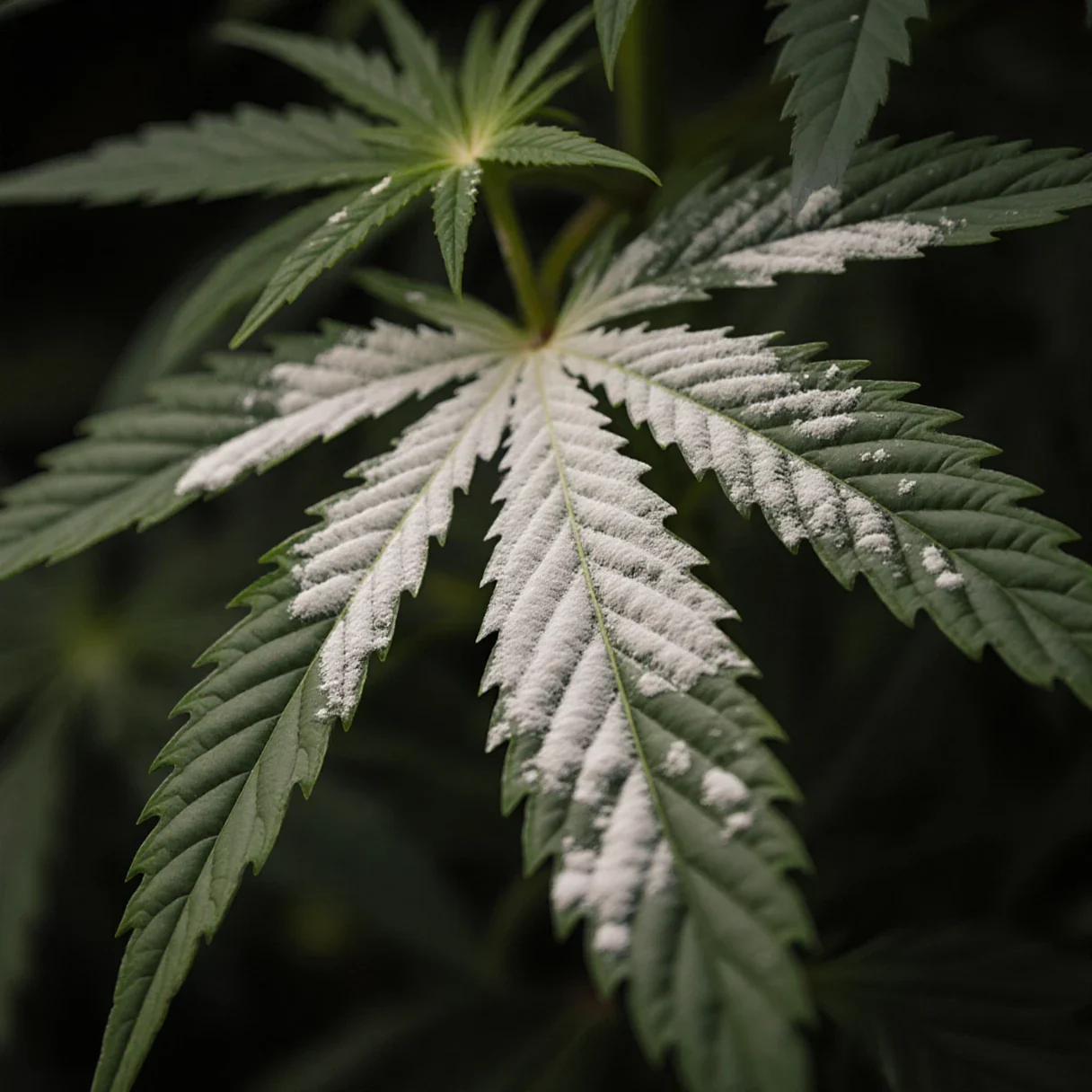
No. Bud rot (Botrytis) often develops inside the cola and turns it to brown mush. Powdery mildew is a different fungus that coats leaf surfaces in a white, flour-like powder. Both love humidity and poor airflow, so the same prevention helps with both, but they look completely different.
Yes. Punja and colleagues note that cannabis bud rot is a post-harvest problem as well as a growing one, and USU advises proper airflow when drying. Check buds as you cut them down, keep any suspect material out of the drying room, and dry in cool air with steady humidity, which our drying temperature guide covers.
No, don’t. Rotted, moldy buds can carry fungal spores and contaminants that are genuinely bad to inhale, and you can’t trim a rotted bud back to safe. Discard any flower with rot in it. It’s not worth your health over a bit of saved weight.
Keep reading
Browse all our cannabis growing guides by topic, from germination to harvest.
Ready to grow? Browse premium seeds from Lighthouse Genetics:
Designed & Built by Wynne Web Design