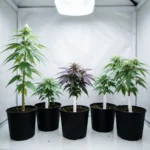
Left alone, a cannabis plant grows like a Christmas tree. One dominant cola shoots up the middle, the side branches stay short and shaded, and much of the lower plant produces airy, undersized buds (growers call them “larf”) that never see direct light. That single tall cola gets all the glory and the best of the light, and much of the lower plant underdelivers. Low stress training cannabis is the fix, and it costs nothing but a few minutes a week and a handful of clips or soft ties.
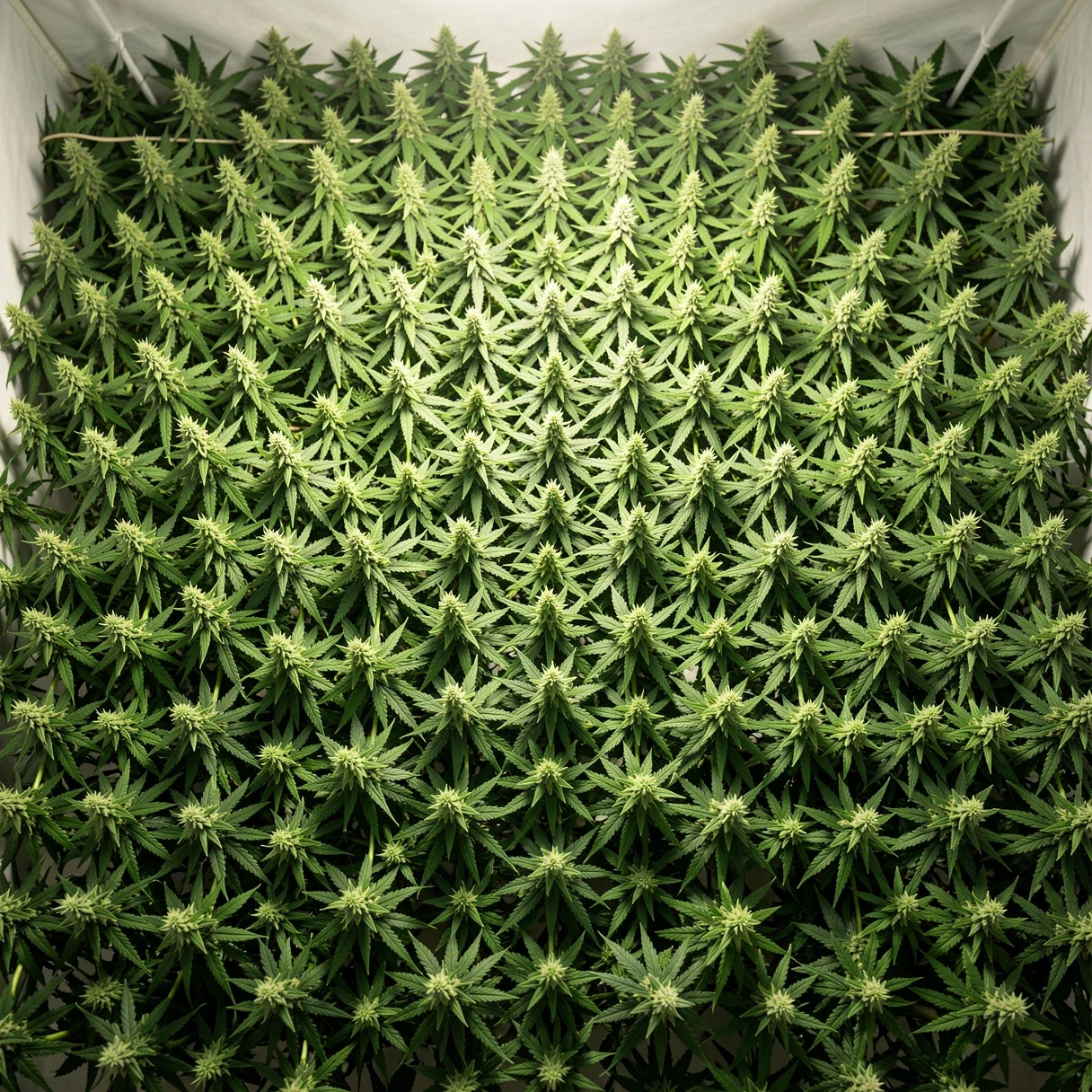
The idea is simple: instead of letting the plant pick one winner, you bend it sideways and tie it down so every branch gets a shot at the light. No cutting, little stress, and only a brief pause in growth. Done right, low stress training cannabis turns one fat top into a flat table of evenly sized colas, and a flat, evenly lit canopy is one of the cheapest ways to make better use of the light you already have. This is how to do it, when to start low stress training, the free tool we send you to make it easy, and the mistakes that turn a good plan into a snapped stem.
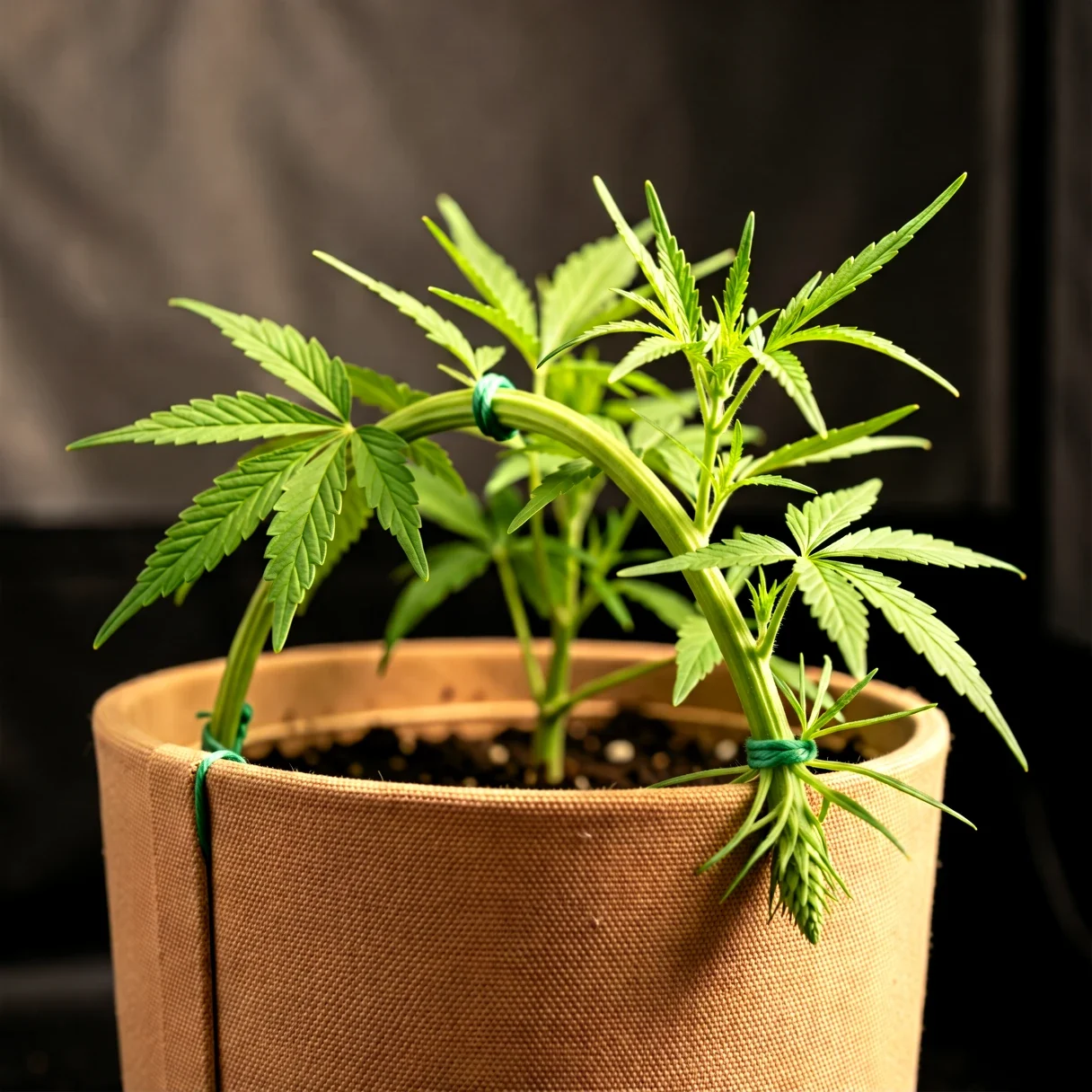
Low stress training (LST for short) is the practice of gently bending and tying down a cannabis plant’s stems to reshape how it grows, without cutting or removing any of it. A 2025 review of cannabis training methods by Ijoma and colleagues describes it as gently bending the stems and securing them, often with ties, to expose more bud sites to light and encourage horizontal growth. You take the tall central stem, bend it down toward horizontal, and secure it. The plant responds by sending its side branches upward to fill the space, and over the following week or two you get a wide, flat plant instead of a tall, narrow one.
The “low stress” part is the whole point. High-stress training (HST), such as topping, FIMming and super cropping, works by injuring the plant on purpose and letting it recover. That recovery costs time and carries risk. Bending a flexible green stem doesn’t cut anything, and the same review notes that because the plant is under minimal stress, recovery time is usually brief and there’s less risk of stunting growth. That’s why low stress training cannabis is the technique most growers reach for first, especially anyone on their first or second grow.
Low stress training cannabis works on two things: hormones and light.
Every cannabis plant has a built-in pecking order called apical dominance. The growing tip at the very top of the main stem produces auxin, a plant hormone that keeps the lower side branches subordinate. As long as that top tip is the highest point, it gets first call on the plant’s energy and the lower branches stay short. In the wild, racing a single shoot toward the sun beats your neighbors. In a grow tent, it just wastes your floor space.
When you bend the main stem over so it’s no longer the tallest point, you weaken that hormonal signal. The plant treats the now-upright side branches as new leaders and pushes growth into them. The result is multiple main colas instead of one. That’s the hormone half of why low stress training cannabis works.
The light half is where the harvest comes from. Light drops as it passes down through a canopy: in Danziger and Bernstein’s 2021 study of large medical cannabis plants, light intensity fell steadily toward the bottom of the plant, and the lower flowers had lower cannabinoid concentrations to match. Opening the plant up by stripping leaves or removing bottom branches raised the light and the cannabinoids in those lower flowers.
That study changed shape by cutting, not bending, and only its twice-pruned plants yielded more, so it doesn’t prove LST adds weight. But the logic carries: flattening the plant puts more bud sites at a similar distance from the lamp, and LST’s main aim, in the Ijoma review’s words, is to optimize light exposure and build a balanced canopy, which can result in higher yields. As of October 2026, we could find no published controlled trial of LST itself on cannabis.
People lump all plant training together, but bending and cutting are different tools. Topping and FIMming are high-stress methods: you cut the growing tip off to force the plant to split into multiple stems. They’re effective, but they stall the plant for a few days to a week, and they’re risky on anything that’s already stressed.
Low stress training cannabis bends instead of cuts, so recovery is brief and the downside is small if you go slow. The two aren’t rivals, though, and plenty of growers combine them. Top the plant once early to get two main stems (top those two again for four), let it recover, then use LST to spread the stems out flat and keep the canopy even. If you only ever learn one, make it low stress training cannabis: it’s forgiving, it works on almost any plant, and it pairs with everything else. Some growers add strategic defoliation once the canopy fills in, though the trials so far haven’t shown it adds yield.
Here’s the actual technique for low stress training cannabis. None of it is hard; the skill is in the timing and a light touch.
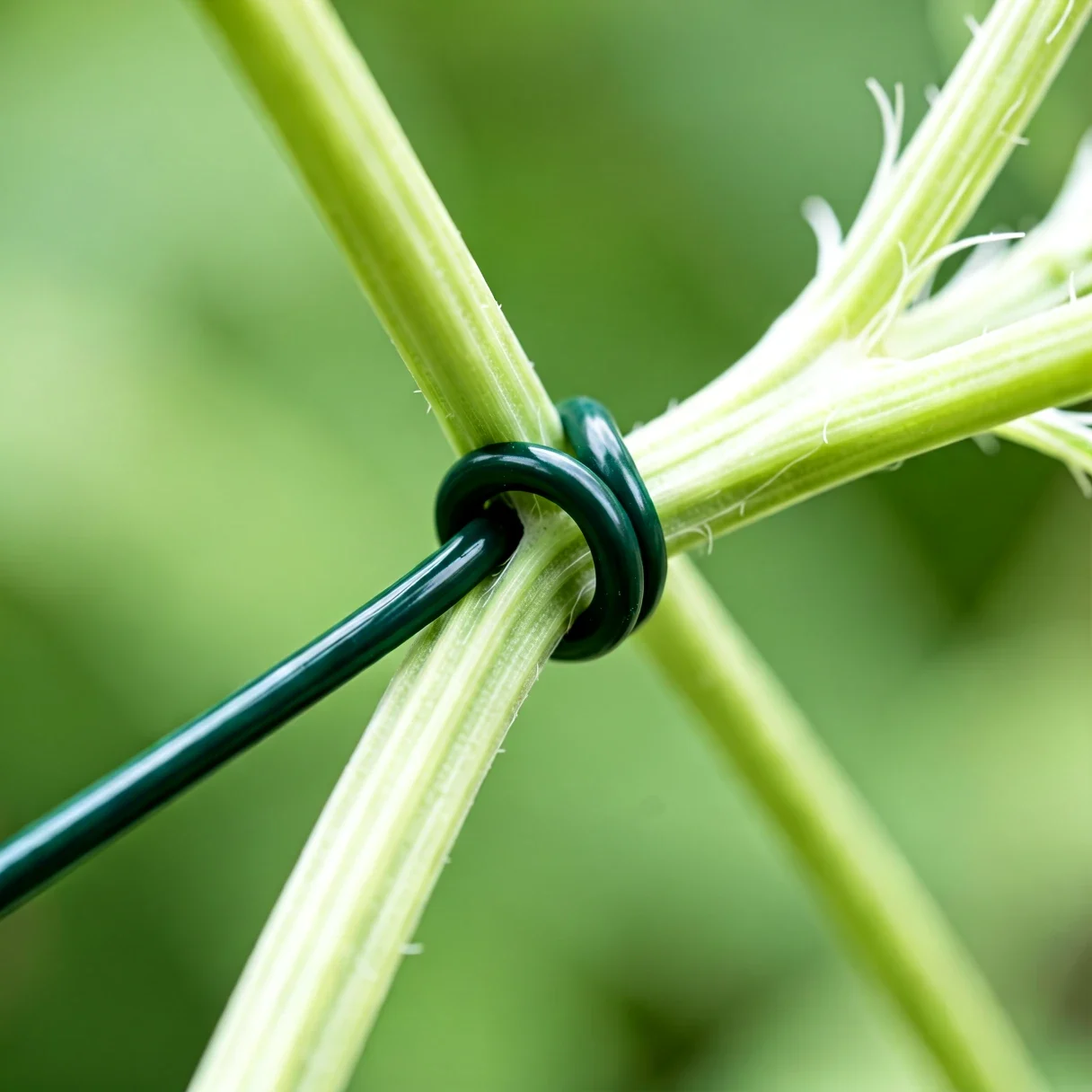
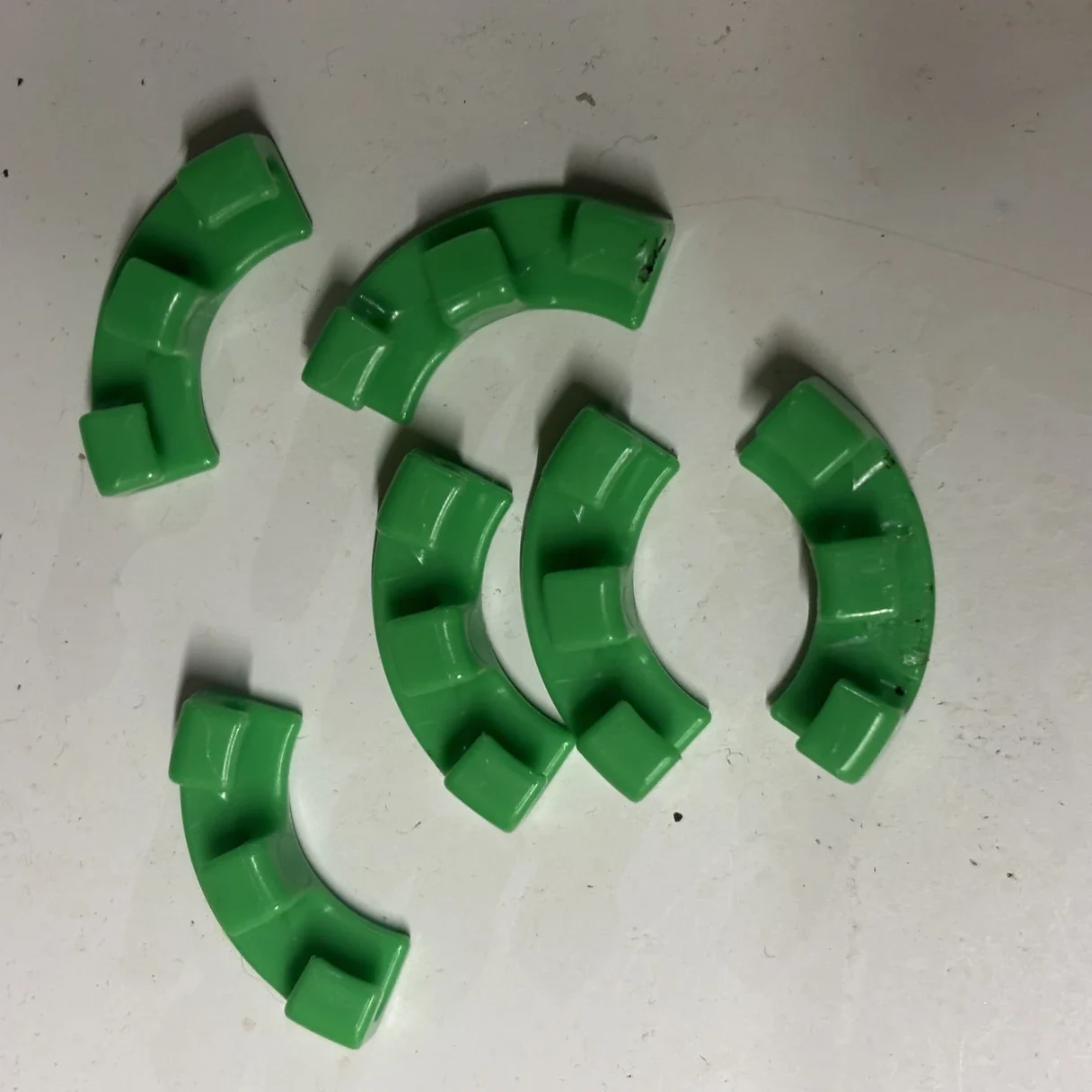
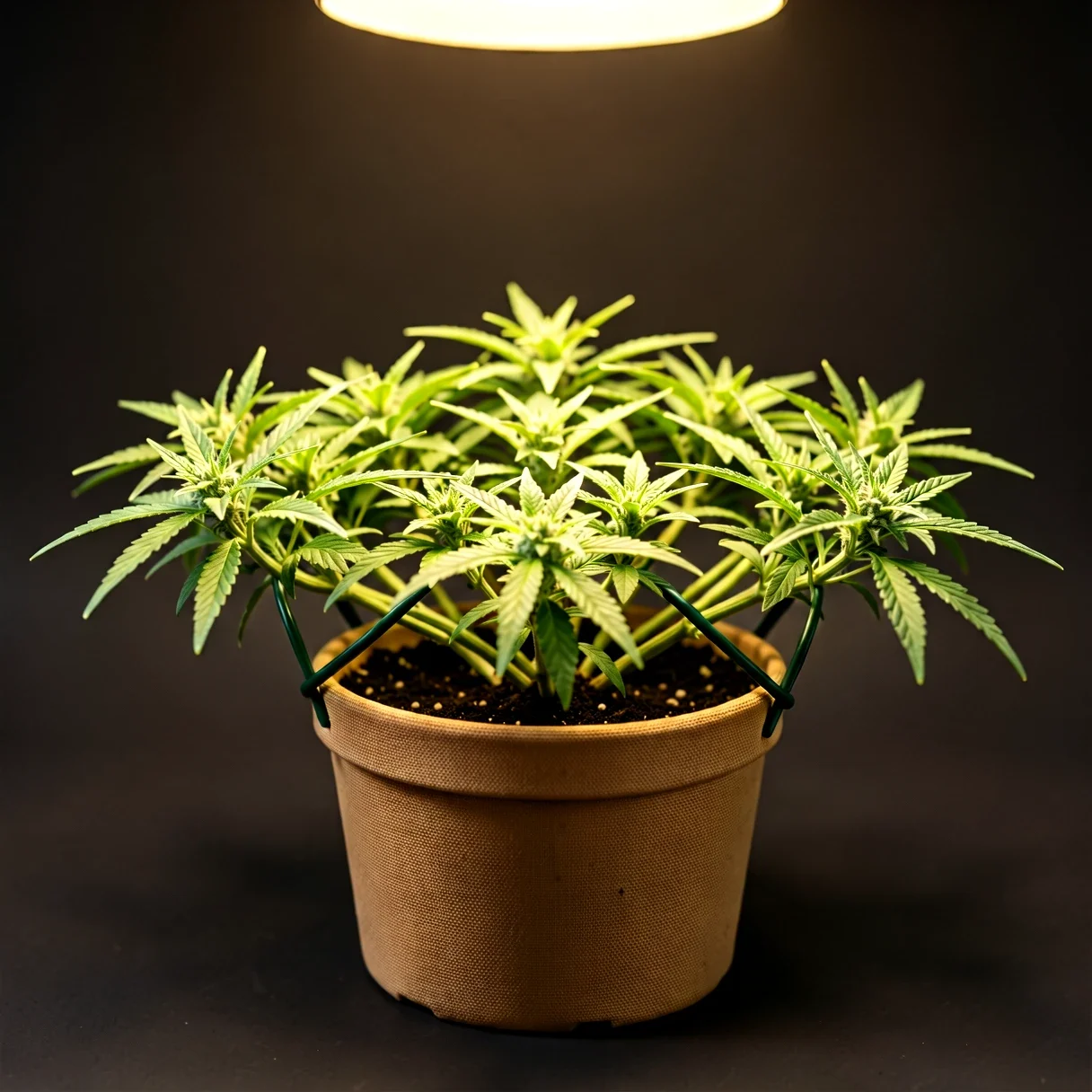
Here’s where we let you in on something. If you’ve ordered from Lighthouse Genetics, you’ve probably found a handful of small green plastic clips tucked into your package, and more than a few growers have messaged us asking what they are. They’re LST clips, and they’re one of the easiest ways to start low stress training cannabis without tying a single knot.
Each clip is a curved strip of plastic, about a quarter circle, with tabs on alternating sides. You press a soft young stem in between the tabs and it holds that stem bent at roughly 90 degrees: no ties, no drilling holes in your pot, no anchoring twine. Bend the stem gently, clip it, done. The tabs hold the stem in place rather than clamping it, and the bend follows a gentle curve rather than a hard crease. They’re sized for young, bendy growth, which is exactly when you want to start training anyway.
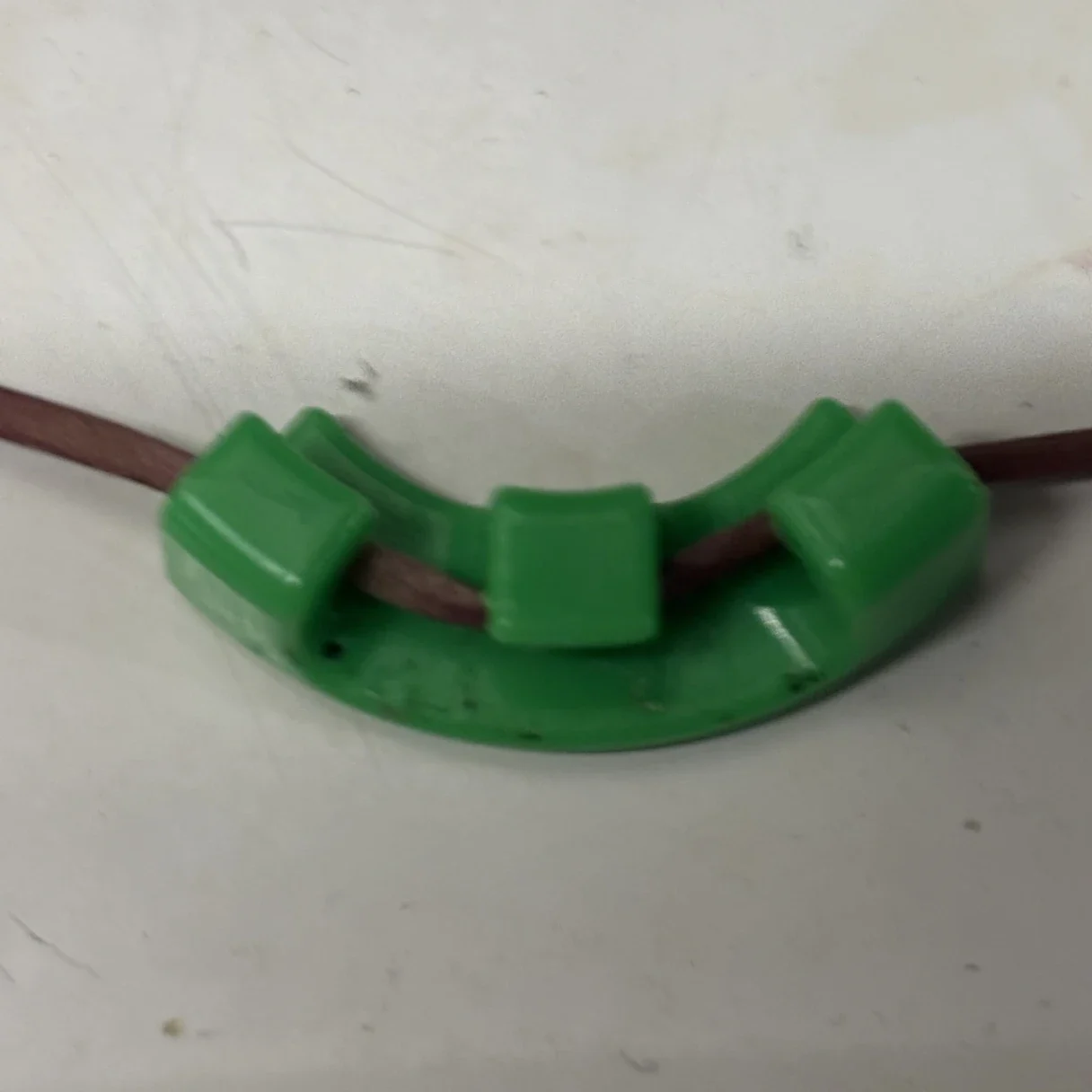
We include a set of these clips free with every order. Clips are a quick way for a first-timer to get comfortable bending a plant, and you can reuse them across grows. For a brand-new grower nervous about snapping a stem, a clip takes most of the fear out of it: the angle is fixed, the pressure is gentle, and you can pop it off and reposition it in seconds. A clip holds a bend, but it isn’t tied to anything, so use a tie-down when you want to pull a branch outward. That’s low stress training cannabis stripped down to its simplest form.
The clips aren’t the only thing we throw in, either. Depending on what you order, you might also find some extra seeds, a cheap grinder, or a sticker in the box, and growers placing larger orders have opened their packages to a t-shirt, a hoodie, or a hat. We’d rather send our customers home with more than they paid for. None of the surprise extras are guaranteed, but the clips are the one thing we try to put in every single order, because they actually help you grow a better plant.
If you grow autoflowers, LST is the safest training method you have. Autos run on a fixed internal clock: they flower on age, not on a light switch, so every day spent recovering from a cut is a day not spent building structure. That doesn’t make topping an auto impossible. As our topping guide explains, if you top an auto at all, do it once, early, and only on a plant that’s growing fast. But for a compact or slower auto, bending is the better bet.
Bending carries far less risk than cutting, which is exactly why low stress training cannabis autoflowers is the standard advice, and it’s where those free clips earn their keep, since an auto’s short veg window rewards fast, gentle training. Start even earlier than you would on a photoperiod plant, around the third node, because an auto’s veg window is short and the stems firm up quickly.
Be gentle, train a little at a time in veg, and leave the plant alone once it is into flower. Done right, LST lets a compact autoflower fill a surprising amount of canopy. New to autos? Our guide to the best autoflower strains for beginners pairs well with a gentle LST plan, and the difference between autoflower and feminized seeds is worth understanding before you start bending.
Most problems with low stress training cannabis come from impatience or heavy hands. A few to avoid:
You can train almost anything, but low stress training cannabis pays off most on two kinds of plant: tall, stretchy plants that would otherwise hit the lights, and compact autos that need every bud site working.
Tall plants are perfect candidates for bending. Landrace-style sativas like Durban Poison, which our listing says can reach 300 to 400 cm (9.8 to 13.1 ft) outdoors, and Acapulco Gold, whose listing says to plan on topping and training it under lights and to leave room for the stretch in early flower, can outgrow a tent if left untrained. Jack Herer is a 50/50 hybrid, but its listing gives about 150 to 180 cm (4.9 to 5.9 ft) indoors and says plants grow vigorously once flowering starts. Low stress training cannabis tames that height and turns the stretch into extra colas instead of wasted ceiling space.
On the autoflower side, Moby Dick Autoflower is slim, with wide gaps between nodes, and its page suggests gentle LST early on as the easier way to manage its height, and the Bruce Banner Autoflower and Gorilla Glue Autoflower pages both suggest LST to open up the canopy. If you’re chasing more weight from a small footprint, pairing one of these with LST and the rest of the playbook in our guide to maximizing yield in cannabis makes good use of a small space. Browse the full autoflower seed collection if you’re starting fresh.
If you want one free, low-risk way to make better use of your light this grow, make it this. Low stress training cannabis is free, it’s forgiving, and it goes straight at a big source of wasted space in a home grow: a tall, uneven plant where much of the bud never sees enough light. Done right, low stress training cannabis is mostly patience: bend early while the stems are green, clip or tie the canopy flat, ease off once the stretch ends, and let the plant fill the space. Light, genetics and feeding still set the ceiling, but a flat, evenly lit canopy helps you reach it, and you’ll get there without cutting a thing.
Pick a strain that suits your space, start gently, and use the clips we send you. For more techniques that stack on top of LST, dig into our cannabis growing guides, and if you’re ready to put it into practice, our feminized seed collection is the place to start.
Shop Autoflower Seeds | Topping vs FIMming | Maximizing Yield in Cannabis | All Growing Guides
Those are LST clips: small curved plastic clips that hold a young stem bent at about 90 degrees. They’re a tie-free way to start low stress training cannabis, they’re reusable, and we include a set free with every Lighthouse Genetics order. Bend a soft stem gently, press it in between the tabs, and reposition it as the plant grows.
Start in early veg, once the plant has 3 to 5 nodes and the stems are still soft and green. For autoflowers, start even earlier, around the third node, because their veg window is short. The flexibility you need disappears as stems turn woody, so earlier is almost always better.
Very little, which is the point. Unlike topping or FIMming, bending doesn’t cut the plant. A 2025 review of cannabis training notes that recovery time after LST is usually brief and there’s less risk of stunting growth. As long as you bend gently and don’t tie so tight the material bites into the stem, low stress training cannabis is about as low-risk as training gets.
Yes, and many growers do. A common approach is to top once early to get two main stems (or twice for four), let the plant recover, then use LST to spread those stems into a flat, even canopy. The two techniques complement each other: cutting builds the structure, and low stress training cannabis arranges it.
LST clips, soft plant ties, foam-coated garden wire, or soft twine all work. Clips are the fastest for beginners; for tie-downs, many growers drill small holes around the rim of the pot as anchor points. The only hard rule is to avoid anything thin and rigid that can cut into the stem as it thickens.
Keep reading
 Cannabis Yield
 SCROG Cannabis
 Does Defoliation Actually Increase Cannabis Yield? What a 2021 Study Found
Browse all cannabis growing guides by topic, from germination to harvest.
Ready to grow? Browse premium seeds from Lighthouse Genetics:
Designed & Built by Wynne Web Design