Sunlight is free. Electricity is not. That one sentence sits at the heart of the indoor vs outdoor cannabis debate, but it’s nowhere near the whole story. Indoor growing buys you control — over light, climate, timing, and privacy — and you pay for that control in money and effort. Outdoor growing hands the hard work to the sun and the seasons, which is cheaper and simpler, but you give up the steering wheel.
Neither one is “better.” They’re suited to different growers, different spaces, and different goals. This guide walks through the real trade-offs of indoor vs outdoor cannabis so you can pick the setup that actually fits your life — not the one a YouTube video told you to buy.
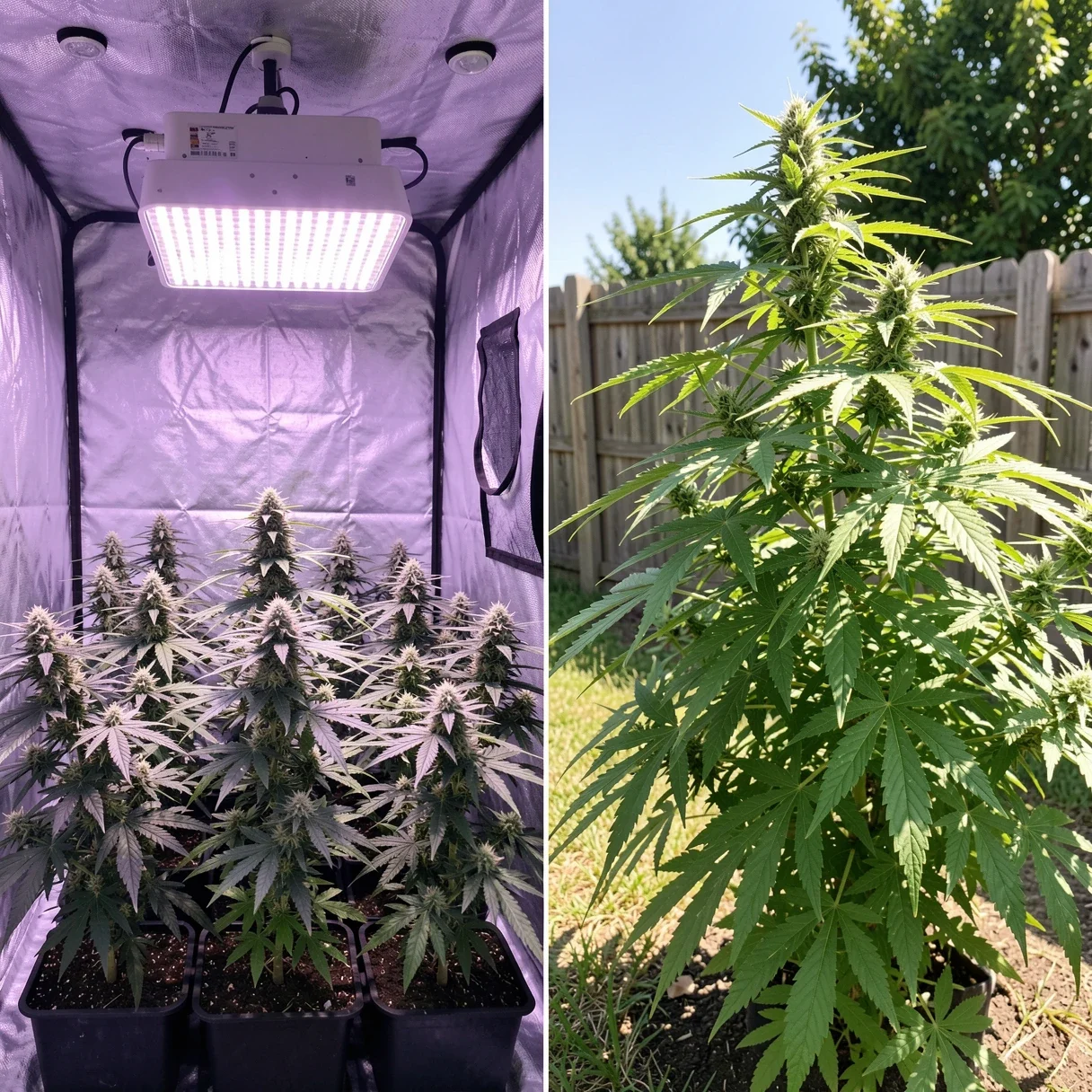
If you want the quick version before the detail, here’s how the two stack up at a glance.
| Indoor | Outdoor | |
|---|---|---|
| Upfront cost | Higher (tent, lights, fans) | Low (soil, pots, seeds) |
| Running cost | Electricity every cycle | Mostly free sunlight |
| Harvests per year | Several | Usually one |
| Control over results | Total | Weather-dependent |
| Yield per plant | Smaller, consistent | Can be huge |
| Privacy / discretion | Excellent | Harder to hide |
That table is the whole indoor vs outdoor cannabis decision in miniature. The sections below explain what each row actually means in practice.
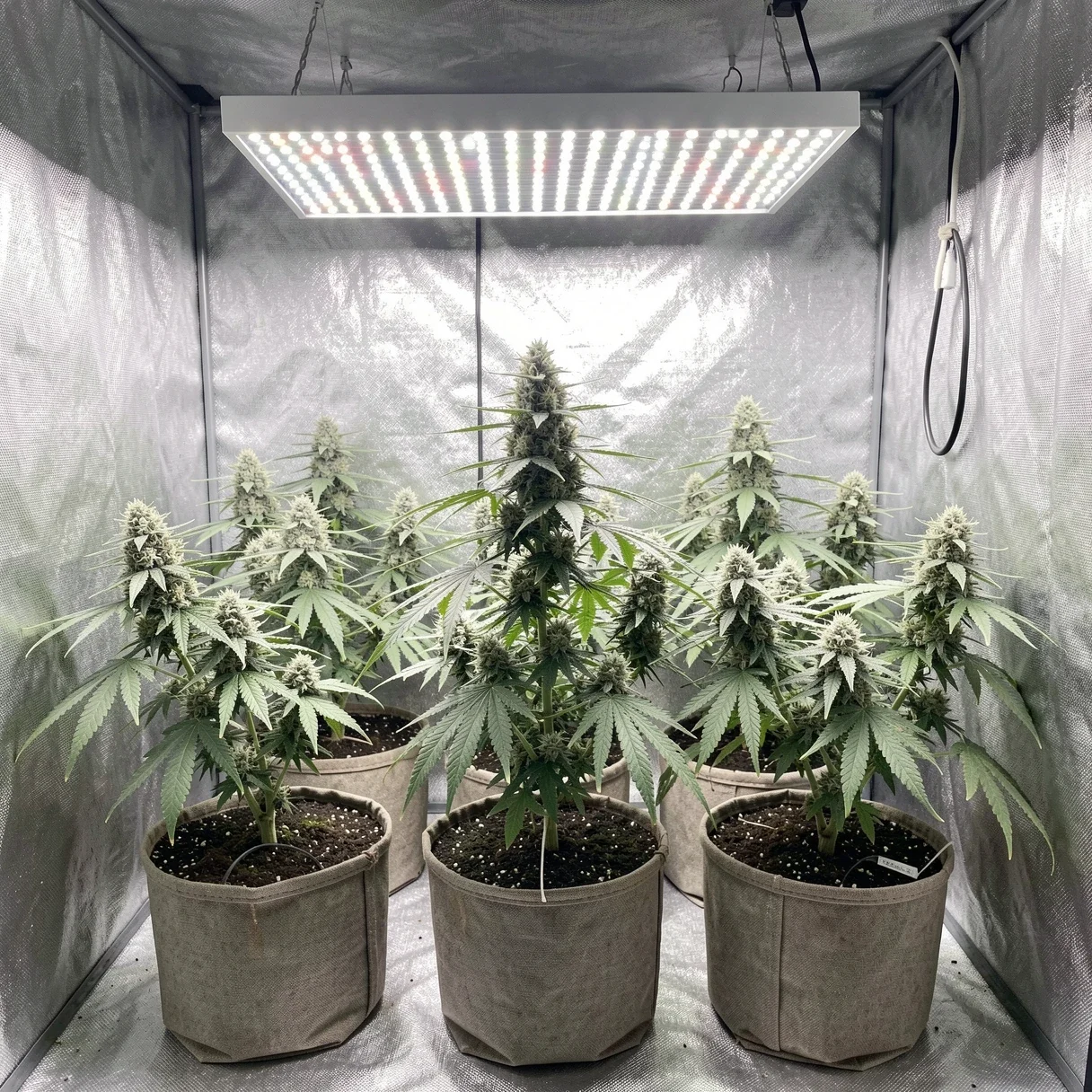
Start with the indoor side of the indoor vs outdoor cannabis question. Indoor growing is cultivation on your terms. You set the light schedule, the temperature, the humidity, and the airflow — so you decide when plants veg, when they flower, and when they finish. Flip your lights to 12 hours on, 12 off and a photoperiod plant flowers on command, in January or July. That’s the indoor superpower: the calendar doesn’t get a vote.
The payoff is consistency and discretion. A tent in a closet is private, runs year-round, and lets you turn several harvests in the time an outdoor grower waits for one. Strains stay compact and manageable, which is why indoor growers love fast, tidy genetics — autoflowers like White Widow Autoflower and Gelato Autoflower, or controllable feminized plants such as Gorilla Glue 4 and the naturally short Northern Lights Skunk.
The cost is real, though. You’re buying a tent, a light, fans, and a filter up front, then paying for the electricity those lights draw every single cycle. You also become the weather — if your room runs hot or your humidity creeps up, there’s no breeze to bail you out. Indoor growing rewards attention. That’s the trade in the indoor vs outdoor cannabis equation: you get control, but control is a job.
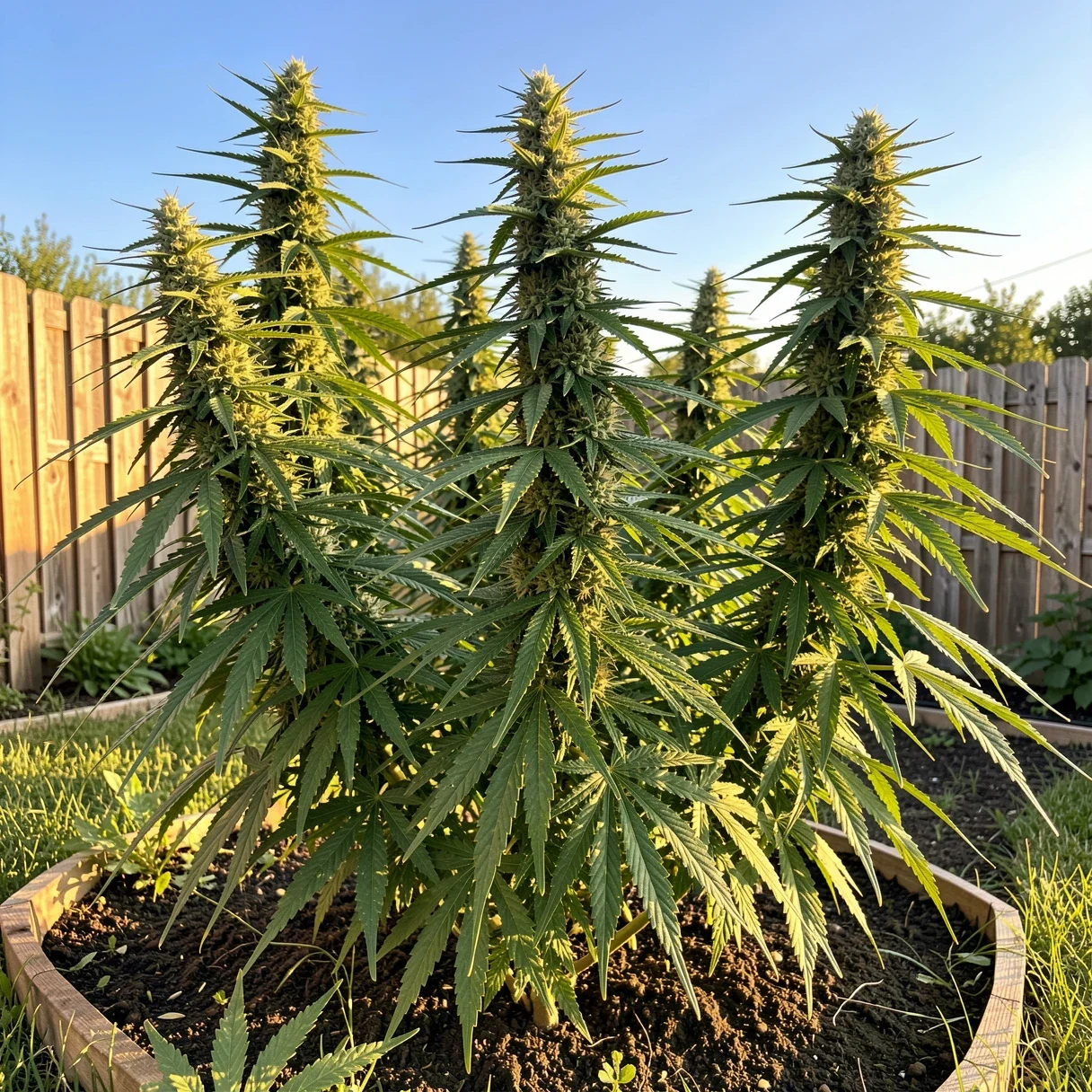
Now the outdoor side of the indoor vs outdoor cannabis question. Outdoor growing is the oldest way there is, and for good reason — the sun is the best grow light ever made, and it’s free. Drop a seed in good soil in spring, and by fall a single plant can reach a size no tent could ever hold. The upfront cost is almost nothing: soil, a pot or a patch of dirt, and seeds. No electricity bill, no equipment to fail.
What you give up is control. Outdoor plants flower when the days shorten in late summer, so in most climates you get one harvest a year on nature’s schedule, not yours. You’re also exposed to weather, pests, and prying eyes. A wet autumn can bring bud rot right as plants finish; a heat wave or an early frost can set them back. The fix is genetics: hardy, vigorous strains handle the outdoors far better. Landrace-rooted plants like Durban Poison and Afghani were bred by the sun for generations, and big, robust producers like Super Skunk, Big Bud, and Blue Dream thrive with room to stretch.
If outdoor is your direction, our region-specific guides do the heavy lifting on timing and climate: growing cannabis outdoors in Canada and growing outdoors in the Eastern US both map out frost dates, season length, and what to plant when.
Cost is where most people settle the indoor vs outdoor cannabis question, so be honest about both columns. Outdoor wins on paper: seeds, soil, and pots, then sunshine does the rest. Indoor asks for a real upfront investment — tent, light, ventilation — plus electricity that recurs every cycle.
But cheaper-to-run isn’t the same as more total weed. Indoor’s several harvests a year can out-produce a single outdoor season over twelve months, even with the power bill. So the indoor vs outdoor cannabis cost question isn’t just “which is cheaper” — it’s “cheaper per gram, or cheaper to start?” For a one-plant hobby grower, outdoor is almost unbeatable on value. For someone who wants a steady, year-round supply, indoor’s higher running cost can still pencil out.
Yield is where the indoor vs outdoor cannabis comparison gets interesting. Per plant, outdoor wins easily — a healthy outdoor plant with full sun and root room can dwarf anything in a tent. Indoor counters with frequency: smaller plants, but several runs a year, and tighter control over size with techniques covered in our yield guide.
Quality is the closer call in the indoor vs outdoor cannabis matchup, and the honest answer is that great flower comes from both. Indoor has a reputation for picture-perfect, frosty, tightly-trimmed buds because every variable is dialed in. But sun-grown outdoor cannabis from strong genetics can absolutely match it — full-spectrum sunlight is something no lamp fully replicates. Genetics and care matter more than the roof over the plant. If quality is your priority, start by getting the strain right; our how to choose cannabis seeds guide is the place for that, and choosing seeds by effect helps if you’re shopping for a specific feeling.
Strip away the noise and the indoor vs outdoor cannabis choice usually comes down to your situation:
One more practical note: check your local rules before you commit. Many places that allow home growing — including Canada’s four-plant household limit — also have conditions about plants not being visible from public spaces, which can push you toward indoor or a well-screened yard. Rules vary widely, so confirm yours.
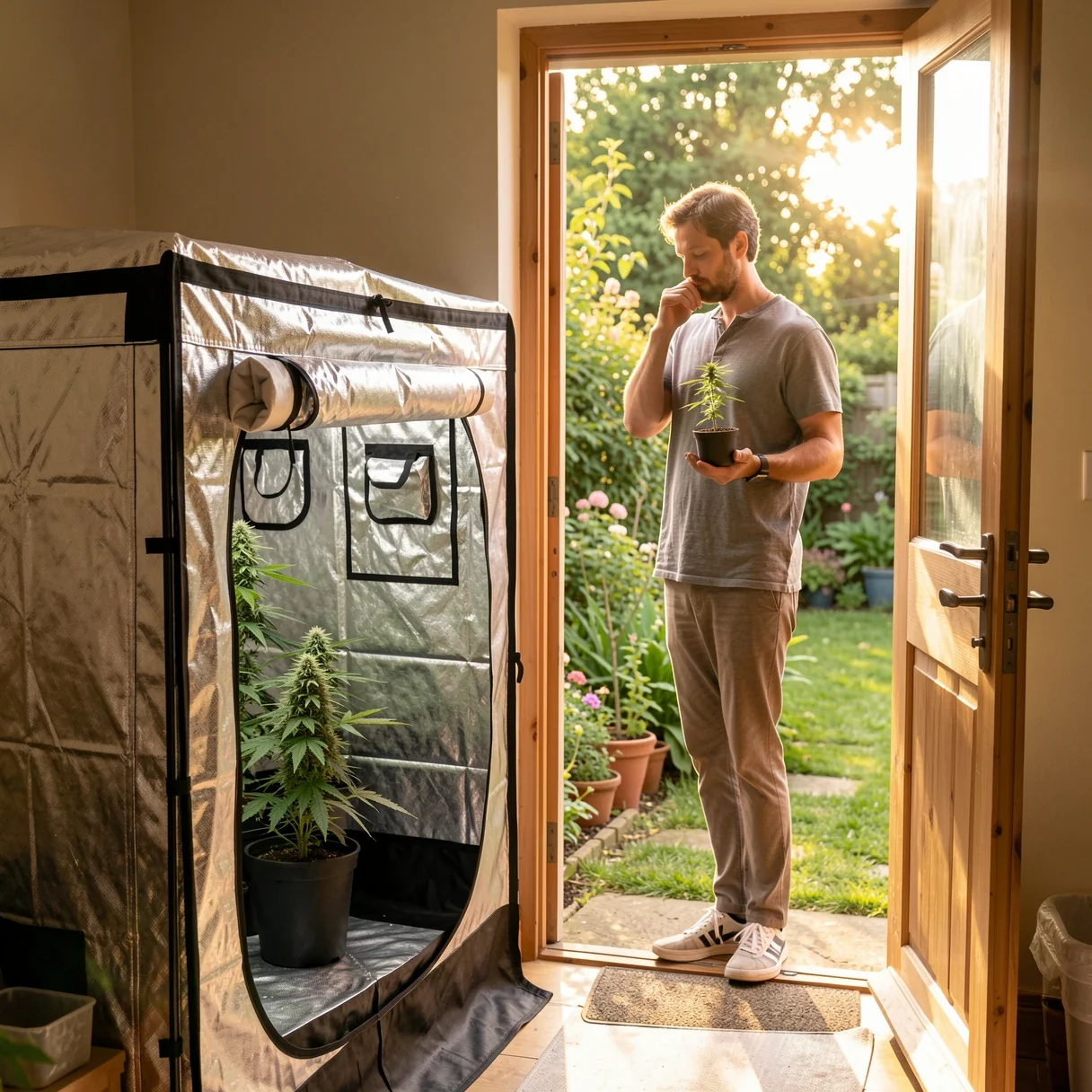
Plenty of growers do, and it’s a fair answer to the whole indoor vs outdoor cannabis question. A common rhythm is a big outdoor crop over summer for volume, plus a small indoor tent for a steady year-round supply and the occasional special strain. Some run a greenhouse to split the difference — sun for power, walls for shelter and a little control. You don’t have to pick a side forever. Many people start outdoors because it’s cheap, get hooked, and add a tent later once they want to grow through winter.
Outdoor is the cheaper, more forgiving place to start if you have a sunny private spot — the sun does the hard part. Indoor is better for beginners in cold climates or apartments, especially with autoflowers, which don’t need a light-schedule change to flower. For beginners, the indoor vs outdoor cannabis call really comes down to your climate and space — both are beginner-friendly with the right genetics.
Per plant, yes — outdoor plants get far bigger and can out-yield an indoor plant several times over. But indoor growers harvest several times a year, so over twelve months the gap narrows. It’s big single harvests versus frequent smaller ones.
Not inherently. Potency comes mostly from genetics and how well the plant is grown, not from being indoors. Indoor’s tight control makes consistent, frosty buds easy, but sun-grown cannabis from strong genetics can be just as potent.
The main recurring cost is electricity for the lights and fans, which varies with your gear and local power rates. There’s also the upfront spend on a tent, light, and ventilation. Outdoor avoids nearly all of this, which is its biggest advantage in the indoor vs outdoor cannabis cost comparison.
You can, but be careful — sudden swings in light intensity or photoperiod can stress photoperiod plants and even trigger intersex traits. If you move plants, do it gradually. Autoflowers handle relocation better since they don’t depend on a light schedule to flower.
Indoor vs outdoor cannabis isn’t a contest with a single winner — it’s a match between your situation and the method that fits it. Want control, privacy, and year-round harvests, and you’ll accept the cost and the work? Grow indoors. Have sun, space, and a preference for cheap and simple over precise? Grow outdoors. Cold climate or brand new? Lean on autoflowers in whichever setting you’ve got.
Pick based on your space, your season, and how hands-on you want to be — then put your real energy into picking great genetics, because that decides more about your harvest than the roof ever will.
Best Autoflowers for Beginners | Outdoor Growing Guide | How to Choose Cannabis Seeds | Shop Feminized Seeds
Want to keep learning? Browse our full library of guides to growing cannabis — everything from germination to harvest, in one place.
Ready to grow? Browse premium seeds from Lighthouse Genetics:
Designed & Built by Wynne Web Design