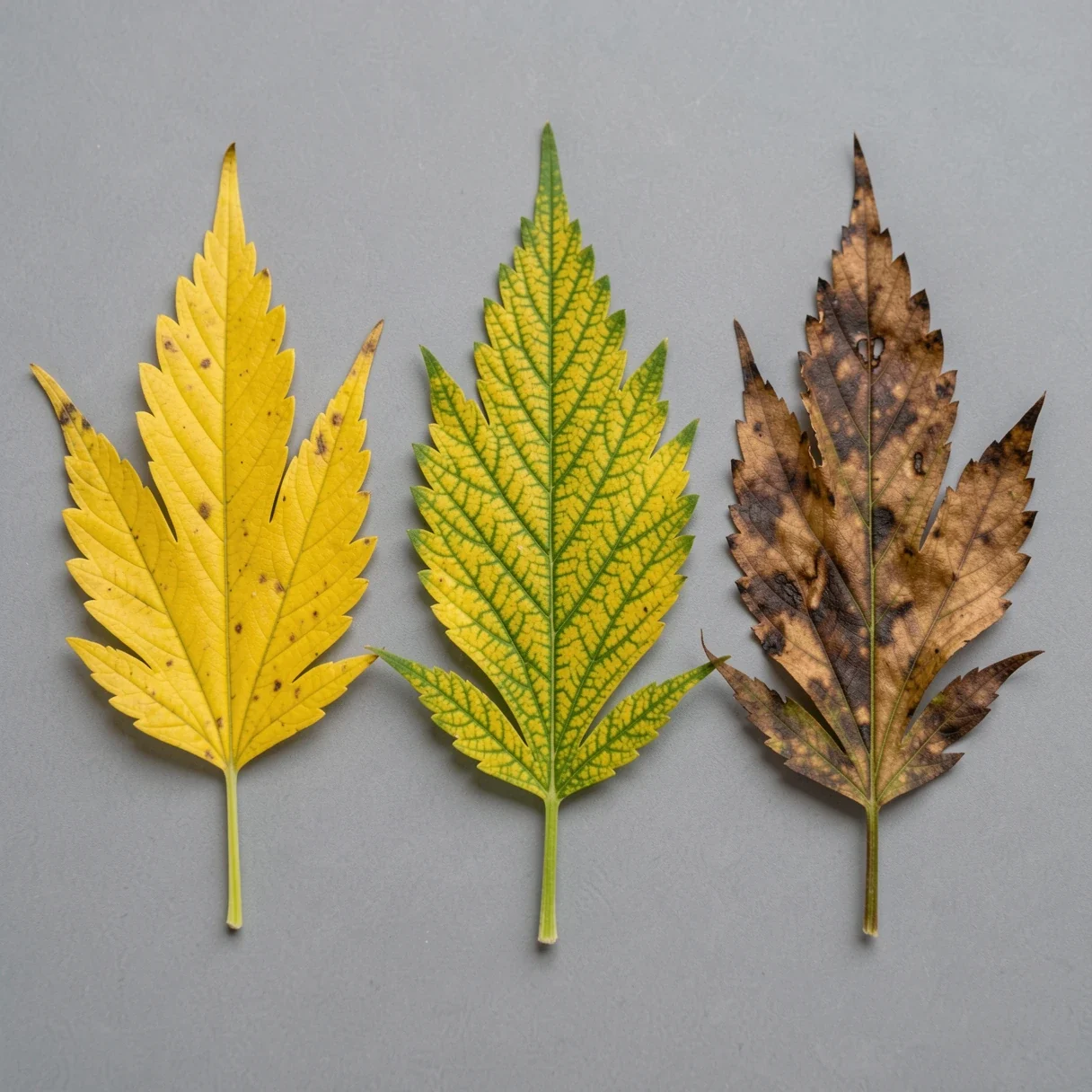
A yellowing leaf is your plant talking to you. The hard part is that it only knows one word for a dozen different problems — too little nitrogen, too much, the wrong pH, a salty pot, cold roots — and they can all start the same way. Learning to read which leaf is yellow, and where, is what turns a panicked guess into a five-minute fix.
Here’s the twist most guides bury: a lot of cannabis nutrient deficiencies aren’t deficiencies at all. The food is in the pot — the plant just can’t reach it because the pH is off and the nutrient has locked out. So before you reach for another bottle, this guide to cannabis nutrient deficiencies walks through how to diagnose what you’re actually looking at, what each of the common cannabis nutrient deficiencies looks like, and how to fix it without making things worse. If you haven’t dialed in your pH for cannabis yet, start there — it’s the root of half these problems, literally.
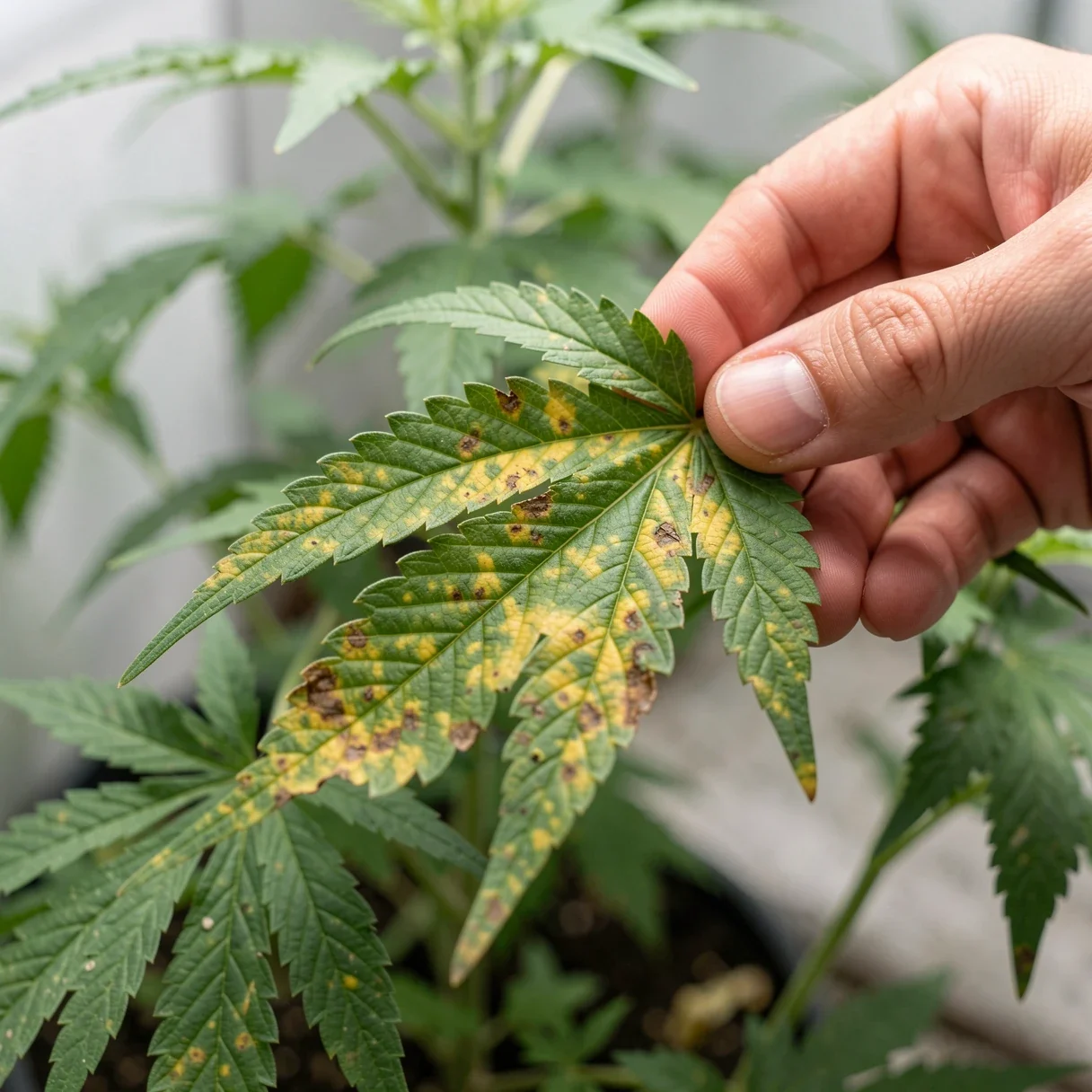
This is the step beginners skip and regret. Most of what looks like cannabis nutrient deficiencies is really nutrient lockout: the element is physically present in the soil or reservoir, but the pH has drifted out of range and chemically locked it into a form roots can’t absorb. That’s why so many cannabis nutrient deficiencies disappear the moment the pH comes back in line. Add more of the “missing” nutrient and you make it worse — now you’ve got an off pH and a salt buildup on top of it.
So the first move is always to check, not feed. Test the pH of your input water and, in soil or coco, the runoff draining out the bottom of the pot. If the runoff is way off your target — acidic soil, a drifting reservoir — you’ve found your culprit before you’ve spent a dollar on supplements. Get the number back in range and watch the plant for a few days; lockout symptoms often stall out and new growth comes in clean once the pH is fixed. Only once pH is ruled out do you start hunting an actual deficiency.
The single most useful trick for diagnosing cannabis nutrient deficiencies is asking one question: are the symptoms on the old, lower leaves or the new growth up top? That tells you which family of nutrient you’re chasing, because nutrients move through a plant differently. According to Michigan State University Extension, mobile nutrients can be “scavenged from older growth and moved to where they are most needed,” so their shortages show up on the old leaves first. Immobile nutrients can’t be relocated, so deficiency shows up in new growth.
That one split sorts the common cannabis nutrient deficiencies into two camps. Mobile elements — nitrogen, phosphorus, potassium, magnesium — show their symptoms on the lower, older leaves, because the plant is robbing those leaves to feed the new tips. Immobile elements — calcium, sulfur, iron, boron, zinc — show up top, in the freshest growth, because once they’re placed they’re stuck. Bottom of the plant looks sick? Think mobile. Top looks sick? Think immobile. That one split narrows the field fast.
One honest caveat: cannabis doesn’t always read the textbook. A peer-reviewed study growing cannabis with single-element shortages found “the onset of individual deficiency symptoms did not always correspond with elemental analysis of foliar tissues” — calcium, for instance, showed up on lower leaves when theory says it shouldn’t. Use the old-vs-new map as your first read, not gospel. Confirm it against the specific symptom before you act.
You don’t need to memorize all seventeen plant nutrients. A handful cause the overwhelming majority of cannabis nutrient deficiencies in a home grow, and they have signatures you can learn in an afternoon. Memorize these few and you’ll recognize most cannabis nutrient deficiencies on sight.
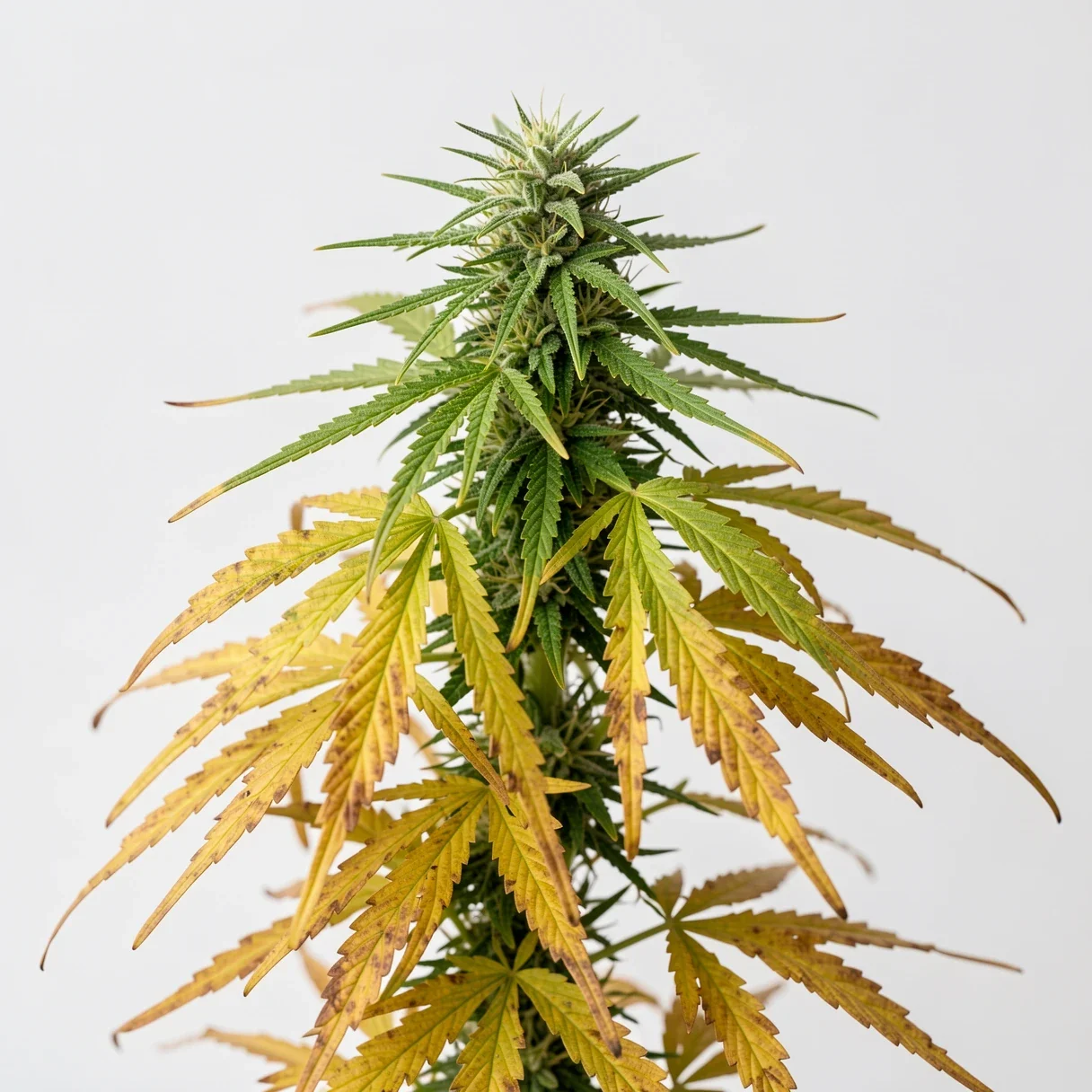
The most common one. Nitrogen is highly mobile, so a shortage starts as a soft, even yellowing of the oldest, lowest leaves and creeps upward as the plant cannibalizes them for the new growth. In that same cannabis study, nitrogen deficiency “began as very slight yellowing of the leaflet tips of lower canopy fan leaves,” then spread — and aboveground fresh weight fell 73% in the nitrogen-starved plants. It’s normal for the lowest leaves to yellow and drop late in flower; it’s a problem when it starts early and climbs fast. We go deep on getting this right in our guide to how much nitrogen a cannabis plant needs.
Phosphorus shortage reads differently: older leaves go an unusually dark, dull blue-green, sometimes with bronze or purple blotching, and petioles can turn red-purple. Growth slows and bud development suffers — the same study saw floral yield drop sharply under phosphorus starvation. Cold root zones make it look worse, since cold roots struggle to take up phosphorus even when it’s there. If lower leaves are darkening and stems are purpling while growth crawls, suspect phosphorus.
Potassium is mobile too, so it hits older leaves, but the look is distinctive: the margins and tips scorch and curl, turning brown and brittle while the leaf interior stays green. It looks like the leaf edges got singed. Don’t confuse it with nutrient burn from overfeeding, which also browns the tips — potassium shortage shows on the older leaves and pairs with a generally weak, floppy plant.
Magnesium deficiency is a classic: vivid interveinal chlorosis on older leaves, where the veins stay green but the tissue between them yellows, often with rusty spots. Calcium shows up in the new growth as spotting, twisted or hooked young leaves, and weak stems. Both are common in coco and in soft or filtered water, which is exactly why so many growers run a cal-mag supplement as routine insurance against this pair of cannabis nutrient deficiencies.
Iron deficiency paints the youngest top leaves with sharp interveinal chlorosis — bright yellow between still-green veins — and it’s very often a pH lockout rather than a true shortage, so check pH before dosing iron. Sulfur looks similar but more uniform and starts on the upper, newer leaves too. Both living up top is your cue to think immobile nutrients and, again, to confirm pH first.
| Nutrient | Where it shows | What it looks like | First move |
|---|---|---|---|
| Nitrogen | Old / lower leaves | Even yellowing, bottom-up | Check pH, then feed N |
| Phosphorus | Old / lower leaves | Dark leaves, purple stems | Warm the roots, check pH |
| Potassium | Old / lower leaves | Burnt, crispy leaf edges | Check pH, ease off salts |
| Magnesium | Old / lower leaves | Interveinal yellowing + spots | Cal-mag, check pH |
| Calcium | New / upper growth | Spotting, twisted new leaves | Cal-mag, check pH |
| Iron | New / upper growth | Bright interveinal yellowing | Fix pH first (usually lockout) |
| Sulfur | New / upper growth | Uniform pale new leaves | Check pH, then feed |
| Overfeeding (burn) | Tips, then inward | Brown, clawed leaf tips | Flush, cut nutrient dose |
| Lockout (pH) | Mimics any of the above | Symptoms despite feeding | Correct pH, flush, reset |
Once you’ve identified it, fixing most cannabis nutrient deficiencies follows the same order of operations — and rushing it is how people turn one problem into three. The fix for nearly all cannabis nutrient deficiencies is methodical, not dramatic.
Start by confirming pH and checking your runoff, because if it’s lockout, no amount of feeding helps until the pH is back in range. If the runoff shows a salt buildup or your pot’s been overfed, flush it with a few times its volume of correctly pH’d water until the runoff reads clean, then resume feeding at a lighter dose. This single sequence resolves the majority of cannabis nutrient deficiencies before you ever buy a supplement.
Only after pH and salts are sorted do you correct an actual shortage — feed the specific nutrient at a conservative rate, or add cal-mag for the magnesium/calcium pair, and give it time. New growth comes in clean within days to a week; the damaged old leaves won’t recover, so judge the fix by the fresh growth, not the casualties. Resist the urge to overcorrect — dumping a big dose to “catch up” just swings you into nutrient burn, and a stressed plant is exactly what wrecks your final yield.
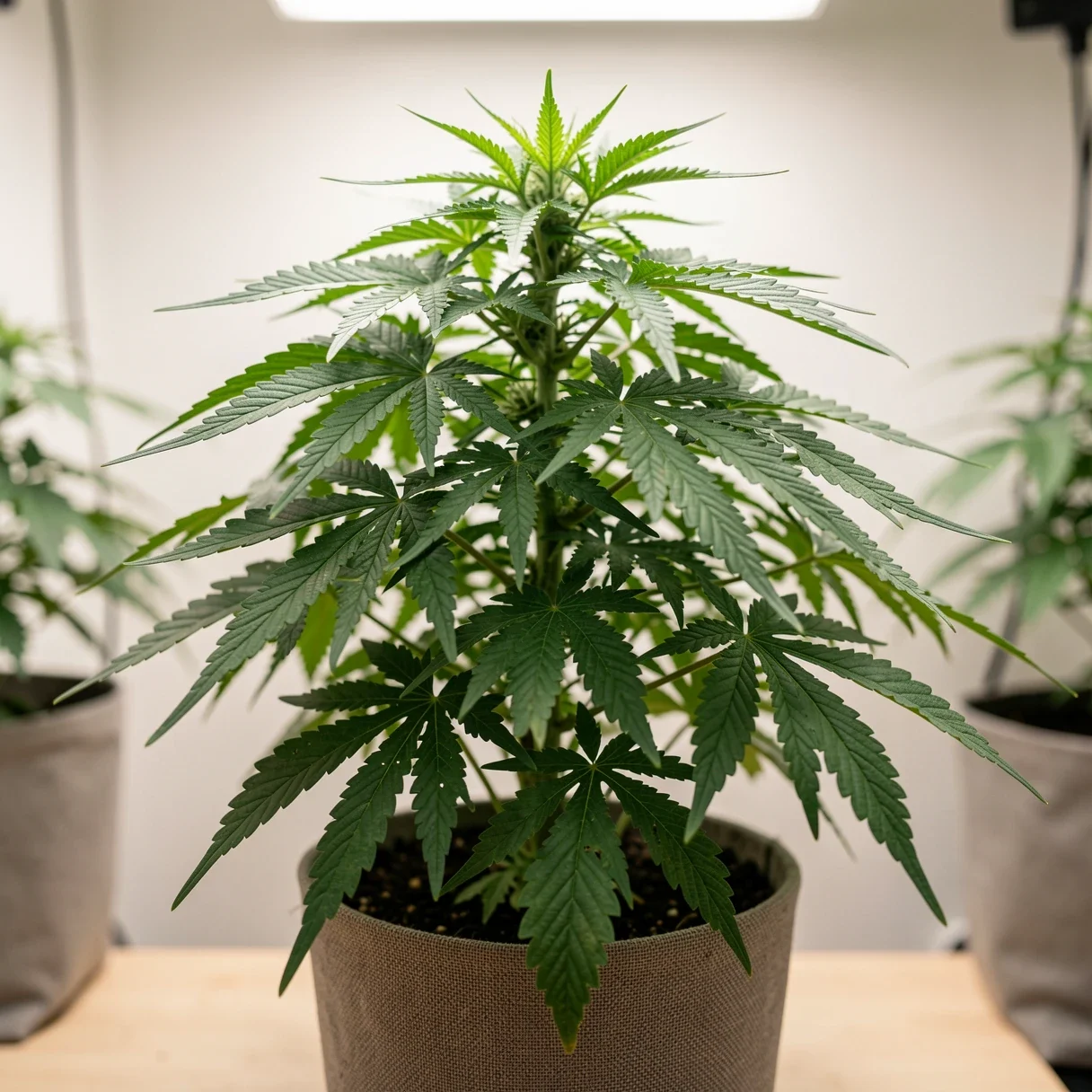
The best defense against cannabis nutrient deficiencies is a routine that prevents them. The growers who rarely fight cannabis nutrient deficiencies aren’t lucky — they’re boring, in the best way. They run a complete, quality base nutrient line at sane doses, they keep pH in range every single feed, and they don’t chase every forum supplement. A good living soil buffers a lot of mistakes on its own; coco and hydro need more attention because they don’t. Either way, consistency beats heroics.
Genetics help too. A vigorous, resilient strain shrugs off small feeding errors that would mark up a fussier plant, which matters a lot on a first grow. Easy-going classics like Blue Dream and White Widow, or a tough indica like Northern Lights Skunk, are forgiving while you build the habit — browse the full feminized seed range for more. Hardy autoflowers such as Gorilla Glue Autoflower, Green Crack Autoflower, or Gelato Autoflower finish so fast there’s less time for problems to snowball, and the whole autoflower collection is worth a look for compact, low-fuss grows. Dial in the basics first — light, water, and a stable environment in your grow tent setup — and the deficiencies mostly never show up.
Incorrect pH, by a wide margin. Most of what looks like a deficiency is actually nutrient lockout — the nutrient is present but the off pH stops the roots taking it up. Always check and correct pH before adding more nutrients, or you’ll chase the symptom instead of the cause.
Neither is automatically worse, but the location tells you what’s wrong. Symptoms on old, lower leaves point to mobile nutrients like nitrogen, phosphorus, potassium, and magnesium. Symptoms in the new top growth point to immobile ones like calcium and iron. Cannabis bends this rule sometimes, so confirm with the specific symptom.
Usually not. A leaf that’s already yellowed or scorched rarely greens back up — the plant has moved on. Judge whether your fix worked by the new growth coming in clean and healthy, not by the old casualties. You can trim badly damaged leaves once new growth is established.
Yes, and it fools people constantly. Too much fertilizer causes nutrient burn — brown, clawed leaf tips — and can trigger lockout that mimics a shortage. When in doubt, feed less, not more, and flush if you suspect salt buildup. Underfeeding is far easier to correct than overfeeding.
Reading cannabis nutrient deficiencies comes down to a short routine: check the pH first, ask whether the damage is on old leaves or new, match the specific symptom to the nutrient, and fix it gently without overcorrecting. Handled that way, cannabis nutrient deficiencies stop being scary. Do that and the mystery evaporates — a yellow leaf stops being a panic and becomes a data point you can act on in minutes.
The best growers diagnose less because they prevent more. A complete nutrient line, pH in range every feed, a forgiving strain, and a stable environment will keep most cannabis nutrient deficiencies from ever showing up. Learn the map, stay consistent, and let the plant’s leaves do what they do best — tell you exactly what it needs.
Shop Feminized Seeds | The Right pH for Cannabis | Maximizing Your Yield
Want to keep learning? Browse our full library of cannabis grow guides — everything from germination to harvest, in one place.
Ready to grow? Browse premium seeds from Lighthouse Genetics:
Designed & Built by Wynne Web Design