Only female cannabis plants make the buds you actually want to smoke. Males make pollen — and if a male slips into your grow and opens up, it pollinates your females and turns those fat colas into seedy, low-potency disappointments. That’s the whole stakes of male vs female cannabis: catch the males early, or risk the entire harvest.
The good news is that most plants tell you what they are early, often before you switch them to flower, if you know where to look. Below is how to read the signs, when they show up, what to do about a male, and the one move that takes most of the guesswork away.
Cannabis is dioecious — most plants are distinctly male or female, an arrangement only about 5–6% of flowering plant species share. Females grow the resinous, cannabinoid-rich flowers. Males grow pollen sacs whose only job is to fertilize those flowers.
An unpollinated female keeps producing seedless flower — what growers call sinsemilla. Once she’s pollinated, she starts setting seed, and in one Israeli study fully seeded flowers tested 60–75% lower in cannabinoids than seedless flowers from the same clone. One overlooked male in a tent can seed an entire crop. So the male vs female cannabis question isn’t academic — it’s the difference between a jar of smokable flower and a bag of seeds you didn’t ask for.
You can’t sex a seedling by eye. For the first few weeks every plant looks the same, and there’s no reliable male vs female cannabis tell that early (a lab DNA test on a leaf sample can do it, but most home growers just wait). Sex usually becomes readable at the pre-flower stage, once the plant is mature enough to form them, and that goes by nodes, not days. In a University of Guelph study of White Widow grown from seed, little leaf-like stipules appeared at nodes 5 and 6, and the first pre-flowers formed from node 7 up; earlier studies saw them from the fourth to seventh node.
Some plants don’t show clearly until the first week or two after you switch to 12/12. In another Israeli study, a female line’s stigmas only became visible after five short days.
Height, leaf shape and stem thickness won’t tell you male vs female cannabis in veg: Oregon State’s hemp specialists say there are no reliable visual signs before flowers form.
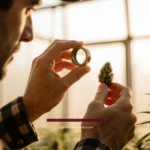
Look at the nodes, the joints where branches meet the main stem. That’s where pre-flowers form, tucked in behind the little leaf-like stipules. You’ll often want a magnifying glass or your phone camera zoomed in — these structures start out tiny. With autoflowers everything moves faster, so check earlier and more often (in university trials, autoflowers began flowering about four to five weeks after planting); our autoflower vs feminized breakdown covers how their compressed timeline changes what to watch for.
Males usually show first, a little ahead of the females — botanists call this protandry, and it’s been recorded in hemp studies.
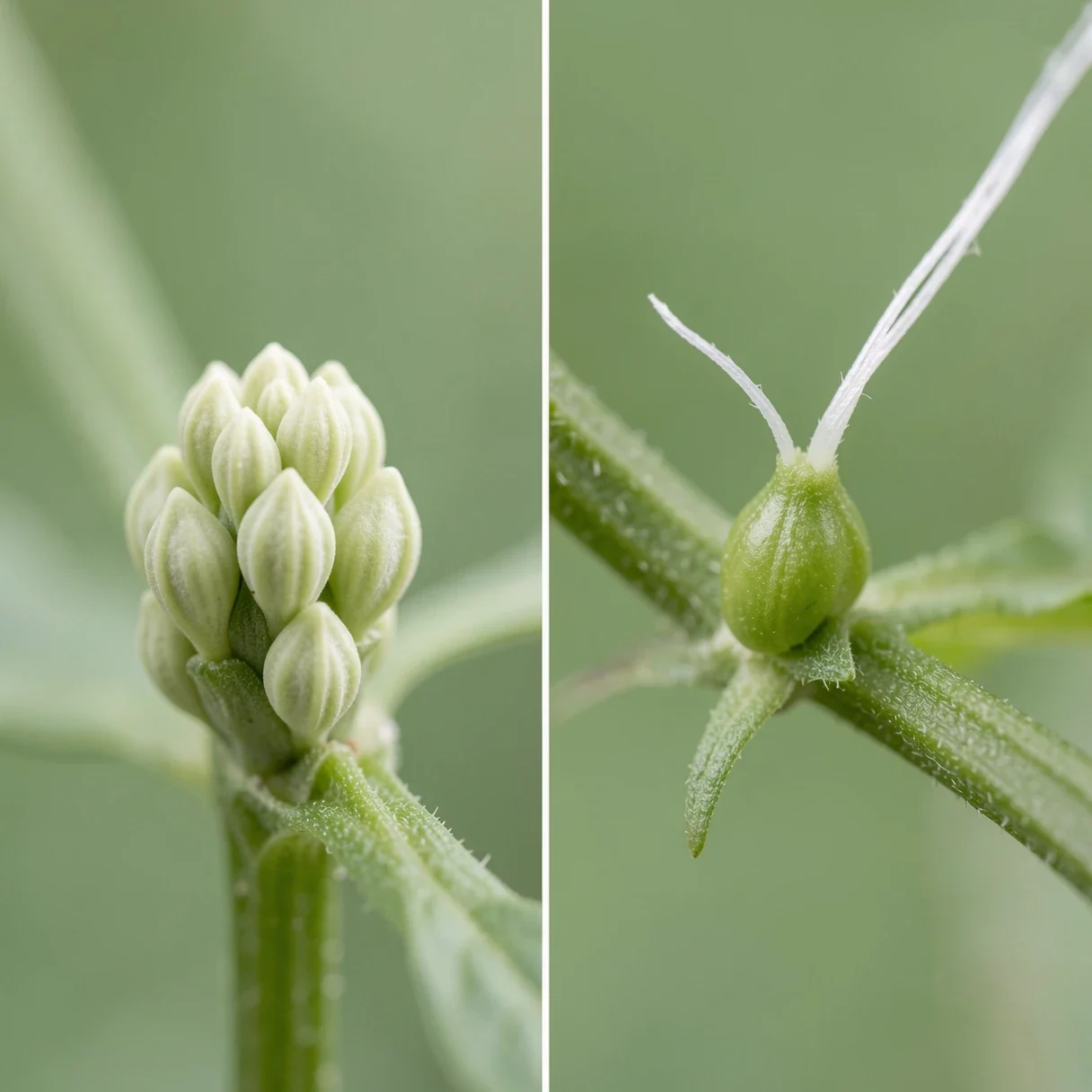
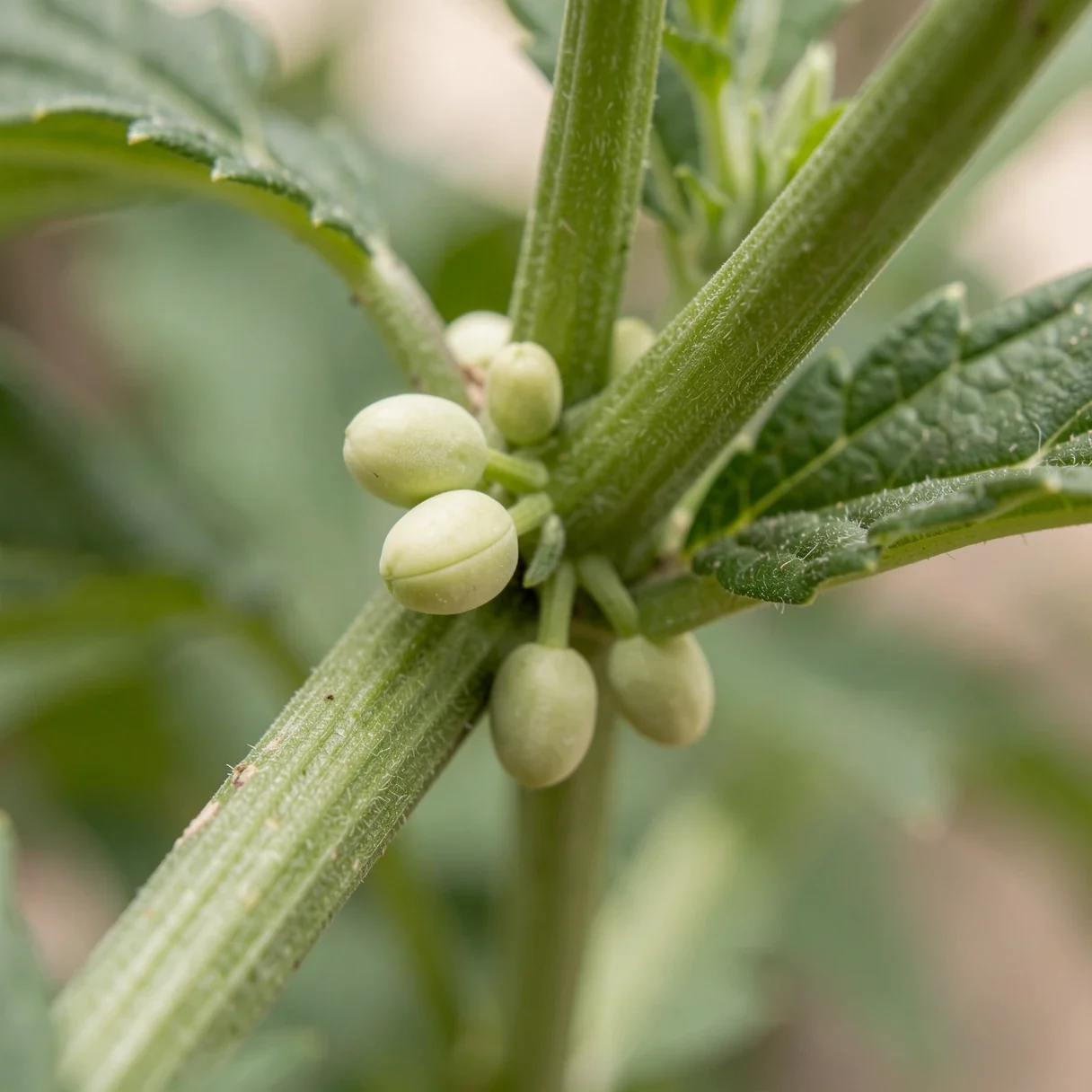
The giveaway is the pollen sac. At the node you’ll see small, smooth, rounded balls — often described as looking like tiny spades or grape clusters on short stalks. They’re closed at first and have no hairs. That absence is the key tell in male vs female cannabis identification: males have smooth sacs, females have wispy hairs.
If you see little balls on short stalks with no white threads coming off them, you’re probably looking at a male. But an immature female can look bare at first, sometimes until a few days after you switch to 12/12, so wait until the shape is clear before you make the male vs female cannabis call. A male’s sacs hang on stalks and multiply into clusters. A female’s pod pushes out its two white hairs.
Don’t wait for them to open. Once those sacs swell and split, they release pollen — and at that point the damage is already happening.
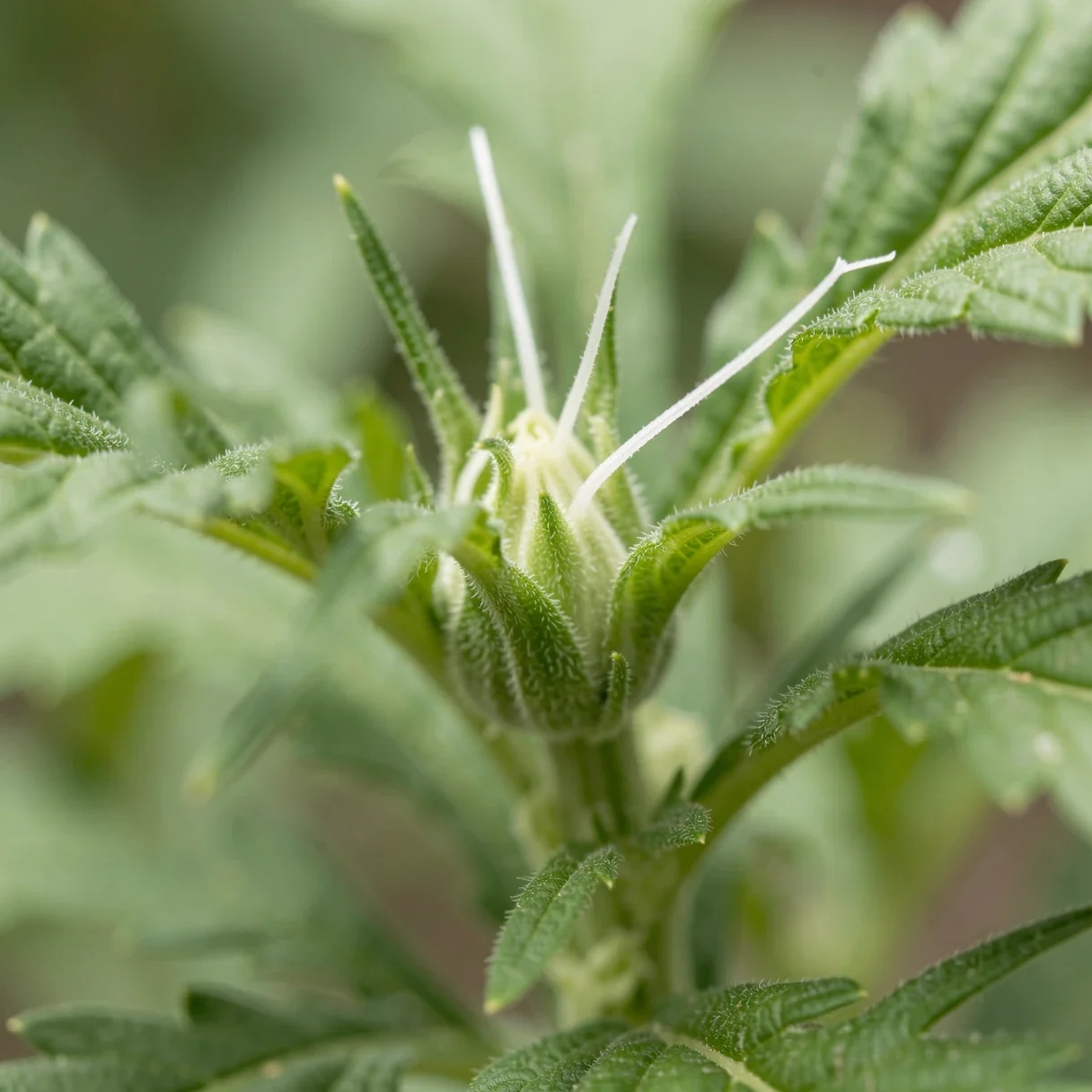
Females are what you’re hoping for. Their tell is a pair of fine, white, hair-like strands (botanically the stigmas; growers call them pistils) poking out of a small tear-drop-shaped pod — a bract that growers usually call the calyx. Those white hairs are the give-away. Where a male has a bare little ball, a female has a ball with two white whiskers coming off it.
As flowering progresses, those single calyxes stack up into the dense, frosty colas you’re growing for. If you spot pistils at the nodes and no pollen sacs, the male vs female cannabis verdict is in — you’ve got a female. Leave her be and let her run.
Here is the male vs female cannabis read at the node, in two lines:
There’s a third outcome the male vs female cannabis question tends to skip over: intersex plants, or “hermies.” A female can grow both pistils and pollen sacs — sometimes as yellow, banana-shaped stamens poking out of otherwise normal buds. A hermie’s pollen is viable: it can seed its own buds and nearby plants. It usually sheds far less pollen than a true male, but in a closed tent that’s still enough for seeds, so don’t ignore it.
Growers usually blame stress: heat spikes, light leaks during dark periods, over-aggressive defoliation, or a badly timed light-schedule swing. Controlled studies haven’t shown that any of these cause hermies, though, and where the research points anywhere, it points at genetics: a 2026 review calls sex expression in cannabis “highly genotype dependent”, though no study has yet confirmed a particular strain as hermie-prone. Stable conditions are sensible practice anyway, though no study has measured how much they reduce hermies. If a plant is throwing male flowers or open anthers through its buds, remove it like a male. A few anthers late in flower is a judgment call our hermie guide walks through.
For most growers chasing flower, the answer is blunt: remove it. The second you’re confident in the male vs female cannabis call, get the male out of the room — gently, so you don’t shake loose any pollen — and well away from your females. Don’t compost it next to the tent. Don’t “wait one more day to be sure” once the sacs are swelling.
A single male can ruin weeks of work, so when in doubt, isolate the suspect plant and watch it for another day or two rather than leaving it in the canopy. Better to quarantine a plant that turns out to be female than to gamble your harvest on a maybe.
Here’s the honest pitch. All of the above is a real skill worth learning — but you can also just avoid the problem. Feminized seeds are bred to produce female plants: breeders spray a female with a silver solution such as silver thiosulfate so she grows pollen, and because that pollen carries no Y chromosome, the seeds it sets on a female are genetically female. That means no sexing every plant, almost never a male to cull, and far less heartbreak.
Bad lots and the odd hermie still happen (in a University of Arizona trial of 17 commercial feminized hemp lots, 14 threw no males and the other three had 4–14%), so a quick male vs female cannabis check now and then through flower is still worth it. For anyone growing for flower rather than breeding, this is an easy win.
It’s why feminized genetics dominate our catalog. Easy-rated picks like White Widow Feminized and Green Crack Feminized, or Gorilla Glue 4 Feminized and Blueberry Kush Feminized if you want a little more challenge, take most of the male vs female cannabis worry off the table from day one. Mac’s own originals — Blue Monkey Dick, Neptune’s Wedding, and Grape Skunk — are all feminized too.
Not sure what fits your space? How to choose cannabis seeds walks through matching a strain to your setup, and you can browse the full feminized collection or the whole seed shop when you’re ready.
Males aren’t villains — traditional breeding needs them. If you’re breeding the classic way, a male supplies half the genetics of every cross he makes, and selecting the right one is how new strains and stable seed lines come to exist. That’s a different game with a different goal, and telling male vs female cannabis apart is the first skill it requires.
If that side of the craft interests you, our piece on F1, F2, F3, F4 seed generations explains how breeders stabilize genetics over multiple generations — and why a good male is worth its weight. For everyone else growing a personal stash, the male’s job is simply to be identified and shown the door.
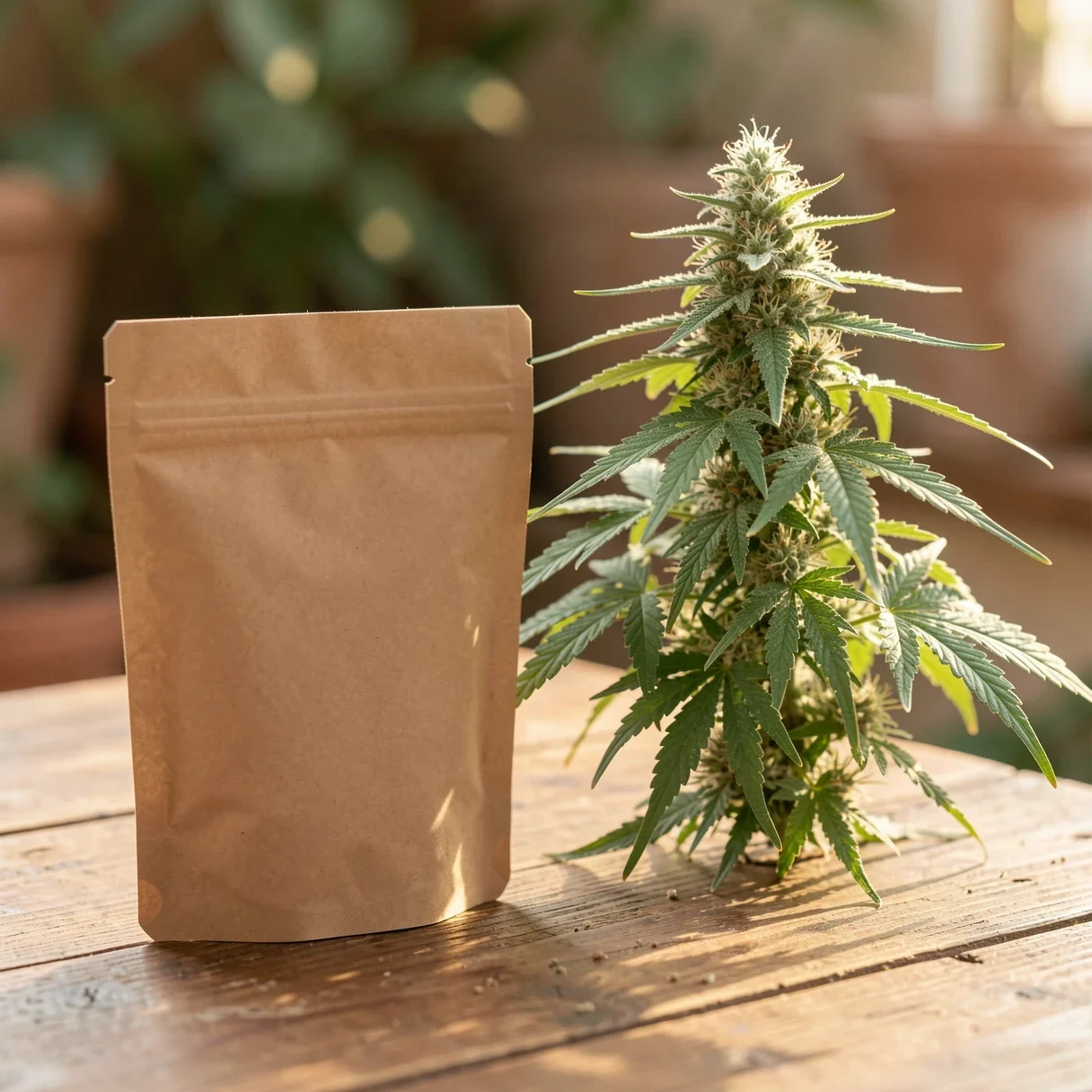
Sorting male vs female cannabis comes down to a close look at the nodes once pre-flowers appear: bare rounded sacs mean male, a small pod with two white hairs means female, and bananas in the buds mean a hermie. Spot the males early, remove them before they open, and keep checking your females through flower for intersex surprises. Do that and your females reward you with full, seedless flower.
Or take the shortcut and start with feminized seeds — then nearly every plant in your tent is one you wanted all along.
Shop Feminized Seeds | Autoflower vs Feminized | How to Choose Cannabis Seeds | How to Grow From Seed
Male vs female cannabis plants usually become readable at the pre-flower stage, once the plant has put on several nodes. In one university study the first pre-flowers formed from the seventh node up. If a plant hasn’t shown by the time you flip to 12/12, it usually will within the first week or two of flowering. You can’t sex a seedling by eye — the structures that reveal sex form at the nodes once the plant matures a little. Autoflowers start flowering on their own, about four to five weeks after planting in university trials, so start checking them from about week three.
Look for small, smooth, rounded pollen sacs at the nodes with no hairs — often compared to tiny grapes or spades on short stalks. The key contrast in male vs female cannabis is simple: males have bare sacs, females have a small pod with two white pistil hairs.
Not exactly, but a female can become intersex (“hermie”) and grow pollen sacs alongside its flowers — often banana-shaped stamens in the buds. It can pollinate your crop, so if it’s throwing male flowers or open anthers, remove it like a male. Stable conditions and a dark room are good practice, though controlled studies haven’t shown how many cases they prevent.
Not quite. They’re bred to produce females and do so the vast majority of the time, which is why they remove almost all the male vs female cannabis guesswork. A bad lot can still throw the odd male, and any female can turn hermie, so keep an eye on your plants through flower. Steady conditions are good practice too, though no controlled study has measured how much they lower the chance of intersex traits showing up (one facility study of plants grown from cuttings saw anthers on 5–10% of them).
It can. A single male releasing pollen in an enclosed space can seed every female nearby, dropping potency and filling your buds with seeds. That’s why early identification and quick removal matter so much.
Keep reading
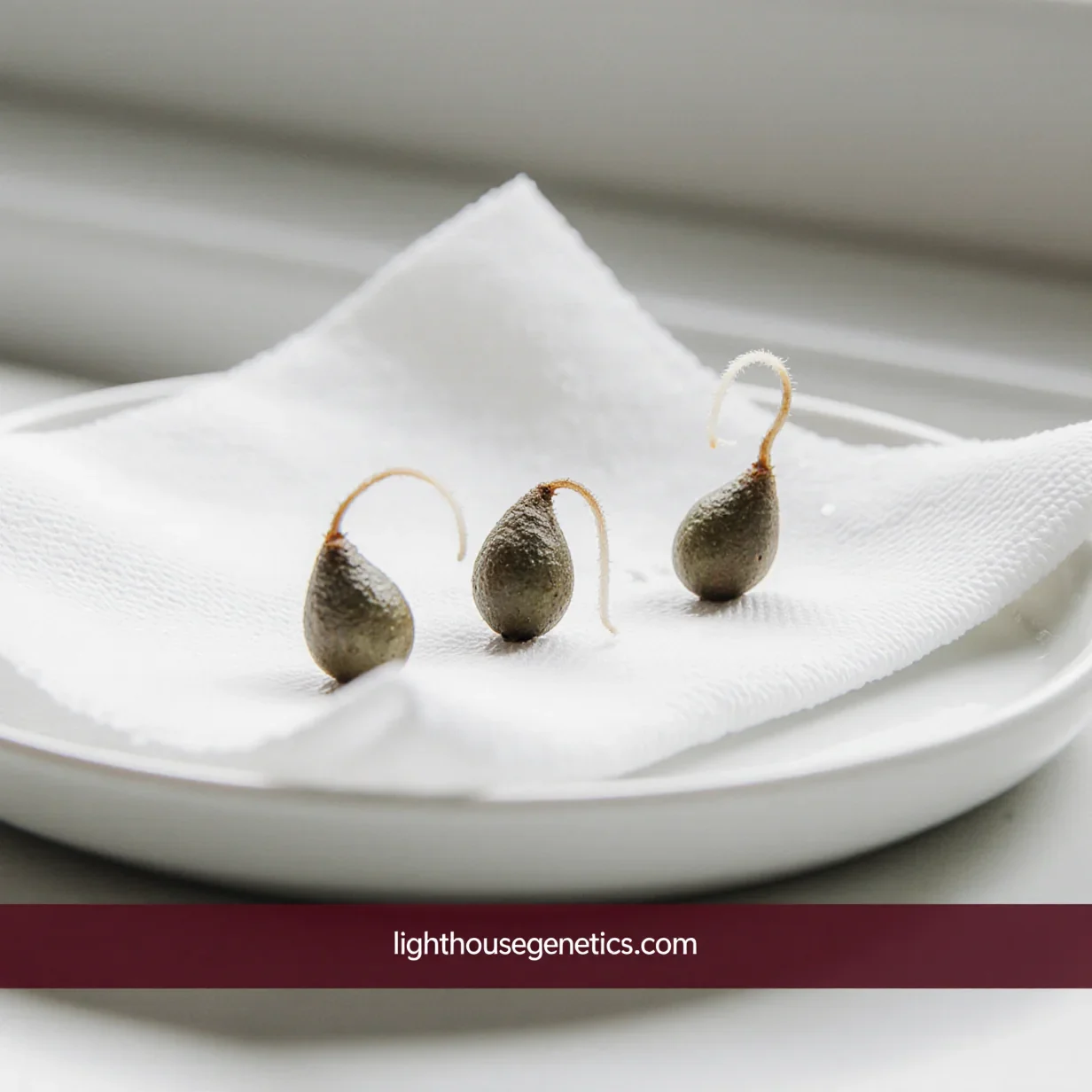 A Simple Guide to Germinating Cannabis Seeds Successfully
 Why Are My Cannabis Seeds Not Germinating? 7 Fixes to Try
 The Cannabis Seedling Stage
Browse all guides to growing cannabis by topic, from germination to harvest.
Ready to grow? Browse premium seeds from Lighthouse Genetics:
Designed & Built by Wynne Web Design